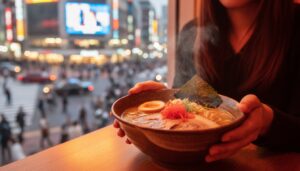

What if the most authentic flavors of Japan aren’t hidden behind the sliding doors of an expensive restaurant, but are found steaming in a 2.5-meter wooden cart tucked down a quiet side street? This tokyo street food guide is your invitation to step away from the tourist traps and into the vibrant, sensory world of local markets and seasonal snacks. We believe that street food is a refined ritual of respect and craftsmanship, not just a quick convenience.
We know that exploring the bustling stalls of Ameyoko or Tsukiji can feel overwhelming, especially when you’re worried about accidentally being a “rude tourist” or misreading the latest 2026 food labeling standards. It’s completely natural to feel a bit lost when faced with endless choices and unspoken rules. We’re here to help you master the art of Japanese street dining with total confidence. You’ll discover exactly which dishes are must-eats this year, the essential etiquette that local artisans appreciate, and the hidden gems in neighborhoods where the soul of Washoku truly lives.
Key Takeaways
- Master the essential “stand and eat” etiquette to navigate local stalls with the grace and respect of a seasoned resident.
- Use this tokyo street food guide to build your personal checklist of seven iconic bites, ensuring you experience the true soul of Japanese snacking.
- Pinpoint the exact neighborhoods, from Tsukiji to Asakusa, where you can find the most authentic seasonal treats away from the crowded tourist paths.
- Learn why carrying a traditional coin purse and seeking out “invite-only” flavors will transform your journey from a simple meal into a deep cultural connection.
What Defines Tokyo Street Food? Understanding Yatai and Market Culture
Tokyo’s culinary heart beats loudest not in its Michelin-starred dining rooms, but in the crackle of a charcoal grill at a street corner. To truly understand this city, we must look at the history of Yatai and Market Culture. These traditional mobile food carts, strictly regulated to 2.5 by 3 meters in size, have been the lifeblood of Japanese festivals for centuries. They represent a mobile kitchen where every inch of space is utilized with surgical precision to serve soul food that connects generations. They aren’t just carts; they’re tiny stages for culinary performance.
While festivals are magical, the daily rhythm of the city revolves around “Shoten-gai,” or local shopping streets. These pedestrian-friendly hubs are where you’ll find families grabbing a quick croquette or a skewer of yakitori on their way home. This is where the tokyo street food guide comes to life as a living, breathing part of the neighborhood. Unlike the “eat on the kerb” model seen in many Southeast Asian cities, Tokyo’s culture is defined by order and quiet appreciation. You won’t find people walking while eating. Instead, there’s a respectful pause at the stall itself. Even in these quick transactions, the spirit of “Omotenashi” remains central. It’s the polite bow and the careful wrapping of your snack that makes you feel like a welcomed guest rather than just a customer.
To better understand the vibrant atmosphere of these markets, watch this helpful video:
The Evolution of the Street Food Scene in 2026
In 2026, we see a beautiful marriage between old-world craft and modern consciousness. Stalls now often feature biodegradable packaging made from rice husks or bamboo, reflecting a city-wide push for sustainability. Digital payments are now common at many carts, yet the food remains deeply rooted in the calendar. A truly authentic tokyo street food guide must acknowledge that “seasonal” is the most important word in your vocabulary. Whether it’s the first bamboo shoots of spring or the fatty mackerel of winter, the ingredients tell you exactly what month it is. This commitment to freshness ensures that even a simple skewer offers an explosion of umami.
Yatai vs. Depachika: Where to Look
Finding these treats requires knowing where to look. While Yatai are often temporary or festival-based, permanent market stalls in places like Tsukiji offer a consistent experience. For a more polished version, don’t overlook the “Depachika,” or department store basement food halls. These are subterranean wonderlands of high-end snacks. Generally, street food prices in 2026 range from ¥300 to ¥800 per item, making it an accessible way to sample diverse flavors. Portions are designed to be snack-sized, allowing you to try multiple items without feeling weighed down. If you’re ready to dive deeper into these neighborhoods, exploring our group food tours in tokyo is a wonderful way to find the spots locals keep to themselves.
Your Essential Etiquette and Preparation Checklist
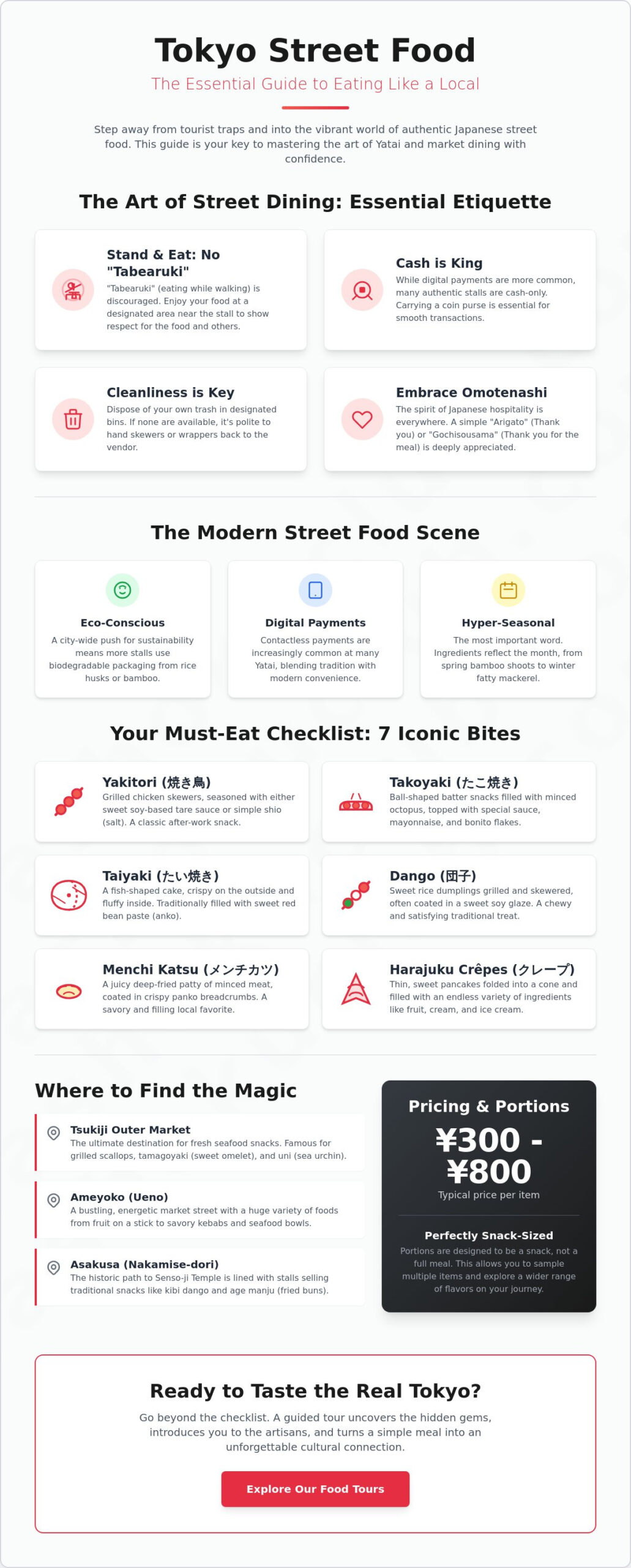
Mastering the art of Japanese street dining is about more than just finding the right stall. It’s about stepping into a flow of mutual respect that has existed for generations. While you explore the top foods to try in Tokyo, you’ll notice that the experience is remarkably orderly. This isn’t by accident. Every tokyo street food guide worth its salt must emphasize the “No Walking and Eating” rule. In Japan, “tabearuki” (eating while walking) is generally discouraged because it’s seen as disrespectful to the food and potentially messy for those around you. It’s an invitation to slow down and truly taste what’s in your hands.
Preparation starts with your wallet. Even in 2026, cash remains the soul of the local market. While larger shops accept digital payments, the most authentic hidden gems often rely on physical currency. Carrying a small coin purse is essential for those ¥100 and ¥500 transactions. You’ll also notice a surprising lack of public trash bins. This is where the “Trash Pocket” strategy comes in. Carrying a small, discreet plastic bag in your daypack allows you to manage your own waste responsibly. It’s a small gesture that reflects the deep local pride in keeping the city pristine. If you’d like to practice these customs with a local by your side, our small and large group tokyo tours offer the perfect, stress-free introduction to these traditions.
The “Stand and Savour” Ritual
When you receive your steaming snack, look for the designated eating area nearby. Most vendors provide a small space or a bench where you can enjoy your meal. Finishing your food right there is considered a high compliment to the artisan. It shows you’re giving their craft your full attention. Once you’re done, remember to return any trays, reusable plates, or wooden skewers directly to the vendor. They’ll appreciate the help in keeping their station organized. A simple “Gochisousama-deshita” (thank you for the meal) as you leave will always earn you a warm smile.
The Practical Gear Checklist
To ensure your adventure is as comfortable as it is delicious, keep these items in your kit:
- Hand Sanitizer and Wet Wipes: Street food can be delightfully sticky, and public hand-washing stations aren’t always immediate.
- Small Denominations: Keep plenty of coins ready to avoid asking small vendors to break large bills.
- Reusable Bag: You’ll likely find beautiful “Omiyage” (souvenirs) or pre-packaged treats you’ll want to carry home safely.
- Basic Phrases: Learning “Kore o kudasai” (This one, please) bridges the gap between being a tourist and a welcomed guest.
By following this tokyo street food guide checklist, you’re doing more than just eating. You’re participating in a cultural exchange that honors the people behind the food. It’s these small moments of connection that turn a simple snack into a lifelong memory.
The Must-Eat Tokyo Street Food Checklist: 7 Iconic Bites
Now that you’ve mastered the local etiquette, it’s time to dive into the flavors that define our city. This tokyo street food guide isn’t just about filling your stomach; it’s about witnessing the dedication of the “Shokunin” (craftsman) who has spent decades perfecting a single skewer or batter. While big chains offer convenience, we always encourage you to seek out the family-run stalls where the recipe is a closely guarded secret passed down through generations. You’ll taste the difference in the depth of the broth and the precision of the seasoning.
Your journey should begin with Takoyaki. These aren’t just octopus balls; they’re a masterclass in texture. Look for vendors who cook them until the outside is a crisp, golden brown while the inside remains perfectly gooey and rich with dashi. Then, follow the scent of smoke to a Yakitori stall. Here, the debate is always “Tare” (sweet soy glaze) or “Shio” (salt). We find that “Shio” truly lets the quality of the charcoal-grilled chicken and the smoky “Binchotan” aroma shine through. It’s a pure expression of umami that needs no hiding.
Savory Staples You Cannot Miss
For a true taste of Tokyo’s markets, you must try Tamagoyaki. In historic markets, artisans layer thin sheets of seasoned egg to create a sweet, pillowy omelette served warm on a stick. It’s a simple joy that embodies the balance of Japanese flavors. If you’re craving something heartier, find a Menchi Katsu. This crispy, deep-fried minced meat cutlet is the ultimate street comfort food. The contrast between the panko crunch and the juicy center is unforgettable. Don’t miss the Ikayaki (grilled squid) for a bit of “Matsuri” festival spirit, or an artisanal Onigiri filled with premium regional ingredients like salted plum or spicy cod roe.
Sweet Treats for the Wandering Foodie
No tokyo street food guide is complete without the iconic Taiyaki. This fish-shaped pastry is traditionally filled with “Anko” (sweet red bean paste), though custard is a popular modern twist. For something lighter, look for Dango. These chewy rice flour dumplings are often glazed in a sweet-savory soy sauce or topped with a delicate matcha paste. Finally, keep an eye out for the Melon Pan. Despite the name, it usually tastes like a buttery brioche with a crunchy cookie crust. In 2026, the “fruit sando” trend continues to thrive, offering aesthetic layers of seasonal Japanese fruit and whipped cream between fluffy milk bread. These treats usually cost between ¥300 and ¥800, making them the perfect companion for a day of exploration.
Where to Find the Magic: A Neighborhood Checklist
To find the true magic of Tokyo, you have to know which corner to turn. Every neighborhood has its own flavor profile and history, offering a different chapter of the city’s culinary story. This tokyo street food guide takes you beyond the neon lights of the main roads and into the narrow alleys where the real secrets are kept. We’ll start at the Tsukiji Outer Market. While some claim it has become too touristy, we believe it remains the undisputed king of seafood snacks. From succulent grilled scallops to artisanal tamagoyaki, it’s a sensory playground where you can also find high-quality kitchen tools to take a piece of Japan home with you.
Contrast the maritime energy of Tsukiji with Asakusa’s Nakamise-dori. Here, traditional treats like freshly toasted senbei (rice crackers) are served in the shadow of the ancient Senso-ji temple. For a grittier, more energetic vibe, Ueno’s Ameyoko market is a must. Most shops here open from 10:00 AM to 8:00 PM, offering a chaotic mix of post-war history and vibrant stalls selling everything from dried spices to fresh fruit skewers. It’s a place where the air is thick with the aroma of charcoal and the calls of spirited vendors.
Navigating the Markets Like a Local
Timing is everything when you’re hunting for the best bites. To avoid the heaviest crowds, we always recommend aiming for early mornings. For instance, the most active period for the Tsukiji market is between 9:00 AM and 12:00 PM. If you see a long line of locals rather than just people with cameras, you’ve likely found a stall that prioritizes quality over flash. To help you plan your visit with precision, check out our guide to Tsukiji Market Hours 2026. Understanding these rhythms ensures you’re treated like a guest rather than just another face in the crowd.
Hidden Alleys and Basement Halls
If you want to step back in time, Sunamachi Ginza is a “Showa-era” throwback street that feels untouched by the modern rush. It’s a haven for authentic soul food that most visitors never see. On the other hand, for a refined experience, we love the “Depachika.” These department store basement halls, particularly in Ginza, are foodie paradises. They offer high-end versions of street staples in a pristine setting, bridging the gap between convenience and luxury. For those wanting to explore the intersection of modern trends and classic yokocho alleys, our Shibuya Street Food Tour Guide covers the neighborhood specifics you need to navigate that vibrant district.
Ready to experience these hidden gems without the stress of getting lost in the crowd? Join us for one of our expert-led food tours in Tokyo to taste the city’s most authentic flavors alongside a passionate local guide.
Elevating Your Adventure: Why a Guided Experience Changes Everything
While this tokyo street food guide provides the essential tools for a solo journey, there’s a certain magic that only happens when you walk these alleys with a friend who knows the local artisans by name. We believe that the most profound flavors are often seasoned with the stories of the people who make them. Having a guide isn’t just about showing you the way; it means having a bridge to the craftsmen. When we visit a stall, we don’t just order food. We translate the history of a family recipe that has remained unchanged for eighty years, turning a simple skewer into a piece of living history. It’s the difference between eating a snack and experiencing a legacy. It’s about genuine human connection.
Many of the most authentic hidden gems simply don’t appear on Google Maps or in standard English-language apps. These are the “invite-only” spots, often tucked behind nondescript curtains or down basement stairs, where the chef might only serve a handful of guests each day. A guided experience grants you access to these exclusive tastes while providing the cultural context that explains why a certain seasonal ingredient is prized or how a specific cooking technique evolved. We also take the stress out of navigating dietary restrictions. Whether you’re looking for family friendly food tours in tokyo or have specific allergies, a private or small group tour ensures every bite is safe, inclusive, and celebratory. You won’t have to guess about ingredients; you can just enjoy the umami.
The Washoku Club culture and food tours Difference
At Washoku Club culture and food tours, we’re fiercely committed to avoiding tourist traps. Our mission is to welcome you into the heart of our community, introducing you to the families and artisans who form the backbone of Japanese culinary tradition. We focus on the “people” behind the food, ensuring your visit supports the local economy and preserves these beautiful traditions. Whether you join us for a Tsukiji Outer Market Food Tour or an Asakusa Food Tour, you’re becoming part of a club that values authenticity above all else. We invite you to explore our full range of tours to find the experience that speaks to your unique appetite. Our experts ensure every moment feels personal and deeply rooted in hospitality.
Your Next Steps to Foodie Heaven
Booking your spot on our popular excursions is the final step in completing your tokyo street food guide checklist. For our Shibuya or Shinjuku tours, we recommend wearing comfortable walking shoes and bringing a curious palate. You don’t need to worry about the logistics; we handle the timing and the ordering so you can focus on the flavors. Most of our guests find that bringing a small amount of cash for personal souvenirs is helpful, but we’ve designed our tours to be comprehensive. We can’t wait to share our favorite corners of the city with you. A warm welcome from the Washoku Club culture and food tours family awaits you at the next stall. Let’s discover the magic together.
Start Your Culinary Journey Through Tokyo
Tokyo’s street food scene is a vibrant tapestry of history, craftsmanship, and seasonal flavors waiting for you to discover them. By following this tokyo street food guide, you’ve taken the first step toward navigating our markets with the grace of a local and the curiosity of a true food lover. You now understand that the perfect bite is about more than just the ingredients. It’s about the “stand and savor” ritual, the respect shown to the artisan, and the thrill of finding a hidden gem in a quiet alleyway.
We founded Washoku Club culture and food tours in 2016 to share these intimate moments with thousands of happy foodies from around the world. Our expert-led tours are deeply rooted in traditional Japanese hospitality, ensuring you avoid the tourist traps and connect directly with the families who have perfected their craft over generations. We’d love to welcome you into our community and share the secrets that don’t appear on any map. Join the Club: Book Your Authentic Tokyo Food Tour Today and let us guide you to the soul of Japanese cuisine. Your seat at the stall is waiting.
Frequently Asked Questions
Is it really illegal to walk and eat in Tokyo?
Walking while eating isn’t illegal, but it’s widely considered poor etiquette across Japan. Most vendors expect you to stand near their stall while you enjoy your treat. Doing so prevents accidental spills in crowded areas and keeps the city streets pristine. It also ensures you’re giving the chef’s hard work your full attention. Just look for the designated standing area or a nearby bench to enjoy your snack.
How much should I budget for a day of street food hopping?
You should budget roughly ¥3,000 to ¥5,000 for a satisfying day of food hopping. Most individual snacks are priced between ¥300 and ¥800 each. This amount covers several savory skewers, a sweet treat, and perhaps a refreshing drink from a vending machine. It’s always wise to carry cash in small denominations like ¥100 and ¥500 coins for the smaller, traditional stalls that may not accept cards.
Are there vegetarian or vegan street food options in Japan?
Vegetarian and vegan options exist, but they require a little extra care to find. Many savory dishes use dashi, which is a traditional stock made from fish. Sweets like Dango or fresh fruit skewers are usually safe bets. For savory bites, look for plain grilled mochi or vegetable tempura. We recommend checking ingredients carefully or joining a tour where we can help identify delicious animal-free choices for you.
What is the best time of day to go to Tsukiji Outer Market?
The best time to visit Tsukiji is between 9:00 AM and 10:00 AM. While many shops open as early as 5:00 AM, the retail stalls are in full swing by mid-morning. This tokyo street food guide suggests finishing your visit by noon, as many vendors begin closing around 2:00 PM. Arriving early ensures the freshest seafood and the widest selection of snacks before the late-morning rush peaks.
Do I need to tip the street food vendors?
Tipping is not required and is generally not practiced at street food stalls or anywhere else in Japan. Excellent service is considered a standard part of the experience. Offering extra money can sometimes lead to awkward situations where the vendor tries to return it to you. A warm smile and a sincere “Gochisousama-deshita” are the only rewards a local artisan expects for their hospitality.
Can I find street food in Tokyo at night, or is it only a daytime thing?
Street food is available at night, especially in the atmospheric “Yokocho” alleys and during local matsuri festivals. While traditional markets like Tsukiji are daytime affairs, places like Shinjuku or Shibuya offer smoky yakitori and grilled snacks well into the evening. These spots provide a completely different energy than the morning markets. They are perfect for those who love the glow of lanterns and bustling nightlife.
Is the tap water at street food stalls safe to drink?
Tap water in Tokyo is completely safe to drink and follows very strict hygiene regulations. You won’t often find water served at street stalls, so it’s smart to carry your own reusable bottle. If you run out, the city is famous for its ubiquitous vending machines. You’re never more than a few steps away from a cold tea or water for about ¥110 to ¥160 depending on the location.
What should I do if a stall doesn’t have an English menu?
You can use a translation app on your phone or simply use the “point and smile” method if there is no English menu. Most vendors are incredibly patient and will understand if you point to an item and say “Kore o kudasai,” which means “This one, please.” This tokyo street food guide emphasizes that a local guide can help you bridge this gap and discover the deeper stories behind the ingredients.