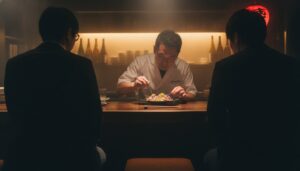

Most visitors believe Shibuya’s best flavors are found at eye level, but the true soul of this district is tucked away in basement izakayas and neon-lit fifth-floor dens. You’ve likely seen the famous scramble crossing, yet the sheer scale of the vertical buildings and the fear of stumbling into a tourist trap can feel overwhelming. It’s natural to feel a bit of anxiety about language barriers when the most authentic menus are often handwritten in kanji. That’s why joining a curated shibuya street food tour is about more than just a meal; it’s about finding the hidden pulse of Tokyo through the eyes of a passionate local guide.
We want you to experience the real Japan without the stress of navigating complex social rules or the worry of the ¥2,000 on-the-spot littering fine enforced since June 2026. In this guide, we’ll reveal seven must-try bites that define Shibuya this year, from seasonal treats to timeless soul food. You’ll gain the insider knowledge needed to master Japanese dining etiquette and feel like a welcomed guest in every shop. Let’s step off the beaten path together to uncover the rich umami and vibrant history waiting in Shibuya’s secret alleys.
Key Takeaways
- Discover the seven most authentic bites of 2026, from premium melt-in-your-mouth Wagyu skewers to modern takoyaki found in Shibuya’s hidden corners.
- Understand the unique contrast between the historical charm of “Drunkard’s Alley” and the futuristic efficiency of high-end basement food halls.
- Learn the crucial “stand and eat” rule and how to time your visit perfectly to avoid the overwhelming peak-hour crowds.
- See why a guided shibuya street food tour is the key to accessing secret menus and local spots that remain invisible to the average traveler.
Why Shibuya is the Heart of Tokyo’s Street Food Revolution
Step into Shibuya and you’re immediately hit by a wall of energy. It isn’t just the neon lights or the sea of people at the crossing. It’s the scent of tare sauce caramelizing over charcoal in a cramped alleyway clashing with the sleek, cool air of a high-end food hall. While many people think of this area as just a place for “Instagrammable” snacks like rainbow toast, the reality is much deeper. To us, Shibuya is a living museum of Japanese culinary evolution. It’s a place where “Washoku,” the traditional philosophy of harmony in food, thrives even in the most casual, fast-paced settings.
On a shibuya street food tour, you’ll discover that street food here isn’t just a quick meal; it’s a sensory journey. You’ll move from the smoky, grit-filled atmosphere of a traditional yokocho to the polished marble of a modern “depachika.” This mix of old and new defines the district’s soul. We believe that to truly understand Tokyo, you have to taste the contrast between a family-run stand-up stall and a contemporary culinary lab. If you’re ready to explore beyond the surface, our range of tours offers the perfect entry point into this delicious world.
The Evolution of Shibuya’s Culinary Landscape
Shibuya’s food scene has deep roots in the post-war era. The narrow yokocho, or drinking alleys, began as makeshift markets where locals sought comfort in simple, hearty dishes. Today, Shibuya, a major commercial center, has transformed these humble beginnings into something spectacular. The 2026 urban renewal projects have integrated high-end street food into the very fabric of new skyscrapers. You can now find a master chef working just steps away from a futuristic digital kiosk. Seasonal ingredients still dictate the menus here, ensuring that even a quick bite reflects the current micro-season of Japan.
The “Vertical Neighbourhood” Challenge
Navigating this district requires looking both up and down. Because space is at a premium, some of the most authentic culinary gems are hidden on the 8th floor of an office building or tucked into the second basement level of a department store. We always encourage our guests to look at the building directories near elevators; those lists often hide the best local eateries.
Finding these spots on your own can be a puzzle, which is why a shibuya street food tour helps you bypass the confusion and head straight for the flavor.
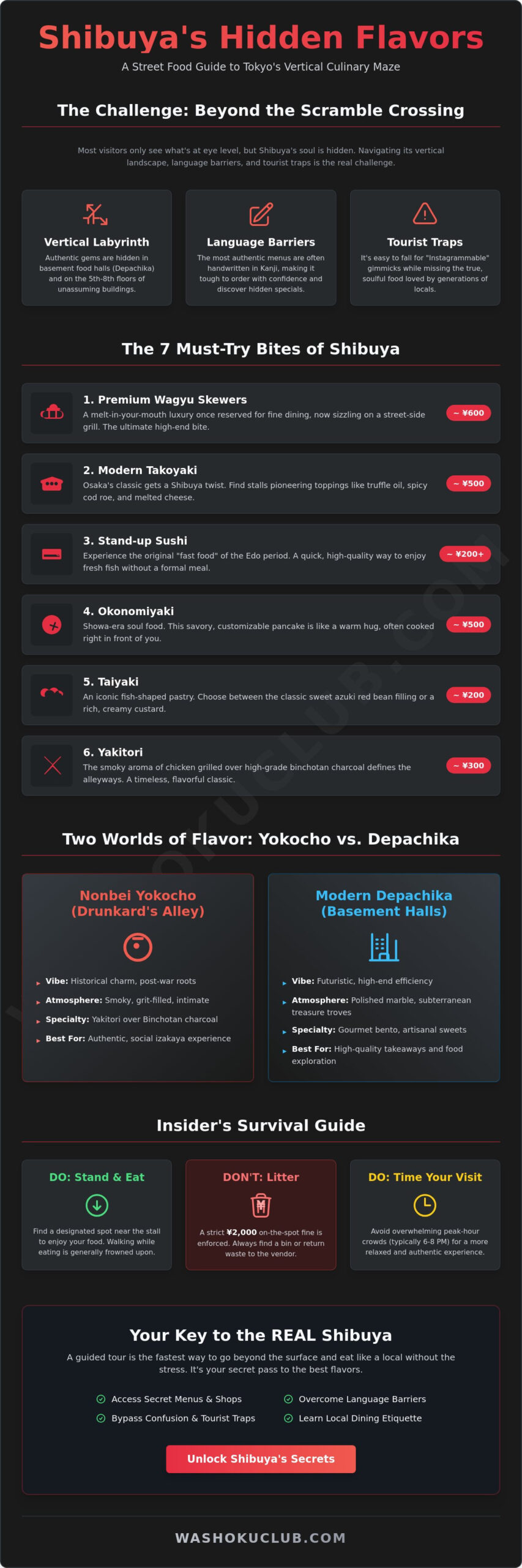
The Essential Shibuya Street Food Roundup: 7 Iconic Bites
Walking through the neon canyons of Shibuya, your appetite is the best compass you have. While the district is famous for its pace, the food here invites you to slow down and savor the craftsmanship behind every bite. Most street food items in this area cost between ¥200 and ¥600, making it an accessible way to explore high-quality Japanese flavors. On a shibuya street food tour, we focus on dishes that represent the heart of the city, starting with the legendary Wagyu skewer. These premium bites offer a melt-in-your-mouth experience that was once reserved for high-end steakhouses, but is now served sizzling hot from a street-side grill.
Next, we look at Takoyaki. While Osaka claims the crown for tradition, Shibuya’s vendors have pioneered modern toppings like truffle oil, spicy cod roe, or even melted cheese. For those seeking a bit of history, stand-up sushi stalls are a must. This was the original fast food of the Edo period; it’s a quick, high-quality way to enjoy fresh fish without a formal sit-down meal. To round out the savory side, we often visit stalls serving Okonomiyaki, a Showa-era soul food that feels like a warm hug in pancake form. Finally, no journey is complete without Taiyaki, the iconic fish-shaped pastry filled with sweet azuki bean or creamy custard.
Savory Classics: From Yakitori to Monjayaki
The smoky aroma drifting through Nonbei Yokocho comes from yakitori grilled over high-grade binchotan charcoal. This traditional method infuses the chicken with a depth of flavor that modern electric grills simply can’t match. You should also try Monjayaki, the “runny” cousin of okonomiyaki. It’s a Tokyo staple that is as much about the social experience of cooking it as it is about the savory, umami-rich taste. If you want to find the best versions of these hidden gems, joining the Washoku Club culture and food tours Shibuya excursion ensures you’re eating where the locals go after work.
Modern Innovations and Sweet Treats
Shibuya is where tradition meets the future, and nowhere is this clearer than in its sweets. We’ve seen a beautiful rise in artisanal “dagashi,” which are nostalgic Japanese candies reimagined with premium ingredients. Matcha-infused snacks have also evolved far beyond the basic latte; look for matcha-dusted mochi or deep-fried crackers. For a refreshing finish, the fruit sando is a visually stunning hybrid of fluffy Japanese milk bread, whipped cream, and perfectly ripe seasonal fruit. As you enjoy these treats, remember that Japanese dining etiquette suggests standing to the side while you eat, especially since Shibuya now enforces a ¥2,000 fine for littering to keep our streets beautiful. If you’re eager to taste these modern delights, we’d love to show you our favorite authentic local spots.
Navigating the Alleys: Hidden Yokocho vs. Modern Food Halls
Shibuya isn’t just a single destination; it’s a layered experience where the 1950s and 2026 exist side-by-side. To truly master a shibuya street food tour, you must understand the two distinct worlds that define one of Tokyo’s busiest districts. On one hand, you have the grit and history of the hidden alleys, and on the other, the sleek, climate-controlled efficiency of modern food halls. Shibuya Center-Gai serves as your gateway to both. It’s a bustling pedestrian artery that can lead you toward a smoke-filled izakaya or a high-tech subterranean market within minutes.
Choosing between these environments depends entirely on your mood and the “vibe” you seek. If you’re looking for a raw, nostalgic atmosphere where the walls are stained with decades of history, the alleys are your sanctuary. However, if you prefer a wide variety of artisanal choices in a comfortable, accessible space, the department store basements are unbeatable. We find that the most fulfilling days include a little bit of both. Use this simple framework: choose the alleys for evening intimacy and storytelling, and head to the modern halls for daytime variety and convenience.
Nonbei Yokocho: A Step Back in Time
Nonbei Yokocho, or “Drunkard’s Alley,” is a narrow slice of post-war Tokyo that has miraculously survived the district’s constant redevelopment. Here, you’ll find tiny bars with only six seats, where the master chef is often just inches away from you. The classic order is a crisp whisky highball paired with salt-seasoned chicken skewers. It’s a place for intimate conversation and slow sipping. This evening-focused energy is a stark contrast to the early-morning hustle described in our guide to Tsukiji Market Hours, which are strictly for the dawn-breakers. In Nonbei, the history is as thick as the grill smoke.
The Modern Revolution: Shibuya Sky and Beyond
For a completely different sensory experience, head to the basements of Shibuya Scramble Square or the legendary Tokyu Foodshow. These spaces are culinary wonderlands where you can find gourmet “street” food reimagined for the modern palate. These halls are particularly helpful for visitors with dietary restrictions, as menus are often more detailed and varied than in the traditional alleys. Because they are spacious, well-lit, and easy to navigate, these modern spots are cornerstones of our family-friendly food tours in Tokyo. You get the same authentic “Washoku” quality without the stress of navigating a cramped, smoky space with children. It’s efficiency at its most delicious.
Mastering Shibuya Food Etiquette and Timing
To truly enjoy a shibuya street food tour, you need to understand the unspoken choreography of the Tokyo streets. Japanese hospitality, or Omotenashi, is a two-way street; while the shopkeepers provide exceptional service, guests are expected to show respect for the space and the community. This begins with timing. To avoid the overwhelming crush of the 12:00 PM lunch rush and the 6:00 PM salaryman surge, we recommend exploring between 10:30 AM and 11:30 AM, or in the late afternoon. This allows you to chat with the artisans and enjoy your food without feeling the pressure of a line forming behind you.
One of the most important rules to remember is the “Stand and Eat” custom. In Japan, walking while eating is generally considered impolite and messy. When you buy a skewer or a tray of takoyaki, the expectation is that you will stand near the stall to finish it. This isn’t just about manners; it’s also practical. Since June 2026, Shibuya has enforced a ¥2,000 on-the-spot fine for littering. By staying at the stall, you can use the vendor’s mandatory trash bin, which became a legal requirement for all takeout businesses in April 2026. If you’re ready to navigate these customs with ease, we invite you to join one of our expert-led journeys.
When it comes to payment, small alleyway stalls still prefer cash, specifically 1,000 yen notes and coins. However, modern food halls and many newer vendors now accept cashless payments. If you decide to sit down in an izakaya, don’t be surprised by the “Otoshi.” This is a small mandatory appetizer served to every guest, acting as a table charge. It’s a traditional way for the house to welcome you, so embrace the mystery dish as part of the authentic experience.
The Golden Rules of Japanese Street Dining
Showing gratitude is a pillar of “Washoku” culture. Before you eat, a simple “Itadakimasu” (I gratefully receive) is appreciated, and “Gochisousama” (Thank you for the feast) is the perfect way to end your meal. Chopstick etiquette is equally vital; never pass food directly from your chopsticks to someone else’s, and never stick them vertically into a bowl of rice. If you need a refill or the bill in a noisy yokocho, a raised hand and a clear “Sumimasen!” (Excuse me) will always get the host’s attention.
Timing Your Shibuya Food Crawl
The rhythm of Shibuya is different from other parts of the country. While many traditional spots close for a “naka-yasumi” (mid-day break) between 2:00 PM and 5:00 PM, the department store food halls remain open all day. This makes Shibuya a more flexible destination compared to others. For instance, if you look at our Kuromon Ichiba Market Guide, you’ll see that Osaka’s famous “Kitchen of Japan” is strictly a morning and early afternoon affair. In Shibuya, the magic happens in layers, transitioning from the refined morning “depachika” to the smoky, neon-soaked energy of the evening alleys.
Why a Guided Shibuya Street Food Tour is Your Best Bet
Standing at the heart of the Scramble Crossing, the sheer volume of neon signs and vertical buildings can be paralyzing. While solo exploration has its charms, the most authentic culinary secrets of this district are often locked behind language barriers and unmarked doorways. Choosing a shibuya street food tour transforms your visit from a simple walk-through into a deep cultural immersion. We take pride in acting as the bridge between you and the local artisans who have spent decades perfecting a single recipe. Instead of guessing which basement holds a gem and which holds a tourist trap, you’ll step directly into the soul of Tokyo with confidence.
One of the greatest advantages we offer is the “Secret Menu” experience. Many of the best izakayas and stalls in Shibuya use handwritten menus that change daily based on what’s fresh at the market. These gems are rarely translated into English, meaning solo travelers often miss out on the most exquisite seasonal dishes. Our guides don’t just translate; they share the stories behind the ingredients and the families who prepare them. This level of cultural storytelling adds a layer of flavor that you simply won’t find in a guidebook. We help you navigate the labyrinthine alleys without the stress of getting lost, ensuring every moment is spent savoring rather than searching.
The Washoku Club culture and food tours Experience
At Washoku Club culture and food tours, we’re dedicated to “off-the-beaten-path” experiences that prioritize quality and connection over commercial popularity. We avoid the crowded “Instagram spots” in favor of quiet corners where the “Washoku” philosophy is truly practiced. Our small group tours are designed to feel like a gathering of friends rather than a formal excursion. This intimate setting allows us to introduce you personally to the chefs and artisans, fostering a sense of belonging that is the hallmark of Japanese hospitality. You’ll leave not just with a full stomach, but with a genuine understanding of the people who make Shibuya’s food scene so vibrant.
Ready to Taste the Real Shibuya?
As we move through 2026, Tokyo continues to see record-breaking interest from food lovers around the world. To ensure you receive the highest level of Omotenashi, we highly recommend booking your experience in advance, especially during the peak spring and autumn seasons. We’re eager to share our favorite hidden spots and help you navigate the “vertical” complexity of this incredible district with ease. Don’t settle for the surface-level snacks; come and discover the deep, umami-rich traditions that define our home. Join our next Shibuya Street Food Tour and eat like a local insider!
Your Journey Into the Heart of Shibuya Awaits
Transitioning from the neon-lit scramble to the quiet, smoky depths of a hidden alleyway is the moment Shibuya becomes more than just a postcard. You’ve explored the vertical neighborhoods and learned the silent rules that keep the city’s heart beating. Whether you’re standing at a traditional stall or exploring a subterranean food hall, you now have the tools to navigate this culinary landscape with respect and curiosity. The soul of this district isn’t found on the main streets; it’s hidden in the secret menus and quiet stalls where artisans still honor the spirit of Washoku.
The true flavor of Tokyo isn’t found in a guidebook; it’s found in the shared laughter over a seasonal dish and the pride of a local artisan. We invite you to step beyond the glass and chrome to discover the authentic umami that defines our home. Our expert guides are ready to lead you to the hidden gems that most visitors never see, providing an intimate look at a world-class food scene. Book your authentic Shibuya Street Food Tour with Washoku Club culture and food tours and experience the warmth of true Japanese hospitality. Let’s make your 2026 visit a story you’ll be telling for years to come!
Frequently Asked Questions
Is it safe to eat street food in Shibuya?
It’s incredibly safe to eat street food here due to Japan’s rigorous hygiene standards. Every vendor must obtain a Restaurant Business Permit from the local public health center, which involves a detailed inspection of their facilities. You can enjoy your meal with total peace of mind knowing that every artisan we visit adheres to these strict safety regulations.
What is the best time to go on a Shibuya street food tour?
The ideal time to start your shibuya street food tour is around 10:30 AM or in the late afternoon between 3:00 PM and 5:00 PM. These windows allow you to avoid the intense 12:00 PM lunch rush and the 6:00 PM salaryman surge. By choosing these quieter times, you’ll have more space to stand and eat comfortably without the pressure of a long queue behind you.
Can I find vegetarian or vegan street food in Shibuya?
While many traditional street foods feature meat or seafood, you can certainly find plant-based treasures. Look for soy-glazed dango, vegetable tempura skewers, or pickled snacks that are naturally vegetarian. Modern food halls in the district have also expanded their offerings in 2026 to include more vegan-friendly options like artisanal fruit sandwiches and matcha-based treats.
Do I need to carry cash for street food in Tokyo?
Yes, carrying cash remains essential for the most authentic experience in Shibuya’s hidden alleys. While modern department stores and large food halls accept credit cards and QR codes, many tiny, family-run stalls only accept yen. We recommend keeping plenty of 1,000 yen notes and 100 yen coins in your wallet to ensure you don’t miss out on a hidden gem.
How much should I budget for a self-guided Shibuya food crawl?
Most individual street food items cost between ¥200 and ¥600, which is roughly $1.50 to $4.50 USD. For a comprehensive self-guided crawl that includes five or six different bites and a drink, you should budget approximately ¥3,000 to ¥5,000 per person. This gives you enough flexibility to try premium items like Wagyu skewers alongside classic snacks.
What should I wear on a walking food tour in Shibuya?
Comfortable walking shoes are a non-negotiable requirement for exploring this district. You’ll be navigating “vertical” neighborhoods and standing at stalls for long periods, so support is vital. We also suggest wearing light layers; the temperature can fluctuate significantly between the breezy open streets and the cozy, heat-filled interior of a narrow yokocho.
Is a Shibuya food tour family-friendly for young children?
It’s a wonderful experience for families, especially if you visit during the daytime. Children often find the process of watching takoyaki flip or taiyaki being molded to be fascinating entertainment. While the historic alleys can be tight for strollers, the spacious modern food halls are perfectly designed to accommodate families with young kids and diverse palates.
What is the difference between a yokocho and a food hall?
A yokocho is a traditional, narrow alleyway that captures the nostalgic grit and history of the post-war era, typically featuring tiny shops with just a few seats. A food hall, or depachika, is a sleek and efficient modern space found in the basements of skyscrapers. Both are essential stops on a shibuya street food tour because they showcase the beautiful contrast between Tokyo’s past and its future.