
What if showing up at dawn to the world’s most famous seafood district actually meant missing out on the very best bites? We’ve seen many travelers arrive at 5:00 AM expecting a tuna auction, only to find themselves wandering quiet streets while the real magic is still hours away. It’s easy to feel overwhelmed by the shifting tsukiji market hours or the confusion between the historic outer market and the new wholesale hub at Toyosu. You want to experience the soul of Japanese food culture without the stress of a “Market Holiday” or the disappointment of a closed stall.
We’re here to ensure your morning is filled with nothing but the scent of toasted nori and the melt-in-your-mouth texture of fatty tuna. This guide provides a foolproof schedule for 2026, helping you navigate the complex rhythm of over 400 shops and restaurants with the confidence of a local. We’ll walk you through the secret “golden window” for the freshest seafood, clarify the official holiday calendar, and share the essential etiquette that makes every guest feel like part of our culinary family.
Key Takeaways
- Pinpoint the ideal tsukiji market hours for public visitors to ensure you arrive just as the freshest street food stalls open their doors.
- Clarify the distinction between the Tsukiji Outer Market and Toyosu to save yourself from a long trip to the wrong side of town.
- Master the “Market Holiday” schedule to avoid the disappointment of closed shutters on Sundays and specific Wednesdays.
- Find the “Golden Window” for your culinary adventure to balance the best selection of seafood with smaller crowds.
- Learn the essential etiquette tips that will help you connect with local artisans and shopkeepers during your visit.
Understanding the Rhythm: Tsukiji Market Hours in 2026
Tsukiji is a place of rhythmic beauty where time is measured in the freshness of the catch and the steam rising from a bowl of miso soup. While the general tsukiji market hours run from 6:00 AM to 2:00 PM, the atmosphere shifts dramatically throughout the morning. We often tell our guests that Tsukiji isn’t a museum with a single front door. It’s a vibrant neighborhood of over 400 independent shops, each with its own heartbeat and schedule. Understanding this flow is the first step to ensuring you don’t just see the market, but truly feel its energy.
It’s vital to understand the difference between the “Outer Market,” where we feast today, and the “Inner Market” that moved to Toyosu in 2018. When you dive into the Tsukiji Fish Market history, you see how this district evolved from a wholesale hub into the world’s most beloved food street. While the tuna auctions have moved, the soul of Tokyo’s seafood culture remains firmly rooted in these narrow alleys.
To better understand this concept, watch this helpful video:
Because each stall is a family-run business, their individual schedules vary. Some master fishmongers start at dawn to prep for professional chefs, while specialized dessert shops might not open until 9:30 AM. This timing is especially crucial for “Ichiba-meshi,” or market meals. These authentic breakfast bowls are the ultimate soul food, best enjoyed when the fish is at its peak freshness. If you want to navigate these shifting tsukiji market hours without the guesswork, our Tsukiji Outer Market Food Tour takes you straight to the stalls that are peaking at that exact moment.
The Early Bird vs. The Brunch Crowd
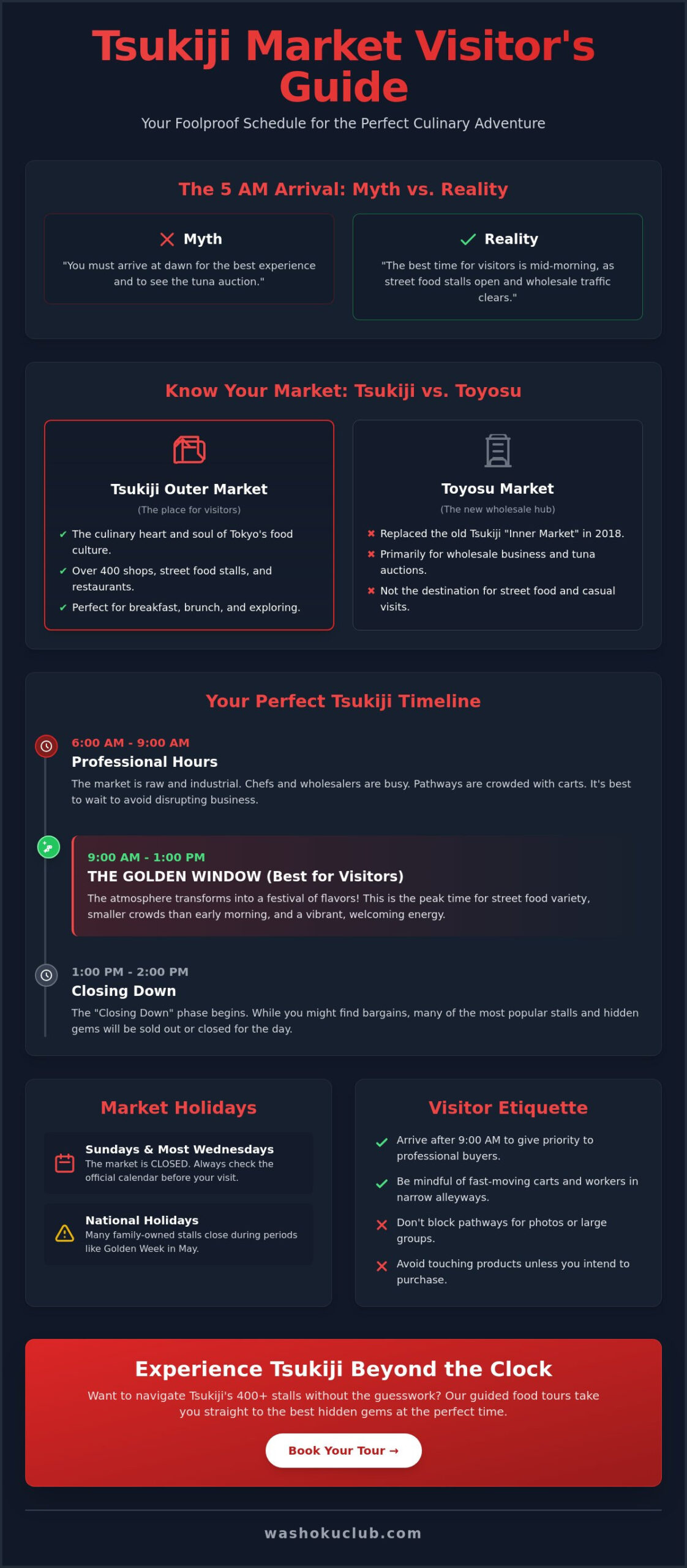
At 6:00 AM, the market is raw and industrial. You’ll hear the rhythmic clatter of carts and see artisans prepping their knives. It’s a time for serious business and early-morning “Ichiba-meshi” for the workers. By 10:00 AM, the scene transforms into a festival of flavors. The air fills with the scent of grilled scallops and sweet tamagoyaki. This is the peak for street food variety. If you arrive after 1:00 PM, the “Closing Down” phase begins. You might find a few bargains, but the most iconic hidden gems are often sold out by then.
The 2026 Calendar: Seasonal Shifts
Your 2026 visit should account for the seasons. Winter brings the rich, buttery flavors of fatty tuna and snow crab, which often means earlier crowds seeking these seasonal delicacies. Spring features delicate cherry blossom themed treats and fresh shellfish. We always recommend checking for National Holidays like Golden Week in May. Many family-owned stalls close during these times to rest. In the peak of summer, the heat can be intense. Some vendors might pack up by noon to protect the quality of their delicate seafood and ensure food safety.
The Professional vs. Public Divide: When Should You Arrive?
In the heart of Tokyo, respect is the silent ingredient in every dish. We often explain to our guests that the “Golden Rule” of the market is simple: professional buyers take priority before 9:00 AM. During these early hours, the narrow pathways are alive with the focused energy of chefs and wholesalers. It’s a time of high-stakes trade where heavy carts move quickly and large knives are at work. While the official tsukiji market hours technically begin at 6:00 AM for professionals, arriving as a visitor during this window can feel like stepping onto a busy factory floor. Out of respect for these local artisans, we recommend waiting until the market transitions into its welcoming retail phase.
There is a common fear among travelers that “everything will be gone” if they don’t arrive at dawn. This is a myth we love to debunk. While the wholesale trade happens early, the vibrant street food stalls and retail shops are just beginning to wake up as the sun rises higher. If you check the Tsukiji Outer Market official website, you’ll see that many of the most beloved eateries don’t even open their shutters until 8:30 AM or later. By arriving during the public window, you’ll find a much more relaxed atmosphere where shopkeepers have the time to share a smile or explain the origin of their seasonal catch. If you want to see these hidden gems without the stress of navigating the morning rush, joining a Tsukiji Outer Market Food Tour is the perfect way to find the best bites at the right time.
Why 9:00 AM is the Magic Hour
At 9:00 AM, the atmosphere shifts from industrial hustle to a sensory celebration. The professional priority period ends, and the market opens its arms to the world. You’ll notice the aroma of dashi and grilled seafood becoming more intense as street food vendors reach their peak. This is when the true “Washoku” spirit shines, as stalls offer everything from delicate tamagoyaki to fresh oysters. It’s the moment when the market becomes a community rather than just a workplace.
Comparison of Early vs. Late Arrival
Timing your culinary adventure changes what you’ll see, taste, and experience. Use this table to help plan your visit based on your priorities.
| Arrival Time | Crowd Type | Food Availability | Photo Ops |
|---|---|---|---|
| 6:00 AM | High (Pros) | Limited Street Food | Difficult/Risky |
| 9:00 AM | High (Tourists) | Peak Variety | Vibrant & Colorful |
| 12:00 PM | Moderate | Selling Out | Relaxed/Empty |
Understanding these shifting tsukiji market hours ensures you feel like a welcomed guest rather than an obstacle. By choosing the right window, you protect the livelihood of the market’s workers while maximizing your own culinary joy.
Market Holidays: Navigating Wednesdays and Sundays
One of the most heartbreaking sights in Tokyo is a hungry traveler standing before a row of lowered steel shutters. We’ve seen it happen too often: a visitor wakes up with visions of fatty tuna and sea urchin, only to realize they’ve arrived on a “Market Holiday.” While the tsukiji market hours generally follow a predictable pattern, the holiday schedule is a bit more nuanced than a typical business. Typically, the market rests on Sundays and National Holidays, but the real confusion for many guests often lies right in the middle of the week.
To navigate this like a local, you must understand the rhythm of the Tokyo Central Wholesale Market calendar. This schedule dictates when the fresh catch arrives from the sea. When the wholesale hub is quiet, many independent stalls in the Outer Market take the opportunity to rest, sharpen their knives, or spend time with family. You can find the most accurate and up-to-date schedule on the Official Tsukiji Outer Market Hours page. We always recommend our guests check this before finalizing their morning plans. A word of caution: beware of “Temporary Opening Days.” These are rare days when the market opens despite a holiday to meet high demand. They are often incredibly crowded as everyone rushes to get their seafood fix at once.
The Wednesday Mystery Solved
There is a common myth on travel forums that Tsukiji is closed every single Wednesday. That isn’t quite true. The market follows what is known as the “Zenshin” wholesale schedule. This means the wholesale hub often closes on Wednesdays, and about 60% to 70% of the stalls in Tsukiji follow suit. If you visit on a closed Wednesday, you might only see 30% of the stalls open. While you won’t go hungry, you’ll miss the full, bustling energy that makes the district so special. The association usually releases a detailed PDF calendar for 2026. Keeping a digital copy on your phone is a pro move for any food lover.
Alternative Plans for Market Holidays
If your schedule only allows for a visit on a Sunday or a closed Wednesday, don’t worry. The spirit of Japanese hospitality is alive throughout the city. You might consider exploring the historic streets and traditional flavors of Asakusa instead. It offers a different but equally authentic taste of old Tokyo. If you happen to be traveling south, the “Kitchen of Japan” at Kuromon Ichiba in Osaka provides a similar market culture with its own unique regional soul food. Even on closed days at Tsukiji, the local neighborhood shrines, like Namiyoke Inari, remain open. They offer a quiet, spiritual moment to appreciate the history of the people who have fed this city for generations regardless of the tsukiji market hours on the calendar.
The Best Time to Eat: A Local Guide’s Golden Window
There is a secret rhythm to the morning that only locals truly understand. While we’ve discussed how the tsukiji market hours technically begin at dawn, the true “Sweet Spot” for a culinary adventure falls between 9:30 AM and 11:30 AM. During this two hour window, the industrial hustle of the early morning has faded, and every artisanal stall is in full, vibrant bloom. The seafood is at its peak freshness, the grills are hot, and the shopkeepers have found their flow. Arriving during this time ensures you see the market in its most welcoming state, with the widest variety of street food available before the popular daily specials begin to sell out.
We always suggest that your first stop be Plat Tsukiji, the market’s dedicated information center. It opens its doors at 8:00 AM and serves as the perfect starting point to grab a map and get your bearings. The staff here are wonderful and can point you toward specific seasonal delicacies that might be hidden in the deeper alleys. If you want to skip the guesswork and head straight to the most authentic artisanal vendors, our Tsukiji Outer Market Food Tour is designed to hit these hidden gems exactly when their flavors are most potent.
As you explore, remember that respect is the most important seasoning in Japanese culture. While the smells of grilled scallops and wagyu are tempting, “eating while walking” is generally discouraged in the market. It’s a matter of safety and cleanliness in these narrow paths. Instead, follow the local etiquette: buy your treat, stand to the side of the stall to savor it, and use the vendor’s provided bin for your trash. This small gesture shows your appreciation for the craft and the community.
Breakfast in the Metropolis
For many, the ultimate Tsukiji experience is a traditional “Kaisendon” or seafood bowl. These vibrant bowls are a mosaic of the morning’s best catch. While famous sushi spots often have lines forming as early as 7:00 AM, don’t feel discouraged. We often find that the smaller, family-run stalls tucked away in the side streets offer an equally sublime experience with a fraction of the wait. These shops often specialize in a single type of fish or a specific regional style, providing a deeper connection to the “Washoku” tradition.
Navigating with Luggage and Strollers
The market alleys are charmingly narrow, which means large bags and strollers can become a hurdle during the peak 10:00 AM to 12:00 PM rush. If you’re traveling with little ones, Plat Tsukiji offers a stroller storage service for 500 yen, which is a lifesaver for navigating the crowds. There are also coin lockers located around the market perimeter. We recommend dropping off your heavy gear early so you can move freely and focus on the incredible aromas and tastes around you. Families with strollers will find the environment much more manageable if they aim for the earlier side of the golden window, before the densest crowds arrive at midday.
Experience Tsukiji Beyond the Clock with Washoku Club culture and food tours
Navigating the shifting tsukiji market hours is one thing, but truly tasting the soul of the district is another. We’ve spent years building deep, personal relationships with the artisans who call these narrow alleys home. When you join our Tsukiji Outer Market Food Tour, you aren’t just following a map; you’re becoming a welcomed guest of the family. The team at Washoku Club culture and food tours lives and breathes the market’s rhythm. This means we know exactly which master fishmonger is opening their shutters on those “tricky” Wednesdays when the rest of the world thinks the market is closed. We take the guesswork out of your morning so you can focus on the explosion of flavors and the warmth of Japanese hospitality.
The spirit of Washoku is about more than just food; it’s about the connection between the season, the chef, and the guest. In a place as vast as Tsukiji, it’s easy to feel like just another face in the crowd. We strive to bridge that gap. We want you to feel the pride in a shopkeeper’s voice as they explain the origin of their seaweed or the specific wood used to smoke their bonito. By joining our club, you’re choosing an experience that rejects tourist traps in favor of authentic, soul-stirring culinary traditions.
Why a Guided Experience Beats a Solo Map
It’s easy to fall into “analysis paralysis” when faced with hundreds of stalls all promising the best umami. A solo map can’t tell you which stall has the best seasonal fatty tuna today or which family has been perfecting their tamagoyaki recipe for over three generations. We take you off the beaten path to the hidden gems that rarely appear in English guidebooks. By focusing on the people behind the food, we turn a simple meal into a shared human story. You’ll learn the etiquette that makes you a respected guest rather than just a customer, ensuring your interactions with local artisans are meaningful and respectful.
Your Invitation to the Club
At Washoku Club culture and food tours, we believe that food is the most powerful way to connect cultures and build community. Our tours are curated to be evocative and sensory, mirroring the deliberate pace of a traditional Japanese meal. As you plan your 2026 journey, we encourage you to book your spot in advance. Peak travel seasons in Tokyo can be incredibly busy, and we keep our groups small to maintain that intimate, friendly touch. We invite you to join us and discover the authentic heart of Tokyo, ensuring you master the tsukiji market hours while creating memories that linger long after the last bite. Let us show you the soul of Japan, one delicious secret at a time.
Your Perfect Morning in Tokyo Awaits
You’ve now unlocked the secrets of the market’s clock. You know that the true magic happens between the early morning rush and the afternoon quiet, and you’re ready to navigate the “Wednesday mystery” with the confidence of a local. By mastering the tsukiji market hours, you’re setting the stage for a morning that tastes exactly like the heart of Japan. It’s about more than just fresh seafood; it’s about the connection to the artisans who keep these beautiful traditions alive through every slice of tuna and bowl of steaming dashi.
Since 2016, we’ve welcomed thousands of happy guests into our culinary family, sharing the hidden corners and family-run stalls that most travelers miss. Our expert-led journeys are deeply rooted in the spirit of authentic Japanese Omotenashi hospitality, ensuring you avoid the typical tourist traps while discovering the true soul of Washoku. Book your authentic Tsukiji Outer Market Food Tour with our expert guides today! We can’t wait to share a seat at the table with you and show you the Tokyo we love so dearly. Your seat is waiting, and the flavors of the market are calling your name.
Frequently Asked Questions
Is Tsukiji Market open every day?
Tsukiji follows a specific rhythm and is not open every day. Most shops close on Sundays, National Holidays, and designated Wednesdays according to the 2026 wholesale calendar. We always suggest checking the official schedule before you set your alarm. If you arrive on a closed day, you’ll find a quiet neighborhood with only a handful of independent restaurants serving guests.
What is the best time to arrive at Tsukiji Outer Market?
The best time to arrive is 9:00 AM to catch the peak of the action. This is when the professional priority period ends and the street food stalls fully open their shutters. Arriving during these tsukiji market hours ensures you find the widest variety of fresh seafood and seasonal treats before the most popular artisanal specials sell out for the day.
Can I visit Tsukiji Market on a Wednesday?
You can visit on a Wednesday, but you must check the calendar first. Many Wednesdays are “Market Holidays” where up to 70% of the stalls remain closed to rest. If you happen to visit on a closed Wednesday, the energy is much lower. We recommend planning your trip for a Tuesday, Thursday, or Friday to experience the full, vibrant spirit of the district.
What time do the restaurants in Tsukiji close?
Most restaurants and food stalls begin packing up around 2:00 PM. While the tsukiji market hours technically extend into the early afternoon, the best selection of “Ichiba-meshi” or market meals is found before 1:00 PM. A few specialized sushi spots might stay open later, but the majority of the 400 independent shops prefer to finish their day once the freshest morning catch is sold.
Are tourists allowed to see the tuna auction at Tsukiji?
Tourists cannot see the tuna auction at Tsukiji because it relocated to Toyosu Market in 2018. This is a common point of confusion for many visitors. While the wholesale “Inner Market” moved, the “Outer Market” at Tsukiji remains the heart of Tokyo’s food culture. It’s the best place to enjoy street food, artisanal kitchen tools, and authentic Japanese flavors in a historic setting.
How much time should I plan for a visit to Tsukiji?
We recommend planning for at least three to four hours to truly savor the experience. This gives you enough time to wander the narrow alleys, chat with local artisans, and enjoy a leisurely seafood breakfast. The market is a sensory adventure, and rushing through it means missing the subtle “Umami” and the quiet stories behind the family-run stalls that make it special.
Is there an entrance fee for the Tsukiji Outer Market?
There is no entrance fee to visit the Tsukiji Outer Market. It’s a vibrant, public district filled with independent businesses and street food stalls. You’re free to wander the alleys and soak in the atmosphere at no cost. We simply ask that you respect the local etiquette, such as eating at the stalls rather than walking, to keep the market beautiful for everyone.
What should I do if the market is closed during my visit?
If you find the market closed, don’t lose heart. You can explore the historic Namiyoke Inari Shrine nearby or head to the traditional streets of Asakusa for a different taste of old Tokyo. Some restaurants on the market’s perimeter stay open even on holidays. It’s a great chance to find a quiet spot for a bowl of authentic soul food away from the usual crowds.