
What if the “closed” market everyone talks about is actually where the most vibrant flavors still live? We understand the anxiety of planning your dream trip to Tokyo only to worry about missing the famous tuna auction or getting stuck in a sterile tourist trap. It is confusing to hear that the wholesale operations moved, yet the streets of the old neighborhood remain packed with hungry locals. Settling the tsukiji vs toyosu market debate isn’t just about picking a location on a map; it’s about choosing the specific atmosphere that speaks to your culinary soul.
In this guide, we’ll show you how to navigate these two landmark hubs like a true local, ensuring you find authentic Washoku flavors without the stress. Whether you want to witness the record-breaking ¥510.3 million tuna auctions at the high-tech Toyosu facility or get lost in the historic, bustling alleys of the Tsukiji Outer Market, we have you covered. We’ll provide the practical tips you need to master food etiquette and find the hidden gems that most visitors walk right past. Let’s discover which market will be the highlight of your 2026 journey.
Key Takeaways
- Understand the 2018 relocation to distinguish between Toyosu’s high-tech wholesale operations and Tsukiji’s thriving retail heart.
- Contrast the sensory experience of Tsukiji’s traditional, steam-filled alleys with the climate-controlled precision of Toyosu’s modern facilities.
- Decide between Tsukiji’s vibrant street food culture, featuring grilled scallops and wagyu, or the elite sushi breakfasts found at the new Toyosu site.
- Master the logistics of your tsukiji vs toyosu market visit by learning the best arrival times and how to navigate the lottery system for the tuna auction.
- Discover why a local guide is essential for bypassing tourist traps and connecting with the artisans who carry the soul of Japan’s seafood heritage.
The Great Marketplace Evolution: Understanding the Tsukiji and Toyosu Relationship
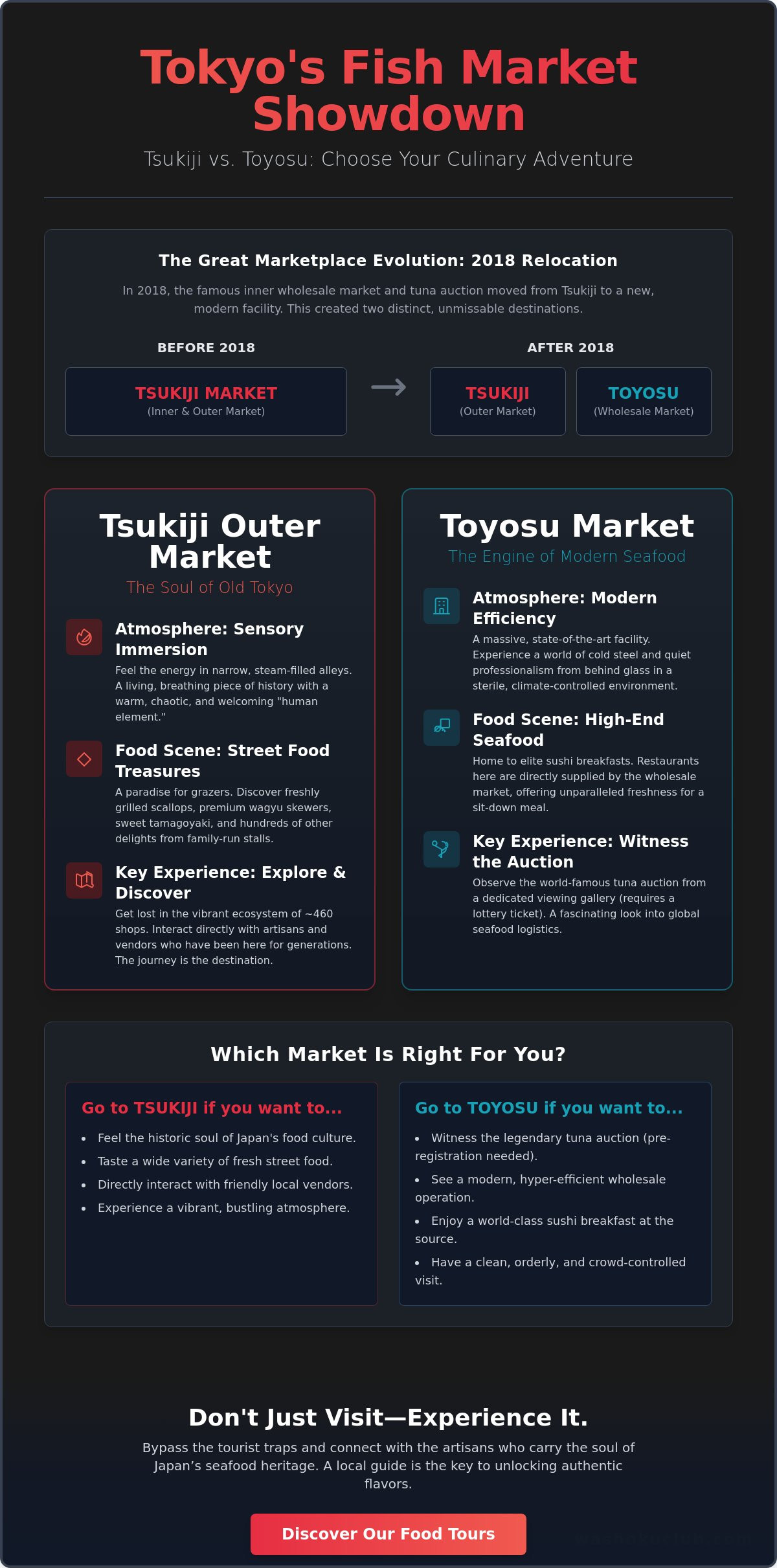
Rumors of Tsukiji’s demise have been greatly exaggerated. When the inner wholesale market packed up its scales and moved to its shiny new home in October 2018, many travelers mistakenly crossed the historic district off their itineraries. This was a massive mistake. To understand the tsukiji vs toyosu market dynamic, you have to see them as two halves of a single, beating heart. Toyosu acts as the high-tech engine, processing the world’s finest seafood with surgical precision, while Tsukiji remains the warm, welcoming soul where generations of families continue to share their craft.
To better understand how these two iconic locations interact in the modern era, watch this helpful comparison:
The Legacy of the Inner vs. Outer Market
The roots of this culinary landmark reach all the way back to the Edo period, serving as the primary kitchen for a growing nation. While the wholesale auctions were the headline act, the surrounding Outer Market evolved into a vibrant ecosystem of approximately 460 shops and restaurants. You can still feel the deep emotional bond between the artisans and this soil. Exploring the history of Tsukiji Market reveals how it survived fires and earthquakes, proving that its spirit isn’t tied to a specific building. Today, the Outer Market thrives as a sanctuary for Washoku lovers. If you want to experience this resilience firsthand, we often recommend joining a Tsukiji Outer Market Food Tour to step directly into the kitchens of families who have been here for decades.
Toyosu: The State-of-the-Art Successor
The move to Toyosu was driven by the necessity of modern food safety and the sheer scale of global logistics. The original site was charming but aging, struggling to keep up with the rigorous temperature controls required for premium seafood. Toyosu is a massive, sterile, and incredibly efficient facility designed to protect the integrity of the catch. It serves as a national hub where the famous New Year’s auctions now take place. Modernization here doesn’t mean a loss of quality; it means that the Umami of a bluefin tuna is preserved with the latest technology. It is a different kind of beauty, one of cold steel and quiet professionalism, which perfectly complements the chaotic warmth of the old neighborhood.
Atmosphere and Soul: Sensory Immersion vs. Modern Efficiency
Choosing your destination in the tsukiji vs toyosu market debate often comes down to a simple question: Do you want to feel the market’s pulse on your skin, or observe its precision from a distance? Tsukiji is a living, breathing relic where the “human element” isn’t just a buzzword; it’s the rough handshake of a vendor who has worked the same stall for forty years. Toyosu, by contrast, is a triumph of polished professionalism. It is a place where you witness the world’s most expensive seafood transactions through a sterile, glass-walled lens. Both are authentic Japanese experiences, but they cater to entirely different moods.
Getting Lost in the Alleys of Tsukiji
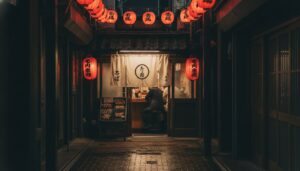
Walking into the Tsukiji Outer Market feels like stepping into a sensory embrace. The air is thick with the sweet, comforting aroma of roasted tamagoyaki and the briny, deep scent of simmering dashi. With approximately 460 shops and restaurants packed into narrow, winding alleys, the crowds are not an obstacle. They are the energy that keeps the heart of the district beating. You might stumble upon the Namiyoke Inari Shrine, a peaceful sanctuary that has protected the market’s residents since the 17th century. Here, you aren’t just a customer. You are a guest in a neighborhood where third-generation shopkeepers still sharpen their knives with a focus that borders on the sacred. To truly find the hidden gems tucked away in these corners, we suggest exploring with one of our group food tours in tokyo to ensure you don’t miss the stories behind the stalls.
The Observation Experience at Toyosu
If Tsukiji is a bustling kitchen, Toyosu is a high-tech laboratory. The experience here is museum-like, characterized by vast, temperature-controlled spaces and quiet efficiency. Navigating the three main buildings—Fish Wholesale, Fruit and Vegetable, and the Management wing—requires a bit more walking, but the reward is a bird’s-eye view of a global industry. The famous tuna auction is now viewed from elevated platforms behind thick glass. While this creates a barrier between you and the action, it offers a unique perspective on the sheer scale of the operation. You won’t find the steam or the shouting vendors here. Instead, you will find a profound respect for the discipline and logistics that define modern Japanese food culture. It is a clean, organized, and deeply impressive look at the future of seafood.
Ultimately, the choice depends on the “vibe” you seek. Tsukiji offers a rough-around-the-edges authenticity that invites you to participate in the chaos. Toyosu provides a sophisticated, structured environment that allows you to analyze the mechanics of Japan’s culinary engine. Both locations represent the spirit of Washoku, just at different stages of its evolution.
The Culinary Showdown: Street Food Treasures vs. High-End Seafood
The choice in the tsukiji vs toyosu market debate often depends on your appetite’s personality. Do you want to graze through a series of savory bites while standing on a bustling street corner, or do you prefer the quiet anticipation of a prestigious omakase counter? Tsukiji is the undisputed king of street food, where you can find everything from charred scallops to wagyu skewers. Toyosu, however, is where the sushi elite have established their new kingdom, following the wholesale market’s move to secure the absolute freshest catch available on the planet.
Must-Try Flavors in the Outer Market
Tsukiji’s streets are a playground for your palate. You shouldn’t leave without tasting the iconic tamagoyaki. This sweet, layered omelet is often served on a stick, offering a gentle hit of dashi-infused comfort that has been a market staple for generations. For those seeking the ocean’s raw power, vendors offer freshly shucked oysters and velvety sea urchin (Uni) that taste like the Pacific itself. Street food items here generally range from ¥200 to ¥1,000 per item. A full morning of grazing, including some high-quality souvenirs like dried bonito or artisanal knives, might cost between ¥8,000 and ¥10,000. It is a sensory journey where every turn reveals a new Umami treasure.
Dining at the Source in Toyosu
If you are a sushi purist, Toyosu is your pilgrimage site. Legendary names like Sushi Dai moved here to stay close to the auction floors, maintaining the tradition of serving fish that was swimming just hours prior. The concept of “Edomae” sushi, which involves specific curing and marinating techniques to enhance flavor, is practiced here with unparalleled precision. Be prepared for a wait; however, many find the experience of a sushi breakfast ranging from ¥2,000 to over ¥8,500 well worth the time. The quality is undeniable. In January 2026, the market saw a record-breaking ¥510.3 million sale for a single bluefin tuna, purchased by the operator of the Sushi Zanmai chain. This level of prestige attracts professional chefs from across Tokyo who still source their personal meals from these very stalls.
Whether you are diving into a vibrant bowl of kaisendon at Toyosu or sampling seasonal delicacies like firefly squid in the spring, both markets offer a direct connection to Japan’s seasonal cycles. To navigate these choices without the fear of landing in a tourist trap, we invite you to join one of our Tsukiji Outer Market Food Tour experiences. We love sharing the secret spots and family-run stalls that only locals know, ensuring your visit is as authentic as the flavors you’ll discover. Both hubs represent the pinnacle of Japanese seafood, but they offer two distinct ways to worship at the altar of fresh ingredients.
Planning Your Visit: A Practical Comparison for the Curious Traveler
Navigating the logistics of a tsukiji vs toyosu market visit requires a bit of strategy, but we are here to ensure your morning flows as smoothly as a master chef’s blade. While both locations are accessible within a single morning, they demand different levels of commitment from your alarm clock. If your heart is set on the drama of the tuna auction, Toyosu is your first stop. If you prefer a leisurely stroll through historic stalls with a coffee in hand, Tsukiji is where you’ll find your rhythm. Balancing these two culinary landmarks is about understanding the clock as much as the cuisine.
The Early Bird Guide to the Markets
Toyosu Market operates from 5:00 AM to 5:00 PM, but the real magic happens before the sun is fully up. The famous tuna auction begins around 5:30 AM. To secure a spot on the lower observation deck for the best view, you must apply for a lottery through the official website at least one month in advance. If you miss out, don’t worry; the second-floor visitor’s walkway is open to everyone without a reservation. By contrast, the Tsukiji Outer Market hits its “sweet spot” around 9:00 AM. While shops open as early as 5:00 AM and begin to wind down by 2:00 PM, arriving mid-morning allows you to avoid the early wholesale rush while still catching the vendors at their most energetic. For those traveling with children, Toyosu’s wide, flat corridors are much easier to navigate with a stroller than the narrow, slippery alleys of Tsukiji.
Market Etiquette for the Culturally Respectful Guest
Respect is the secret ingredient in every Japanese market. One of the most important rules to remember is the local custom of “no eating while walking.” In the Tsukiji Outer Market, it is polite to stand near the stall where you purchased your snack until you finish. This prevents accidental spills in the crowded alleys and shows respect for the artisan’s work. When it comes to photography, always look for signs or ask for permission before snapping a close-up of a vendor or their products. Many workers are focused on precision tasks and find flashes distracting. While Toyosu is more modernized, Tsukiji remains a traditional economy. Many small stalls still prefer cash, so we recommend carrying plenty of yen to ensure you don’t miss out on a rare find. To take the guesswork out of your morning and ensure you’re navigating these customs like a local, we invite you to book one of our group food tours in tokyo where our guides handle the etiquette for you.
Seeing both markets in one day is possible if you start at Toyosu for the 5:00 AM opening and take a short taxi or train ride to Tsukiji by 8:30 AM. It is a whirlwind of an experience that showcases both the industrial power and the neighborhood heart of Tokyo’s seafood scene. Whether you choose one or both, arriving with an open mind and a respectful attitude ensures you’ll be welcomed with the legendary hospitality that defines the Washoku spirit.
Beyond the Stalls: Immersing Yourself in Authentic Japanese Food Culture
Your journey through the tsukiji vs toyosu market debate shouldn’t end with a full stomach and a few photographs. It is a portal into the very soul of Japanese life. We believe that the true magic of these hubs lies in the stories of the people who call them home. When you look past the stainless steel of Toyosu or the weathered wood of Tsukiji, you find a commitment to excellence that has defined Washoku for centuries. It is about a deep respect for the ingredient, the season, and the guest who travels miles to taste it. This is where food stops being just fuel and starts being a story.
The Value of a Passionate Local Guide
Walking through these markets alone is a visual feast, but a local guide acts as your cultural translator. They bridge the gap between a curious visitor and a busy vendor, turning a simple transaction into a meaningful connection. We take pride in introducing you to the hidden gems that don’t appear on tourist maps, where you can taste the finest seasonal flavors without the long lines. These are the places where third-generation shopkeepers might share a secret about their dashi or show you a rare ingredient that never makes it to the supermarket shelves. To truly dive deep into these traditions, we invite you to explore our curated food tours for an immersive experience that feels like visiting a friend’s neighborhood.
Embracing the Spirit of Washoku
At the heart of every market visit is the concept of Shun, or seasonality. It is the belief that every ingredient has a peak moment of flavor and nutritional value. Whether it is the first succulent peaches of summer or the fatty winter yellowtail, the markets are a living calendar of Japan’s natural cycles. This connection to the earth is what makes Japanese cuisine so vibrant and healthy. It is a philosophy that encourages us to slow down and appreciate the present moment through every bite we take.
- Connecting with Artisans: Learn why a specific knife shape matters or how a tea blender achieves the perfect balance.
- The Umami Factor: Discover the building blocks of Japanese flavor, from fermented miso to aged kelp and dried bonito.
- Community Over Commercialism: Join a group of food lovers who value heritage and soul food over generic tourist traps.
Our philosophy at Washoku Club culture and food tours is simple: we treat every guest like family. We want you to leave not just with a souvenir, but with the confidence to explore Japanese food culture like a local. By understanding the “why” behind the flavors, you can take a piece of this authentic experience home with you, enriching your own kitchen for years to come. Deciding between the tsukiji vs toyosu market experience is just the beginning of your adventure. Whether you choose the modern energy of Toyosu or the historic charm of Tsukiji, you are now part of our culinary community. We look forward to welcoming you to the table.
Your Journey Through Tokyo’s Culinary Heart
Your exploration of the tsukiji vs toyosu market landscape reveals that Tokyo’s seafood scene is far from a simple choice between old and new. It’s a harmonious balance where Toyosu offers the high-tech precision of a global industry and Tsukiji preserves the intimate, sensory traditions of Washoku. Whether you’re drawn to the early morning drama of a professional auction or the comforting steam of a hidden alleyway stall, you’re stepping into a culture that honors the sea with every bite.
At Washoku Club culture and food tours, we’ve been leading expert tours since 2016 with a deep commitment to the spirit of Japanese hospitality. We believe the most authentic flavors are found off the beaten path, tucked away in the stalls of families who’ve perfected their craft over generations. We’d love to welcome you as our guest and share the secrets that most visitors never find. Join our Tsukiji Outer Market Food Tour for an authentic taste of tradition! Let’s discover the seasonal treasures and hidden gems together, ensuring your 2026 adventure is filled with incredible Umami and warm memories. We look forward to seeing you at the table.
Frequently Asked Questions
Is Tsukiji Market still open in 2026?
Yes, the Tsukiji Outer Market is very much alive and remains a thriving culinary destination in 2026. While the inner wholesale operations moved to Toyosu years ago, over 400 shops and restaurants continue to serve locals and travelers daily. It is the perfect place to enjoy traditional street food and find specialized kitchen tools. We love seeing our guests discover that the heart of this historic neighborhood never stopped beating.
Can I see the tuna auction at Toyosu without a reservation?
You can view the tuna auction from the upper visitor’s gallery without any reservation. However, if you want to access the lower observation deck for a closer look and a more immersive sound experience, you must apply for a lottery through the official Toyosu Market website at least one month in advance. Both options require an early start, as the action begins around 5:30 AM. It is a spectacular way to witness the precision of Japan’s seafood industry.
Which market is better for a family with young children?
Toyosu Market is generally the more comfortable choice for families with young children due to its modern, climate-controlled facilities and wide, stroller-friendly corridors. It offers a more structured and predictable environment for little ones. While the Tsukiji Outer Market is vibrant and exciting, its narrow, bustling alleys and uneven surfaces can be challenging to navigate during peak hours. We often recommend Toyosu for a stress-free morning for those traveling with a full family group.
What should I wear when visiting the fish markets?
We recommend wearing comfortable, closed-toe shoes with good grip, as market floors can often be wet or slippery. Dress in layers to stay comfortable while moving between the chilly auction floors and the warmer restaurant areas. Since these are active places of business, it is best to avoid loose clothing or long scarves that could get caught in equipment. Dressing practically ensures you can focus entirely on the incredible aromas and flavors around you without distraction.
Is it worth visiting Toyosu if I don’t want to see the tuna auction?
It is absolutely worth visiting Toyosu even if you skip the early morning auction. The facility houses some of the city’s most elite sushi restaurants and seafood bowl specialists who source their fish directly from the floor. Additionally, the Senkyaku Banrai complex, which opened in 2024, offers an Edo-inspired village with diverse dining options and a 24-hour onsen. It provides a fascinating look at the modernization of Japanese food culture in a clean, organized setting.
How much should I budget for a food-focused morning at the markets?
When considering the tsukiji vs toyosu market experience, your budget will vary based on your appetite. Street food snacks in Tsukiji usually cost between ¥200 and ¥1,000 per item. A high-end sushi breakfast at Toyosu typically ranges from ¥2,000 to over ¥8,500 for a premium set. If you plan on a full meal plus some artisanal souvenirs like high-quality tea, budgeting between ¥8,000 and ¥10,000 per person will allow you to indulge comfortably.
Do the markets close on certain days of the week?
Most market operations are closed on Sundays, national holidays, and many Wednesdays throughout the year. It is essential to check the official market calendar before you set out to avoid disappointment. While some restaurants in the Tsukiji Outer Market or the Toyosu Senkyaku Banrai complex may remain open on these days, the wholesale atmosphere and many specialty stalls will be quiet. We always help our guests pick the best day to ensure an authentic experience.
Can I buy fresh fish to take home at both markets?
You can purchase fresh seafood at both locations, but the experiences differ significantly. Tsukiji Outer Market is designed for retail, making it easy to buy smaller portions of fish, dried goods, or seasonal delicacies to enjoy later. Toyosu has a dedicated retail area called Uogashi Yokocho where visitors can buy professional-grade ingredients and specialized condiments. Keep in mind that international travel regulations often restrict taking fresh fish across borders, so focus on items you can enjoy locally during your stay.