
You might assume that choosing between a Tsukiji vs Shibuya food tour is simply a matter of whether you prefer an early morning coffee or a late-night cocktail, but the reality is far more nuanced. The obvious choice between a fish market and a neon-lit district might actually be the opposite of what your palate craves. It’s a choice between touching the historic soul of Japanese heritage or diving headfirst into the vibrant, pulsing energy of Tokyo’s culinary future.
We know that planning your 2026 trip comes with a lot of pressure. You don’t want to fall into a tourist trap, and the anxiety of navigating 400 crowded stalls in the Tsukiji Outer Market or finding a hidden izakaya in Shibuya’s maze-like alleys is real. We promise to help you clear that fog. You’ll gain a deep understanding of the unique vibe each tour offers, ensuring you feel confident booking the experience that best fits your family or group.
We’ll explore the delicate Umami of freshly prepared Washoku at the market and compare it to the sizzle of modern soul food near the Scramble Crossing. By the time we’re done, you’ll know exactly which specific dishes to expect and which neighborhood truly speaks to your appetite.
Key Takeaways
- Contrast the serene morning focus on Washoku heritage in Tsukiji with the high-energy evening “soul food” scene in the heart of Shibuya.
- Learn how to navigate the 400 plus stalls of the Tsukiji Outer Market by connecting with the artisans, tea masters, and generational fishmongers who define Japan’s kitchen.
- Discover why a Tsukiji vs Shibuya food tour comparison is essential for understanding the transition from traditional craftsmanship to modern Tokyo street food trends.
- Use our practical decision framework to determine which experience fits your group’s logistics, including specific advice for families with strollers or travelers with picky eaters.
- Understand how the Washoku Club philosophy turns you from a tourist into a welcomed guest at authentic, family-run establishments that most visitors never find.
Morning Heritage vs. Evening Energy: The Fundamental Comparison
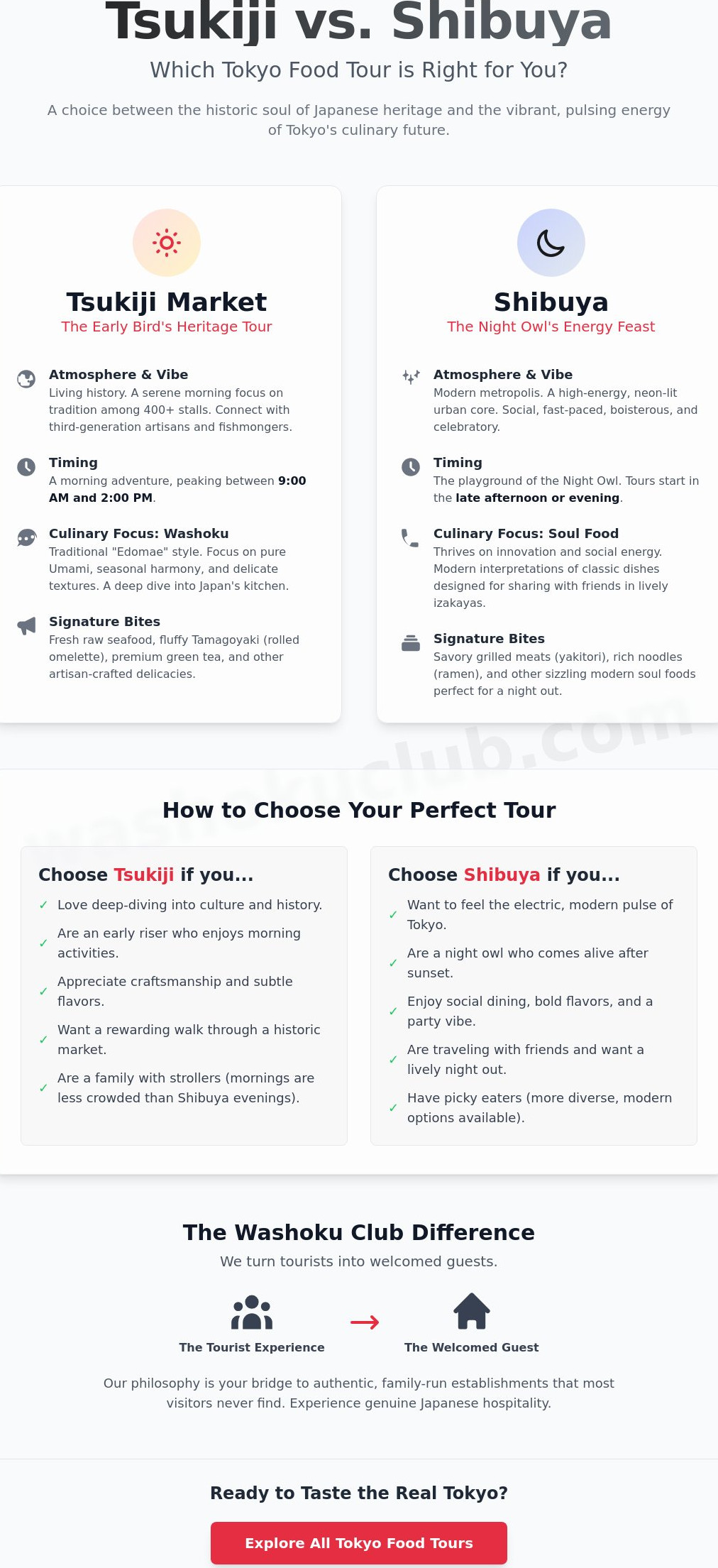
Deciding between a Tsukiji vs Shibuya food tour feels like choosing between the two beating hearts of Tokyo. One represents the dawn of Japanese tradition, where the scent of salt spray and the rhythmic tapping of artisan knives define the morning air. The other captures the electric pulse of the city’s future, where neon lights flicker over sizzling grills and the “soul food” of the urban streets takes center stage. These aren’t just different neighborhoods; they are distinct culinary philosophies that every food lover should experience at least once.
We believe that understanding the rhythm of these areas is just as important as the food itself. In Tsukiji, the focus is on Washoku, the traditional dietary culture of Japan that emphasizes seasonal harmony and the pure Umami of fresh ingredients. Shibuya, by contrast, thrives on innovation and the social energy of the Izakaya. To better understand this concept, watch this helpful video:
The Atmosphere: Traditional Market vs. Modern Metropolis
The Tsukiji Outer Market is a place of living history. Even after the inner wholesale market moved to Toyosu in 2018, the outer market remains a vibrant hub with over 400 shops and stalls. You’ll find yourself walking through narrow alleys lined with historic wooden architecture, where third-generation fishmongers and tea masters greet you with a warmth that feels like stepping back in time. To understand why this area remains so special, it helps to look at the history of the Tsukiji Market, which evolved from a wholesale hub into the beloved retail destination we explore today.
Shibuya offers a complete sensory shift. As the sun sets, the area transforms into a high-energy urban core. The social dining experience here is fast-paced and inclusive, centered around the backstreet eateries that feed the city’s modern workforce. It’s a world of vibrant colors and crowded crossings, where the food is designed to be shared among friends in a lively, informal setting. Whether you choose the morning light or the evening glow, you can find our curated list of group and private food tours in Tokyo to help guide your journey.
Quick Comparison: Timing, Vibe, and Culinary Focus
To help you decide, think of yourself as either “The Early Bird” or “The Night Owl.” The Tsukiji experience usually peaks between 9:00 AM and 2:00 PM. It’s a morning adventure focused on delicate textures, fresh raw seafood, and the subtle flavors of tamagoyaki or high-quality green tea. The walking is intensive but rewarding, as every corner reveals a new hidden gem of craftsmanship.
Shibuya is the playground of the Night Owl. Tours here often begin in the late afternoon or evening, focusing on savory grilled meats, rich noodles, and modern interpretations of classic Japanese dishes. The vibe is boisterous and celebratory, making it an excellent choice for those who want to feel the modern pulse of Tokyo. Both tours are essential pillars of Japanese gastronomy, but they cater to very different appetites and energy levels.
The Tsukiji Outer Market: A Deep Dive into Japan’s Kitchen
Tsukiji isn’t just a place to eat; it’s the cultural heartbeat of Tokyo’s culinary identity. While we previously discussed the high-energy contrast of a Tsukiji vs Shibuya food tour, it’s here in the narrow alleys of the market where the true depth of Washoku is revealed. The air is thick with the scent of roasted green tea and the briny promise of the morning’s catch. You’ll witness the “Edomae” style in action, a traditional approach that prioritizes local, seasonal seafood prepared with a level of precision that borders on the sacred. Freshness here isn’t a goal; it’s a cultural obsession that has spanned generations.
The market serves as a living museum of Japanese craftsmanship. Every stall tells a story of dedication, from the precision of the knife makers to the expertise of the dried bonito wholesalers. For a deeper look at the market’s layout and historical significance, the official guide to Tsukiji Outer Market provides a wonderful overview of why this district remains essential to the city’s soul.
Signature Flavors: Beyond Just Fresh Sushi
Most visitors rush for the nigiri, but the true treasures are often found in the smaller, specialized stalls. You haven’t truly experienced Tsukiji until you’ve tasted the fluffy, golden layers of Tamagoyaki. This iconic rolled omelet is infused with a secret dashi recipe unique to each family vendor, offering a savory-sweet explosion of Umami in every bite. Between these rich flavors, a cup of premium green tea serves as more than just a drink; it’s a palate-cleansing ritual that prepares you for the next discovery. We love sharing “market snacks” meant to be enjoyed on the go, such as grilled scallops topped with uni or seasonal wagashi that reflect the changing months.
The Cultural Heart: Meeting the Artisans
What truly sets this experience apart is the human connection. When choosing between a Tsukiji vs Shibuya food tour, consider that Tsukiji offers a rare chance to meet the artisans who sustain Japan’s kitchen. We’ll introduce you to the third-generation fishmongers who can identify the best tuna with a single glance and the tea masters who have spent decades perfecting their blends. These family-owned stalls have survived decades of change, and their respect for ingredients is palpable. By joining one of our group food tours in Tokyo, you move beyond being a spectator to becoming a welcomed guest in their world. This connection transforms a simple meal into a shared story of heritage and hospitality.
Shibuya Food Tours: Exploring the Pulse of Modern Flavors
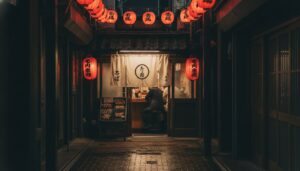
As the sun dips below the horizon, Shibuya transforms into a playground for the senses. The electric hum of the world’s busiest crossing fades into the background as we lead you into the warm, glowing lanterns of the backstreets. While a Tsukiji vs Shibuya food tour comparison often begins with the clock, the real difference lies in the social energy of the evening. Here, the “soul food” of modern Japan comes alive in intimate spaces where the chefs are as much a part of the meal as the ingredients themselves. It is a world of shared plates and spirited conversation, far removed from the quiet, artisanal focus of the morning markets.
We love the way the city’s atmosphere shifts as the day ends. The transition is palpable. One moment you are standing in the middle of a modern metropolis, and the next, you are tucked away in a hidden alleyway where the air is thick with the savory aroma of charcoal and soy sauce. These hidden gems are the pulse of the city, offering a modern interpretation of classic Japanese dishes that reflect the vibrant, ever-changing nature of Tokyo.
Modern Classics: Wagyu, Okonomiyaki, and Street Gems
The culinary landscape of Shibuya is a beautiful collision of tradition and urban innovation. Tasting premium Wagyu in this setting is an experience in texture and Umami, often served in cozy spots where the focus is on the quality of the cut and the precision of the grill. You’ll also encounter the interactive joy of “DIY” dishes like Okonomiyaki or Monjayaki. These savory pancakes are the ultimate communal food, often cooked right at your table on a hot griddle. Global influences have certainly touched the city, but these street gems remain deeply rooted in local tastes. Whether it’s a modern twist on a classic gyoza or a perfectly seasoned skewer of yakitori, the focus remains on authentic flavors that satisfy the soul after a long day.
The Izakaya Experience: A Social Masterclass
To truly understand Tokyo’s night owl culture, you must step inside an Izakaya. These establishments serve as the city’s communal living rooms, where friends and colleagues gather to share small plates and stories. The etiquette of “Kanpai” is your first lesson in Japanese hospitality; it’s a shared moment of celebration that unites everyone at the table. However, many of the most authentic Izakayas are tucked away in narrow alleys with handwritten menus that are notoriously difficult for visitors to navigate.
A guide is your essential bridge to these hidden gems, translating not just the language but the cultural nuances of the experience. We take pride in introducing you to the families behind the counter, ensuring you feel like a welcomed guest rather than just a customer. For those looking to experience this vibrant energy, our Shibuya food tour provides an off-the-beaten-path journey into the heart of Tokyo’s modern flavors, moving you away from the tourist traps and into the real city.
Decision Framework: Which Experience Fits Your Travel Style?
We often hear the question: “Can’t I just walk through these areas myself?” While you certainly can, the value of a Tsukiji vs Shibuya food tour lies in the cultural translation. In Tsukiji, with its 400 plus shops, it’s easy to feel overwhelmed by the sheer volume of choices. A guide acts as your bridge, helping you avoid tourist traps and introducing you to the people behind the food. Without a local expert, you might miss the subtle stories of the third-generation artisans we’ve discussed in previous sections.
Budget and energy levels are also practical factors to weigh. Market strolls in the morning are generally lighter on the wallet as they focus on street snacks and small bites. Evening izakaya hops in Shibuya tend to be a more significant investment because they include multiple courses and drinks. Consider your “tour fatigue” as well. If you’re early in your trip and battling jet lag, the morning light of Tsukiji might be more forgiving than the late-night energy of Shibuya.
The Family-Friendly Factor
Kids often struggle with the early start of a fish market, but they love the “kid-approved” snacks found in both locations. In Tsukiji, the sweet, custard-like Tamagoyaki is always a hit with younger palates. In Shibuya, the interactive nature of savory pancakes like Okonomiyaki keeps them engaged and entertained. If you’re traveling with a stroller, the wide streets of Shibuya’s modern core are much easier to navigate than the narrow, often slippery alleys of the market. We recommend checking out our family friendly food tours in tokyo to find an experience that keeps everyone happy and fed.
Photography and Visual Storytelling
The morning market offers beautiful natural light, perfect for capturing the vibrant colors of seasonal produce and the glistening scales of fresh seafood. Etiquette is key here; always ask before photographing an artisan at work, as these are active places of business. Shibuya is all about the “neon bokeh.” The glow of the lanterns and the steam rising from a street grill create a moody, cinematic feel. It’s a different kind of magic that captures the urban soul of the city. Whether you prefer the crisp details of the market or the vibrant blur of the city lights, both locations offer incredible visual rewards for the patient storyteller.
Why Washoku Club is Your Bridge to Authentic Japan
At Washoku Club, we don’t just see ourselves as tour operators; we’re your local friends eager to share the secrets of our home. Whether you’re still debating a Tsukiji vs Shibuya food tour or planning to explore both, our philosophy remains the same. We want to move you from the position of a curious tourist to that of a welcomed guest. This isn’t about ticking boxes on a “must-eat” list. It’s about the connection you feel when a third-generation artisan smiles as you enjoy their craft. We believe that the best way to experience Japan is through its people and the stories they tell through their food.
Our guides are the heart of this bridge. They don’t just translate words; they translate culture. They’ll explain why a specific seasonal ingredient matters or the history behind a family-run stall that’s survived for decades. We firmly reject “tourist traps” that offer surface-level experiences. Instead, we’ve spent years building relationships with local families to ensure you’re tasting the most authentic soul food Tokyo has to offer. When you join our club, you’re joining a community of food lovers who value the story behind every bite.
Beyond the Menu: Cultural Immersion
A great meal is about more than just flavor. It’s about understanding the etiquette of the table, the history of the district, and the culinary techniques that define Washoku. On our tours, you’ll learn the proper way to use seasonings and the cultural nuances that make every bite more meaningful. We take pride in uncovering hidden gems that are only accessible through these long-standing local relationships. We invite you to explore all our guided culinary experiences to find the perfect match for your group’s appetite, whether you’re craving the morning market or the evening neon.
Tailored Experiences for Every Palate
We know that every traveler is different. That’s why we offer flexibility through small group food tours in Tokyo and private excursions that can be tailored to your specific needs. Whether you’re looking for a kids-friendly tour of Tokyo or a deep dive into an A5 Wagyu Yakiniku Experience, our commitment to Omotenashi remains unwavering. This spirit of Japanese hospitality means we anticipate your needs before you even have to ask. We’re here to ensure your journey is seamless, delicious, and deeply human. Your seat at the table is waiting.
Your Seat at the Table Awaits
Choosing between the historic morning light of the market and the electric pulse of the city’s neon alleys is a wonderful dilemma to have. You’ve discovered that Tsukiji offers a deep connection to Japan’s artisanal heritage, while Shibuya provides a high-energy dive into modern soul food and communal dining. Whether you prefer the delicate Umami of fresh Washoku or the savory sizzle of an evening izakaya, the Tsukiji vs Shibuya food tour comparison highlights the beautiful diversity of Tokyo’s culinary landscape.
Since we were founded in 2016, our focus has been on sharing the stories of the families and artisans who make Japanese cuisine so special. Our expert guides specialize in finding off-the-beaten-path hidden gems that a typical tourist would never find. We invite you to become part of our warm, inclusive community of global food lovers who value connection over a simple transaction. It’s time to move beyond the menu and experience the true heart of Japanese hospitality.
Join the Washoku Club and discover authentic Japan through its flavors. We’re eager to welcome you into our family and share the secrets of our favorite neighborhood spots. Your next great adventure is just a bite away.
Frequently Asked Questions
Is a food tour in Japan worth the cost if I am on a budget?
A food tour is an investment in your travel experience that saves you from the hidden costs of overpriced tourist traps. We provide the cultural context and local secrets that transform a simple snack into a memorable lesson in Washoku. You’re paying for the expertise of a guide who ensures every bite is authentic and meaningful, rather than gambling your budget on random stalls that might not deliver true quality.
How much walking is involved in a typical market vs. urban food tour?
Most tours involve about two to three kilometers of walking at a leisurely, inclusive pace. The market environment requires a bit more agility to navigate its 400 plus narrow, bustling stalls and potentially slippery floors. Urban tours in districts like Shibuya cover similar distances but on flatter, modern pavement, making it a slightly different physical experience. We always recommend wearing comfortable shoes to fully enjoy either adventure.
Can these food tours accommodate dietary restrictions like gluten-free or vegetarian?
We strive to welcome every guest, and many of our experiences can be tailored for gluten-free or vegetarian needs with advance notice. While certain market areas are heavily focused on seafood, we can often find delicious plant-based alternatives like seasonal pickles, grilled vegetables, or specific sweets. Please let us know your requirements when booking so we can ensure your culinary journey is both safe and delicious for everyone in your group.
What is the best time of year to take a food tour in Japan?
Spring and autumn are the most magical times to explore the city’s culinary scene. The mild weather is perfect for walking, and the seasonal ingredients are at their peak, from the delicate cherry blossom treats in April to the rich, earthy flavors of the autumn harvest in October. These seasons offer the most vibrant sensory experiences, though the winter months bring their own comforting soul food treasures that are equally delightful.
Do I need to speak Japanese to enjoy the hidden izakayas in the city?
You don’t need to speak a word of Japanese to enjoy the city’s hidden gems when you’re with a local guide. Many of the most authentic back-alley izakayas have only handwritten menus in Japanese, which can be daunting for solo travelers. We act as your cultural bridge, handling the ordering and explaining the etiquette so you can focus entirely on the flavors and the vibrant social atmosphere.
What happens if it rains during a scheduled walking food tour?
Our tours proceed rain or shine, as a little weather is just part of the authentic Tokyo experience. Much of the market area is covered, providing plenty of shelter while you sample fresh treats. For urban tours, we’ll navigate through covered walkways and cozy indoor eateries to keep you dry. We simply recommend bringing a small umbrella or raincoat to ensure you stay comfortable during the short walks between stops.
Are the food portions enough to count as a full meal?
You certainly won’t leave hungry, as the portions on a Tsukiji vs Shibuya food tour are designed to equal a very generous full meal. We pace the experience carefully so you can enjoy a wide variety of small plates and snacks without feeling overwhelmed too quickly. Most guests find that the combination of multiple tastings and a final main dish leaves them feeling perfectly satisfied and well-fed.
How far in advance should I book my food tour for the 2026 season?
We recommend booking your spot three to six months in advance for the 2026 season. Popular times like the cherry blossom peak or autumn foliage periods fill up very quickly due to high international demand. Securing your date early ensures you get the specific experience and time slot that best fits your travel itinerary, especially if you’re looking for a private or family friendly food tour.