
What if I told you that the most iconic culinary experience in modern Japan isn’t found at a sushi counter, but on a plate of jiggling, gravity-defying clouds? You’ve likely seen the viral videos of these wobbling towers and felt a mix of intense craving and hesitation. We know the feeling. It’s easy to worry about falling for a hollow tourist trap or losing half your afternoon to a grueling two hour wait. You’re looking for the real deal, and we’re here to ensure you find it. These fluffy pancakes tokyo is renowned for are a masterpiece of aerated engineering, and they require a bit of insider strategy to enjoy properly.
In this guide, we’ll peel back the curtain on the “fuwa fuwa” phenomenon to help you distinguish between a classic hotto keiki and a true soufflé pancake. You’ll discover our handpicked shortlist of must-visit shops, including spots like Micasadeco & Cafe where the signature ricotta cheese stacks cost ¥1,750. We’ll also share the practical hacks you need to bypass the longest lines and secure those rare, limited-portion plates. Whether you’re joining Washoku Club for a food tour or exploring this culinary destination on your own, you’re about to master the art of the perfect Japanese breakfast.
Key Takeaways
- Master the art of the perfect jiggle by understanding the meringue-based science that separates authentic soufflé pancakes from standard breakfast fare.
- Navigate the city’s top destinations with ease, from the honey-drizzled stacks at A Happy Pancake to the seasonal fruit masterpieces found at Flipper’s.
- Learn the local hacks for finding fluffy pancakes tokyo shops without the wait, including the best time of week to visit and which digital reservation apps to download.
- Respect the “30-second rule” and other essential cafe etiquette to ensure your delicate dessert doesn’t deflate before you take your first bite.
- Discover how to balance your sugar rush by weaving these sweet treats into a larger culinary journey, such as a savory food tour through Tsukiji or Shibuya.
The Science of the Soufflé: What Defines a True Japanese Fluffy Pancake?
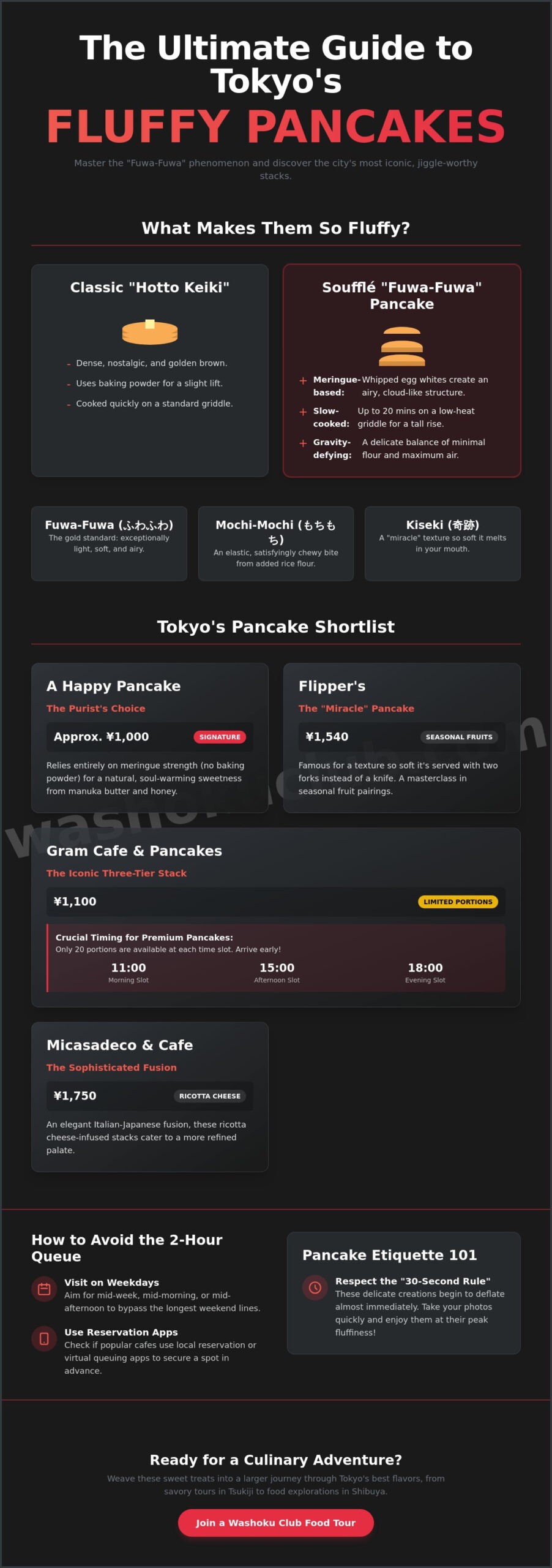
To understand why fluffy pancakes Tokyo foodies line up for hours, you have to look beyond the surface of the plate. These aren’t your typical flat, syrupy breakfast stacks. They’re a gravity-defying innovation that bridges the gap between a traditional dessert and a high-level culinary experiment. While a classic Japanese “hotto keiki” is dense, golden, and nostalgic, the modern soufflé style is all about the air. The secret to that signature jiggle is a delicate ratio of whipped meringue to a minimal amount of flour. It’s a slow-cooking process that requires immense patience, often taking up to 20 minutes to reach perfection on a low-heat griddle. This creates a structure that’s firm enough to stand tall but delicate enough to dance with every movement of the plate.
The Meringue Method: A Lesson in Precision
Creating these edible clouds requires a level of “Shokunin” dedication that we deeply admire in Japanese kitchens. Chefs must whip egg whites into stiff, glossy peaks before folding them into the yolk base with extreme care. If they’re too aggressive, the air bubbles collapse, and the pancake loses its lift. This process is deeply rooted in The Soufflé Technique, which prioritizes structure and lightness above all else. Many top-tier shops use specialized copper griddles because they distribute heat with incredible consistency. This low, steady temperature ensures the batter cooks through without burning the exterior, allowing the stack to rise high and proud. When you’re waiting at a cafe, remember that each plate is being made to order from scratch. It’s a labor of love that simply cannot be rushed.
Texture Profiles: From “Melt-in-the-Mouth” to “Elastic”
In Japan, we use the term “fuwa-fuwa” to describe something exceptionally light and airy. It’s the gold standard for most fluffy pancakes Tokyo destinations, but the texture isn’t one-size-fits-all. Some artisans blend their flour with rice flour or glutinous starches to create a “mochi-mochi” or elastic quality that offers a satisfying, chewy bite. The “Kiseki” pancake is a specific style that prioritizes a melt-in-the-mouth sensation so soft you can almost eat it with a spoon. A crucial part of this flavor profile is the “egginess” factor. Top chefs source premium local eggs with deep orange yolks to provide a rich, custard-like taste that balances the sweetness of the toppings. This focus on high-quality ingredients is exactly what we celebrate on our Shibuya Food Tour, where craft and tradition meet modern trends. We believe that understanding the people and the precision behind the food makes every bite taste that much better.
Tokyo’s 2026 Shortlist: The Top 5 Fluffy Pancake Destinations
Finding the most authentic fluffy pancakes Tokyo has to offer is a journey into the heart of Japanese “kawaii” culture and culinary precision. We’ve spent years tasting our way through the city’s bustling neighborhoods to bring you a shortlist that avoids the tourist traps and delivers true “fuwa-fuwa” bliss. Whether you’re a first-time visitor or a seasoned food lover, these five destinations represent the gold standard of the soufflé movement in 2026.
- A Happy Pancake (Shiawase no Pancake): This is the destination for purists who value natural ingredients. They famously avoid baking powder, relying entirely on the strength of their meringue. Their signature plate, starting at approximately ¥1,000, features manuka butter and high-grade honey that creates a soul-warming sweetness.
- Flipper’s: Known globally for their “Miracle Pancake,” Flipper’s offers a texture so soft it’s often served with two forks instead of a knife. Their signature plate is verified at ¥1,540, and they are masters at incorporating seasonal Japanese fruits into their ever-changing menu.
- Gram Cafe & Pancakes: If you want the iconic three-tier stack, this is the place. Be warned that their “Premium Pancakes” (¥1,100) are only served at 11:00, 15:00, and 18:00. With only 20 portions available per time slot, it’s a true test of timing and dedication.
- Micasadeco & Cafe: For a slightly more sophisticated palate, we recommend their ricotta cheese pancakes. Priced at ¥1,750, these stacks offer a subtle Italian-Japanese fusion that balances the “egginess” of the batter with a creamy, savory undertone.
- Ain Soph Journey: We haven’t forgotten our vegan friends. Ain Soph serves a plant-based version for ¥1,620 that defies logic. It manages to capture that elusive airy lift without using any animal products, making it a must-visit for ethical foodies.
The “Big Three” vs. Boutique Cafes
While major chains like Gram and A Happy Pancake offer incredible consistency across their many locations, don’t overlook the charm of independent boutiques. Chains are reliable, but smaller shops often experiment with unique flour blends or “savory-sweet” options like bacon and eggs benedict. If you find the sugar content of a traditional fruit stack overwhelming, look for shops like Flipper’s that offer “meal pancakes” to ground your palate. Balancing these flavors is a key part of the Japanese dining experience, much like the way we structure our Shibuya Food Tour to include a variety of sensory profiles.
Seasonal Specials and Limited-Edition Toppings
In Japan, we celebrate “Shun,” or the peak of a season’s flavor. In 2026, keep an eye out for Uji Matcha infusions or Hokkaido cream toppings that elevate the humble pancake into a gourmet masterpiece. Spring brings the delicate pink of Sakura-infused batters, while autumn is dominated by rich chestnut purées. Even if you don’t speak the language, look for the kanji “期間限定” (kikan gentei) on the menu. This indicates a limited-time special that uses the freshest ingredients available that month. It’s these fleeting flavors that make every visit to a pancake house feel like a unique celebration of the season.
How to Avoid the 2-Hour Queue: A Local’s Strategy for 2026
We’ve all seen the daunting lines snaking around the corners of Harajuku, where hopeful diners wait two hours for a single plate of sweets. While the anticipation is part of the experience for some, we want you to spend your time savoring the city rather than standing on a sidewalk. In 2026, the landscape of hunting for fluffy pancakes tokyo has shifted toward digital efficiency. Many of our favorite spots have moved away from physical lines in favor of smart queuing systems. If you’re planning a visit to a popular branch, especially in high-traffic areas, looking for a QR code at the entrance is your first step. This allows you to wander through nearby backstreets or duck into a local shrine while your digital place is held securely in the cloud.
Tuesday mornings are often the “sweet spot” for a walk-in. Most visitors flock to these cafes on weekends or Monday holidays, so a mid-week visit usually results in the shortest wait times. Also, consider heading to quieter business districts like Nihonbashi or even residential pockets in Setagaya. You’ll find the same high-quality soufflé stacks without the frantic energy of the primary tourist zones. It’s a much more relaxed way to enjoy your morning, allowing you to actually talk with the staff and appreciate the cafe’s atmosphere.
Mastering the Digital Queue
Most shops now use a system called AirWait. You’ll find a small machine near the door where you can print a ticket with a QR code. Scan this with your phone to see exactly how many groups are ahead of you in real-time. It’s vital to remember that these estimates are just that; reality can shift quickly if several groups leave at once. We recommend returning to the shop when the app says there are two groups left. Japanese hospitality is punctual, and missing your number often means starting the process from the very beginning. While you wait, we suggest looking for a “hidden gem” nearby, such as a small stationery shop or a quiet neighborhood park, to make the most of your time.
The “Early Bird” vs. “Late Night” Tactic
If you have your heart set on the famous Gram stacks mentioned earlier, remember they only serve 20 portions per time slot. Arriving exactly at the time slot usually means you’ve already missed out. Instead, aim for 10:30 AM on a Tuesday or Wednesday. This is the “Golden Hour” for pancake lovers, as the morning rush has faded and the lunch crowd hasn’t yet arrived. Be careful with late-night cravings, too. Many cafes stop taking orders 60 minutes before they close to ensure the kitchen has enough time to slow-cook these masterpieces. If you’re exploring the city late, you might find it more rewarding to join our Shinjuku Food Tour for savory midnight snacks instead. It’s the perfect way to balance out your day of sweets with some authentic local umami.
Pancake Etiquette: How to Enjoy Your Soufflé Like a Local
When the server finally places that wobbling stack in front of you, the clock starts ticking. We call it the “30-Second Rule.” While the urge to capture the perfect video for social media is strong, these delicate structures begin to deflate the moment they leave the heat of the griddle. To experience fluffy pancakes Tokyo at their peak, take one quick photo and dive in immediately. The structural integrity relies on those tiny air bubbles we explored in the science of the soufflé. Waiting too long turns a cloud-like masterpiece into a dense sponge, losing the very magic you waited so long to taste.
You should also be aware of the “One Drink, One Food” policy common in many Tokyo dessert salons. Space is limited in these specialty cafes, and the labor required for each plate is significant. It’s considered polite for every guest at the table to order at least one item. If you’re visiting with a partner and plan to share a single stack, please order a beverage or a side dish to show respect for the shop’s hospitality. Most locals choose a bitter black coffee or a hot green tea. This isn’t just a habit; it’s a way to create a beautiful balance. The bitterness of the drink cuts through the richness of the cream, refreshing your palate for the next sweet bite.
The Art of the First Bite
We always recommend tasting the first bite entirely plain. This allows you to appreciate the quality of the local eggs and the subtle sweetness of the batter. Only after you’ve savored the base should you add the “clover honey” or “maple butter” provided on the side. When cutting into your stack, use your fork and knife with a light, sawing motion. Pressing down too hard will crush the air pockets and ruin the texture. It’s a focused, almost meditative way to eat that honors the “Shokunin” who prepared it.
Navigating the Cafe Environment
Japanese cafes are often quiet, focused spaces where diners appreciate the atmosphere as much as the food. Before you eat, use the “Oshibori” (wet towel) provided to clean your hands. It’s a small but vital ritual of Japanese hospitality. Be mindful of time limits, too. During peak hours, many shops have a 60 to 90 minute stay limit to ensure everyone gets a chance to dine. When you finish, a simple “Gochisousama-deshita” (It was a feast) to the staff goes a long way in showing your appreciation for their craft. If you want to dive deeper into these cultural nuances while exploring the city’s best bites, consider joining our Shibuya Food Tour for a guided journey through local traditions.
Crafting the Ultimate Food Itinerary: From Pancakes to Savory Tours
A perfect day of eating in Tokyo is a marathon, not a sprint. We believe the most rewarding itineraries are those that balance the deep “umami” of traditional dishes with the playful sweetness of modern trends. Think of fluffy pancakes Tokyo as your essential mid-day sanctuary. It’s a chance to sit down, rest your feet, and enjoy a sensory experience that feels entirely unique to this city’s evolving food culture. This “sweet intermission” provides the necessary energy to continue your exploration well into the evening when the izakaya lanterns begin to glow. The journey from a bustling market stall to a quiet, sun-drenched pancake salon is the story of Tokyo itself, and we can’t wait to tell it with you.
Morning Markets and Afternoon Sweets
We recommend starting your day early amidst the vibrant energy of the Tsukiji Outer Market. Imagine tasting charcoal-grilled scallops or fresh tamagoyaki at 8:00 AM while the market is at its peak. By the time 1:00 PM rolls around, your palate will naturally crave a soft, airy counter-balance to the morning’s savory intensity. A guided experience helps you navigate the language barrier at local dessert shops, ensuring you order exactly what you’re looking for without the guesswork. If you’re planning your route, our Shibuya Food Tour offers a fantastic way to discover savory hidden gems that pair beautifully with a day of dessert hunting.
Why a Guided Tour Beats a Solo Search
Exploring solo can be a grand adventure, but it often leads travelers toward the most crowded, over-hyped “tourist traps” seen on social media. We take immense pride in being your passionate local guides, filtering out the noise to find the artisans who treat pancake-making as a serious craft. At Washoku Club, we don’t just show you where to eat; we share the stories of the people behind the food. Our philosophy is rooted in the belief that even a modern soufflé pancake is an extension of the “Washoku” dedication to precision and quality. We bridge the gap between international visitors and local traditions, ensuring you feel like a welcomed guest in every shop we visit. Join the Washoku Club for an unforgettable journey through Japan’s food scene and let us share the secrets that make Tokyo the world’s ultimate dining destination.
Ready to Savor the Clouds of Tokyo?
You’ve now mastered the secrets of the jiggle, from the precise meringue science to the digital queue hacks that keep you away from the crowds. By choosing authentic destinations and respecting the local etiquette, you’re ready to experience the very best fluffy pancakes tokyo has to offer. These airy masterpieces are just one chapter in the vast story of our city’s culinary landscape, and we’d love to help you write the rest of your foodie adventure.
At Washoku Club, we’ve been sharing the soul of Japanese food since 2016. Our expert local guides specialize in small group, off-the-beaten-path experiences that connect you with the artisans behind the counter. We filter out the over-hyped tourist traps to bring you genuine flavors and deep culinary knowledge that you won’t find in a standard guidebook. Discover the Heart of Japanese Cuisine on a Washoku Club Food Tour and let us turn your visit into a true cultural connection. We can’t wait to welcome you to the club and share the incredible tastes of Japan together!
Frequently Asked Questions
Why are Japanese fluffy pancakes so much thicker than regular pancakes?
The characteristic height of Japanese fluffy pancakes comes from the meringue-based batter rather than traditional flour-heavy recipes. By folding stiffly whipped egg whites into a minimal amount of yolk and flour, chefs create a structure that traps air. This allows the pancake to rise significantly on a low-heat griddle, resulting in a stack that jiggles and stands tall without becoming dense or heavy like a standard flapjack.
Do Japanese fluffy pancakes taste raw or undercooked inside?
No, these pancakes are fully cooked, though their high moisture and air content give them a soft, custard-like interior. The slow-cooking method ensures the heat penetrates the center without burning the golden exterior. While the texture is much wetter than a traditional cake, it’s a deliberate culinary choice designed to create a “melt-in-the-mouth” sensation rather than a sign of being underdone.
Where can I find the best vegan or gluten-free fluffy pancakes in Tokyo?
You can find exceptional vegan options at Ain Soph Journey and gluten-free varieties at Riz Labo Kitchen in Omotesando. Ain Soph uses plant-based meringues to achieve a remarkable lift, while Riz Labo specializes in rice flour blends that maintain that signature “fuwa-fuwa” fluffiness. These shops are essential stops for travelers with dietary preferences who still want to experience the fluffy pancakes tokyo foodies love.
Do I need to make a reservation for pancake shops in Tokyo?
Reservations are highly recommended for high-end restaurants like bills, but many popular chains rely on digital queuing systems. Instead of traditional bookings, you’ll often find machines that issue a QR code for your phone. This modern approach to Japanese hospitality allows you to explore the neighborhood while your place in line is held, making the experience much more relaxed for everyone involved.
What is the best time of day to visit a fluffy pancake cafe to avoid lines?
The best time to avoid long lines is typically Tuesday or Wednesday morning around 10:30 AM. Most crowds peak during weekends and public holidays, so a mid-week visit often secures you a table with minimal wait. We always suggest avoiding the lunch rush or the 3:00 PM “snack time” when local students and office workers often fill the most popular cafes.
Are fluffy pancakes considered a breakfast or a dessert in Japan?
In Japan, these pancakes are primarily enjoyed as a decadent dessert or an afternoon “sweets” treat rather than a standard breakfast. While some establishments offer savory versions with eggs and bacon, most locals view them as a special occasion indulgence. You’ll find that cafes typically start serving them after 11:00 AM, aligning with the traditional Japanese rhythm of mid-day and afternoon dining.
How much do fluffy pancakes typically cost in Tokyo?
You can expect to pay between ¥1,000 and ¥2,000 for a plate of these pancakes depending on the complexity of the toppings. A simple stack with butter and honey usually sits at the lower end of that range, while seasonal specials featuring fresh fruit or premium Hokkaido cream can reach the higher end. It’s a fair price for the “Shokunin” level of craft and time required for each order.
Can I find fluffy pancakes in other cities like Osaka or Kyoto?
You can absolutely find these fluffy treasures in other major cities, including our favorite spots on an Osaka Food Tour or Kyoto Food Tour. Many of the famous Tokyo chains have branches across the Kansai region, and each city often boasts its own unique boutique cafes. We love discovering how different regions put their own local spin on this national culinary phenomenon.