
Did you know that over 50% of Japanese Black cattle now achieve the prestigious A5 grade? This is a massive leap from just 15% a few decades ago, and it means finding the best wagyu experience in tokyo is more about discernment than just looking for a high number. We know how daunting it feels to stand before a glimmering Ginza storefront, wondering if the marbled beef inside justifies the price or if you’re simply paying for a polished tourist trap. It’s completely natural to feel a bit of anxiety about etiquette or the confusing terminology surrounding Kobe versus other regional varieties.
We’re here to share the secrets of Japanese hospitality and deep culinary expertise to ensure your meal is nothing short of transformative. You’ll discover how to identify true A5 quality, learn the essential differences between Yakiniku and Teppanyaki styles, and gain the confidence to book a table at the city’s most authentic establishments. We’ve curated this guide to take you beyond the surface, exploring everything from seasonal pairings to the rich umami that defines Japan’s most celebrated soul food.
Key Takeaways
- Learn why true A5 quality is a reflection of Japanese agricultural heritage and how to look for the perfect balance of deep umami and delicate texture.
- Discover how to select the best wagyu experience in tokyo by choosing between the high-energy social atmosphere of Yakiniku and the refined, chef-led performance of Teppanyaki.
- Master the secret language of the Beef Marbling Score (BMS) to identify the elite 10-12 range that represents the absolute gold standard of wagyu.
- Understand the heart of Omotenashi to navigate high-end dining etiquette with grace and build a meaningful connection with the artisans behind your meal.
- Find out how joining a guided local journey can protect you from overpriced tourist traps while securing a seat at authentic, hidden gems.
What Defines the Ultimate A5 Wagyu Experience?
We believe that enjoying high-end beef is a ritual that honors the soul of Japan. An A5 grade is certainly a mark of excellence, but the best wagyu experience in tokyo goes far beyond a simple certificate. It’s a sensory journey that begins the moment you see the intricate, lace-like marbling and continues through the sweet, nutty aroma released as the meat hits the heat. You’re looking for a perfect harmony where the rich fat content doesn’t overwhelm the deep, savory umami of the muscle. This balance creates a texture so tender it requires almost no effort to chew, leaving a lingering sweetness on the palate.
To see how these elements come together in the heart of the city, watch this helpful video:
The Legend of Kuroge Washu (Japanese Black Cattle)
Nearly 90% of premium Japanese beef comes from a specific breed called Kuroge Washu. To truly appreciate What is Wagyu, one must understand that these cattle are the result of centuries of careful breeding. These animals are raised in stress-free environments with specialized diets, often including local grains and clean spring water. This level of care creates a marbling that is chemically different from the “Wagyu-cross” varieties often found in other countries. In Japan, the fat contains higher levels of monounsaturated fatty acids. This is why it literally melts at room temperature, providing that signature buttery mouthfeel.
The Role of the Artisan Chef
While the meat is the star, the chef is the director who ensures every note is hit perfectly. A master butcher understands how to cut against the grain to enhance the tenderness of each specific muscle. Because Wagyu fat has such a low melting point, precision in temperature control is vital. A second too long on the grill can ruin the delicate structure. We find that the most memorable meals are those where the chef shares the story of the farm or the specific lineage of the cattle. This human connection is why we invite you to explore our curated food tours to find those hidden gems where artisans still treat every slice with reverence. It’s this dedication that transforms a simple dinner into the best wagyu experience in tokyo.
Choosing Your Style: Yakiniku, Teppanyaki, or Sukiyaki?
Every diner holds a different vision of what the best wagyu experience in tokyo should be. For some, it’s the rhythmic sizzle of marbled beef over an open flame. For others, it’s the elegant performance of a chef at a polished iron griddle. We believe that the style of service is just as important as the quality of the cattle. The way the meat is prepared changes its texture, its saltiness, and even the way the fat coats your tongue. To find your perfect match, you need to consider the energy of the room and the size of your party.
Yakiniku: The King of Communal Dining
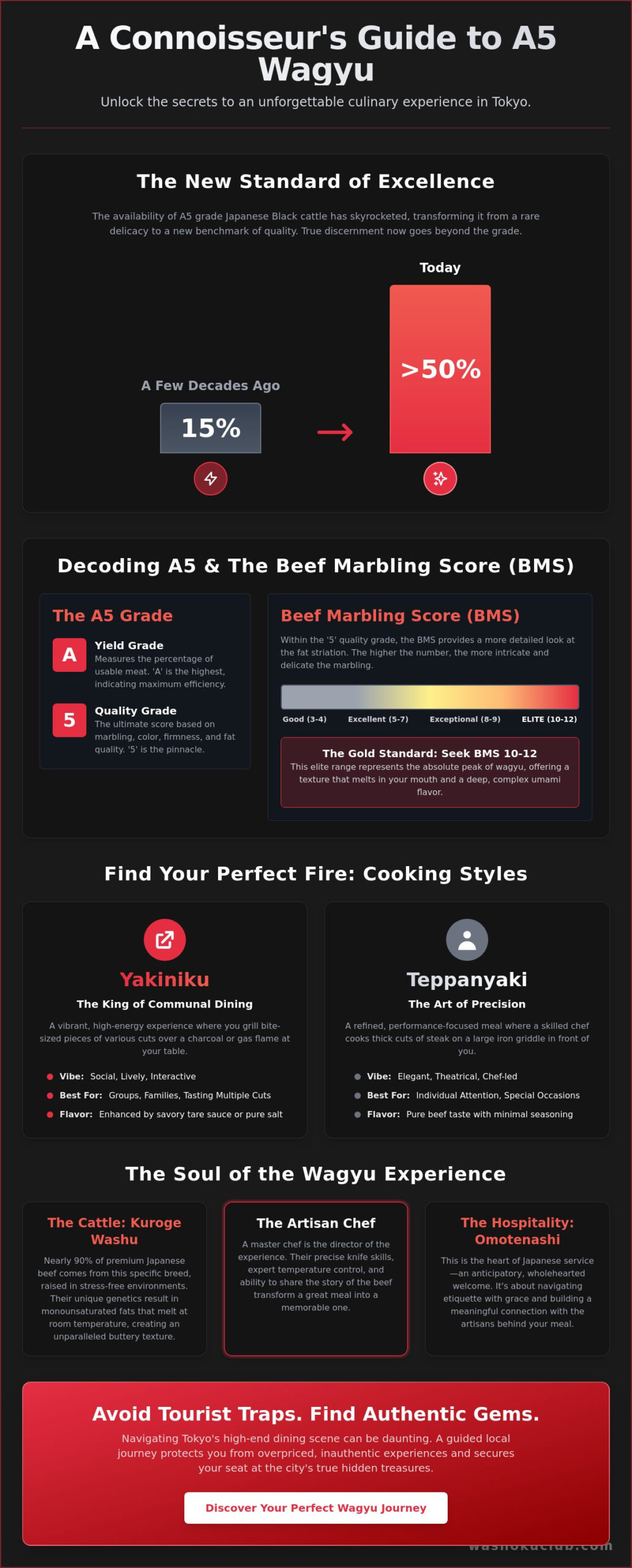
Yakiniku is a vibrant, high-energy style where you or your server grills bite-sized pieces of beef over charcoal or gas. Many high-end spots now offer a “meat omakase,” where the chef selects a sequence of cuts ranging from lean tongue to the richest ribeye. You’ll often face a delicious dilemma: dipping your beef in a savory tare sauce or using just a pinch of salt. While sauce adds layers of umami, salt allows the natural sweetness of the A5 fat to shine. This style is perfect for families and groups of friends because it invites conversation and shared discovery. If you’re looking for a lively way to taste multiple cuts in one sitting, we invite you to explore our curated food tours where we help you find the city’s most authentic grills.
Teppanyaki and Steakhouses: The Art of Precision
If you prefer individual attention and a touch of theater, Teppanyaki is your ideal choice. You’ll sit at a counter and watch a master chef handle thick cuts of beef with incredible knife skills. This style focuses on creating a beautiful, caramelized crust that contrasts with a buttery, almost rare interior. It’s a refined and quieter experience compared to the bustle of a Yakiniku house. We often recommend this for couples or solo travelers who want to focus entirely on the craftsmanship of the meal. You aren’t just eating; you’re watching a culinary performance where every flip of the spatula is deliberate.
Sukiyaki and Shabu-Shabu: The Gentle Simmer
For those who prioritize a silky, delicate texture, traditional simmering styles are unmatched. Sukiyaki involves cooking thin slices of beef in a shallow iron pot with a sweet and salty soy-based broth. It’s often dipped in raw, whisked egg for an incredibly creamy finish. Shabu-Shabu is even lighter, as you quickly swish the beef in a kombu kelp broth. These methods highlight the beef’s tenderness without the smoky char of a grill. It’s a soul-warming way to enjoy the best wagyu experience in tokyo, especially during the cooler months when a shared pot brings everyone together.
Beyond the Marbling: Understanding A5 Grades and BMS
When you’re searching for the best wagyu experience in tokyo, you’ll see the term “A5” featured on almost every high-end menu. It’s often treated as a magical incantation of quality, but we want you to understand what’s actually happening behind that label. While A5 represents the pinnacle of Japanese beef, the grading system is more nuanced than a simple pass or fail. In fact, due to decades of breeding improvements, over 50% of Japanese Black cattle now reach the A5 grade. This means that to find the absolute best of the best, we need to look even deeper into the sub-grades and regional stories.
The Yield and Quality Grades
The alphanumeric code used by the Japan Meat Grading Association is actually two separate scores joined together. The “A” refers to the yield grade, which measures how much usable meat is produced from the carcass. The “5” is the quality grade, which is the part you’ll truly taste. To earn a 5, the beef must excel in four specific categories:
- Marbling: The intricate “frosting” of fat throughout the muscle.
- Color and Brightness: A vibrant, healthy red hue.
- Firmness and Texture: A delicate, velvety feel.
- Fat Quality: Luster and a low melting point.
While A5 is technically the top tier, it represents a range of excellence rather than a single point of quality.
The BMS Gold Standard
The real secret to the best wagyu experience in tokyo lies in the Beef Marbling Score, or BMS. This scale runs from 1 to 12. While an A5 grade only requires a BMS of 8 or higher, the true gold standard for connoisseurs is a score of 10, 11, or 12. These elite cuts offer an almost unbelievable level of richness. However, we always tell our guests to be mindful of “fat fatigue.” Because this beef is so incredibly rich, eating a large steak can sometimes be overwhelming. Often, a few perfectly prepared slices in a multi-course meal provide a much more balanced and enjoyable experience than a massive portion.
Prefectures and Provenance
We encourage you to look past the famous Kobe label and explore other legendary prefectures. While Kobe is iconic, regions like Miyazaki and Ohmi produce beef that is equally elite; Miyazaki has even dominated the “Wagyu Olympics” multiple times. Each region has its own unique climate and water sources that subtly influence the flavor profile of the beef. When you read a menu, look for the specific prefecture of origin or “Award Winning” labels. Understanding these regional identities helps you appreciate the human story of the farmers who dedicated their lives to raising these incredible animals.
The Art of the Meal: Etiquette and Omotenashi
We believe that high-end dining in a metropolis like Tokyo is an exercise in mutual respect. It centers on the beautiful concept of Omotenashi, a form of anticipatory hospitality that seeks to look after a guest’s needs before they’re even voiced. When you seek out the best wagyu experience in tokyo, you aren’t just paying for a plate of premium beef; you’re participating in a cultural exchange. This means the atmosphere is often more focused and quieter than a typical Western steakhouse, as everyone is there to honor the artisan’s craft.
To truly appreciate the natural fat of A5 Wagyu, we always recommend the “salt first, sauce second” rule. Start with a tiny pinch of high-quality sea salt to draw out the beef’s inherent sweetness. Only after you’ve experienced the pure flavor should you move on to the savory tare dipping sauces. Handling these delicate, fatty cuts with chopsticks can be a challenge because the meat is so tender it breaks easily. We suggest supporting the slice from underneath with your chopsticks rather than pinching it too tightly from the sides.
Navigating the High-End Dining Environment
While Tokyo is slowly becoming more casual, premium establishments generally expect a smart-casual dress code. You don’t necessarily need a suit, but avoiding flip-flops or gym wear shows respect for the establishment. Punctuality is another cornerstone of the experience. Japanese chefs plan their preparation around your arrival time to ensure the beef is at the perfect temperature for serving. Being five minutes early is considered on time. To show your gratitude, a simple “Gochisousama-deshita” at the end of the meal speaks volumes to the artisans who prepared your feast.
Savouring the Experience
If you’re at a Yakiniku table, you’ll likely receive a small cube of white beef tallow. Use this to grease the grill before your first slice; it prevents sticking and adds a rich layer of flavor. For thin A5 slices, remember the “five-second rule.” A quick, high-heat sear on each side is often enough to liquefy the marbling without drying out the muscle. To balance the intense richness of the fat, we suggest pairing your beef with a dry, high-quality Sake or a crisp Japanese lager. The acidity or carbonation acts as a perfect palate cleanser between bites. If you want to ensure you’re getting the most out of every bite without the stress of navigating these rules alone, we invite you to book our A5 Wagyu Yakiniku Experience where we guide you through every step of the journey.
Join the Club: Our Signature Wagyu Yakiniku Journey
We understand that the quest for the best wagyu experience in tokyo can feel overwhelming. With so many bright lights and competing claims in the city, it’s easy to fall into a polished tourist trap that offers high prices without the cultural soul. That’s why we invite you to join our community. We act as your bridge to the local culinary masters who have spent decades perfecting their craft. By walking with a guide from Washoku Club culture and food tours, you aren’t just eating; you’re learning the story of the farm and the specific reasons why a certain cut is prized above all others. This real-time education transforms a simple dinner into a deep connection with Japanese heritage.
Our goal is to remove the anxiety of high-end dining so you can focus entirely on the sensory journey. We believe the people behind the grill are just as important as the beef itself. Whether it’s a family-run shop in a quiet alley or a sophisticated Ginza establishment, we prioritize places where the chef treats every guest like a member of their own community. This approach ensures you experience the true heart of Japanese hospitality and the legendary service that makes Japan so special. You’ll leave the table not just full, but truly inspired by the artistry of the meal.
The Washoku Club culture and food tours Difference
Our commitment is rooted in authentic, off-the-beaten-path culinary discoveries. We favor small-group intimacy because it allows for a genuine connection with the food and the artisans. While others might lead you to the most crowded spots, we seek out hidden gems where the quality of the A5 beef is matched only by the warmth of the service. We handle the complex reservation systems and menu translations so you don’t have to worry about a thing. This logistical support ensures a worry-free dining adventure where every detail is curated for your comfort and enjoyment.
Ready to Taste the Best of Japan?
If you’re eager to begin your journey, we invite you to explore our premium culinary experiences. Our flagship A5 Wagyu Yakiniku Experience is specifically designed for those who want to see, smell, and taste the absolute pinnacle of Japanese beef in a respectful and engaging environment. We highly encourage early booking for your 2026 travels to secure spots in our most exclusive and sought-after venues. Let’s make your search for the best wagyu experience in tokyo a reality that exceeds your wildest expectations. We look forward to welcoming you to the table.
Begin Your Journey to A5 Perfection
You now have the tools to distinguish genuine heritage from marketing noise. We’ve explored the intricate BMS scales, the theater of the teppan, and the quiet respect of Omotenashi. Finding the best wagyu experience in tokyo is finally within your reach, as you can now navigate the city’s elite dining landscape with the confidence of a seasoned local. It’s time to put that knowledge into practice and experience the buttery, melt-in-your-mouth reality of Japan’s finest beef.
Since 2016, Washoku Club culture and food tours has been dedicated to preserving authentic culinary traditions and providing access to exclusive, non-tourist venues that remain hidden from most visitors. We focus on the human connection between you and the master butcher to ensure every bite tells a story. We invite you to Book Your Authentic A5 Wagyu Yakiniku Experience and step into a world of flavor that most travelers simply never witness. We look forward to sharing our passion for Japan’s most celebrated soul food with you.
Frequently Asked Questions
Is A5 Wagyu worth the high price tag?
Yes, A5 Wagyu is worth the investment because of the incredible labor and heritage that goes into every cut. You aren’t just paying for meat; you’re paying for a product of centuries of refined breeding and a stress-free raising process that results in a unique fat profile. This fat is rich in monounsaturated acids that provide a sweet umami flavor you won’t find in any other beef. We believe it’s a transformative soul food experience that defines the best wagyu experience in tokyo.
What is the difference between Kobe beef and A5 Wagyu?
Kobe beef is a specific brand of Wagyu, while A5 is a quality grade assigned by the Japan Meat Grading Association. To be called Kobe, the beef must come from Tajima cattle raised in Hyogo Prefecture and meet very strict criteria. A5 is the highest possible rating for any Japanese Wagyu, regardless of which prefecture it comes from. Think of Wagyu as the category and Kobe as one of its most elite, localized members.
How much should I expect to pay for a premium Wagyu dinner in 2026?
Budgeting for the best wagyu experience in tokyo depends heavily on the restaurant tier you choose. Casual yakiniku chains generally cost between ¥2,000 and ¥4,000, while neighborhood spots sit in the ¥4,000 to ¥8,000 range. Premium Wagyu specialists typically command prices from ¥10,000 to over ¥30,000 per person. A great local secret is to visit these high-end establishments during lunch, where sets often range from a more accessible ¥3,000 to ¥6,000.
Can I find good Wagyu without a reservation?
It’s very difficult to secure a table at a top-tier Wagyu specialist without a reservation, especially in busy hubs like Ginza or Shinjuku. Most high-end restaurants require bookings at least a week in advance and often have strict cancellation policies. While you might find a seat at a casual chain or a market stall without a plan, the most authentic and refined experiences almost always require a bit of forward thinking to ensure the chef is prepared for your arrival.
Is Wagyu beef safe to eat rare or medium-rare?
Wagyu is perfectly safe and actually best enjoyed rare or medium-rare because of its incredibly low fat-melting point. If you overcook it, you lose the delicate, buttery texture that makes A5 beef so famous. While raw beef liver has been banned in Japan since July 1, 2012, many licensed restaurants still serve yukke, a delicious raw beef tartare. These establishments follow very strict safety protocols to ensure every bite is as safe as it is flavorful.
What happens if I have a dietary restriction at a Wagyu restaurant?
Navigating dietary restrictions can be a challenge because Wagyu dining is so focused on the beef itself. For those with gluten sensitivities, we recommend bringing your own gluten-free soy sauce, as many traditional dipping sauces contain wheat. Vegetarians and vegans will find very few options at specialist grills beyond simple side dishes. If you have specific needs, it’s always best to have your guide or a local friend call the restaurant in advance to see if they can accommodate you.
Why is Japanese Wagyu so much more marbled than Australian or American Wagyu?
The intense marbling of Japanese Wagyu is due to the pure genetics of the Kuroge Washu breed and a much longer feeding cycle. In Japan, cattle are often raised for up to 30 months in a quiet, climate-controlled environment with a specialized diet. Australian and American Wagyu are frequently crossbred with other cattle types, which results in a different fat structure. The Japanese approach prioritizes the depth of umami and a melt-in-your-mouth texture that purebred cattle provide.
How do I spot a ‘tourist trap’ Wagyu restaurant?
You can spot a tourist trap by looking for aggressive street touts or flashy signs that only use the word “Kobe” without any mention of the specific farm or lineage. Authentic establishments are proud of their artisans and will usually display a certificate featuring the animal’s unique 10-digit identification number. If the restaurant lacks Japanese locals and focuses more on high turnover than the spirit of Omotenashi, it’s likely not the deep cultural experience you’re looking for.