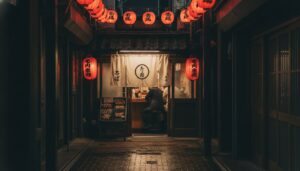
Order carefully:
- Start with a small mixed plate.
- Ask about cuts and portion size.
- Watch cooking time because thin pieces cook fast.
- Check whether pork and beef are cooked on the same grill if that matters to your diet.
Washoku Club Osaka tours can route through yakiniku neighborhoods and help guests choose reputable, good-value spots.
Most Common Japanese Foods: Festival & Street-Food Classics
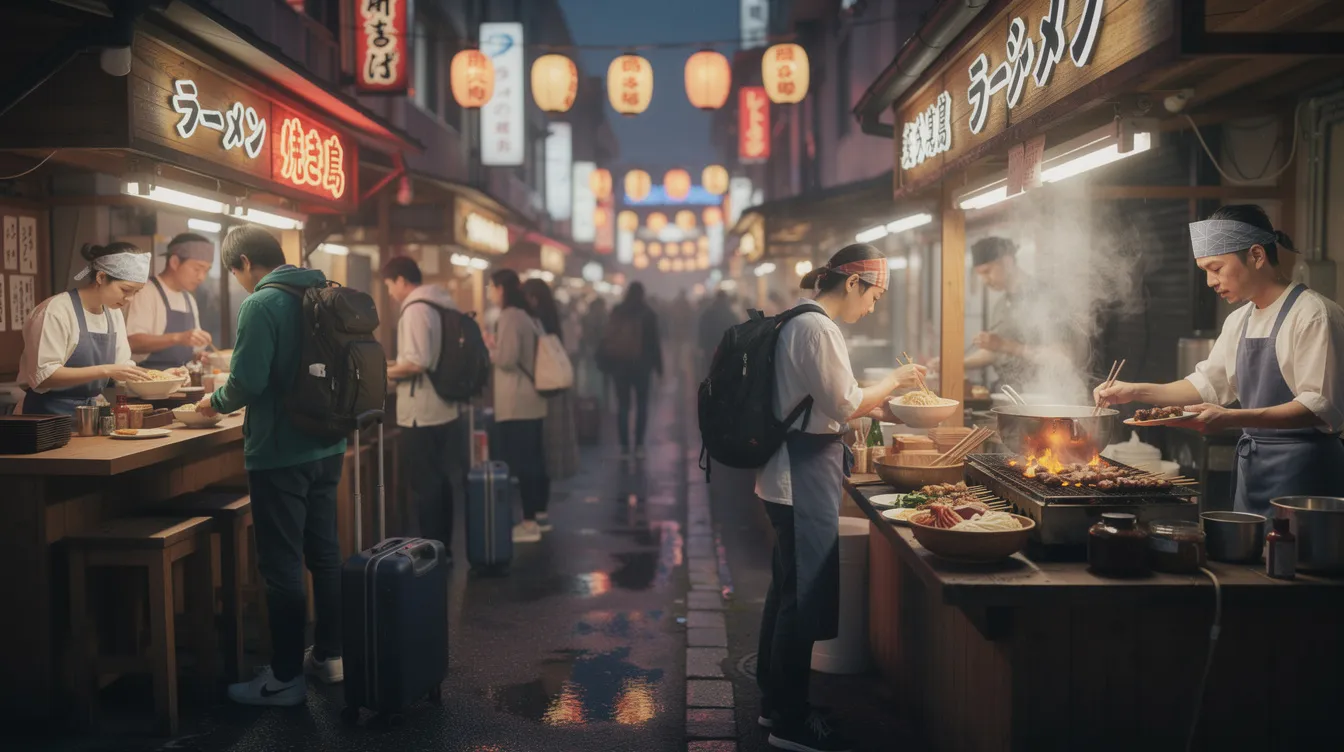
Japanese street food is easiest to find at festivals, busy shopping streets, temple approaches, and Osaka’s nightlife areas.
Takoyaki, also known as octopus balls, is a popular street food in Japan, made from a batter filled with diced octopus, tempura scraps, and green onions, cooked in a special molded pan. It is usually topped with sauce, mayonnaise, bonito flakes, and seaweed powder.
Okonomiyaki is a savory pancake made with a batter of flour, grated yam, and shredded cabbage, often topped with a variety of ingredients such as meat, seafood, and sauces, and is particularly popular in Osaka and Hiroshima. Osaka-style mixes the ingredients into the batter
Introduction to Japanese Cuisine
Step out of Tokyo Station, wander through Osaka’s Dotonbori, or follow the smell of broth down a Kyoto side street, and you quickly realize one thing: japanese food is everywhere, and the choices can feel wonderfully overwhelming. There are steaming bowls of ramen, neat trays of sushi, sizzling skewers, bento boxes, sweets shaped like fish, and convenience stores stocked with snacks that locals actually buy every day.
This guide focuses on the most common japanese foods you are likely to see when you eat in japan: on menus, in convenience stores, at train stations, in markets, and inside casual japanese restaurants. It covers what each dish is, when locals commonly eat it, and how travelers can order it with more confidence.
Japanese cuisine includes both washoku and yōshoku. Traditional Japanese cuisine, known as washoku, is characterized by seasonality and meticulous preparation, and it is often built around rice, soup, fish, pickles, and small dishes. Yōshoku refers to Western-influenced japanese dishes such as japanese curry, tonkatsu, omurice, and Hamburg steak that became part of modern daily life after the Meiji era.
Many culinary staples of japanese cuisine incorporate seasonal ingredients to enhance flavor. Japanese cuisine is globally celebrated for its deep respect for seasonal ingredients, meticulous preparation, and balance of flavors. Many japanese dishes rely on the absolute freshness and pristine quality of the ingredients used, especially seafood, tofu, vegetables, and rice.
At Washoku Club, we guide travelers through Tokyo, Kyoto, and Osaka, and this article reflects the dishes guests most often ask to try: sushi, ramen, miso soup, curry rice, hot pot dishes, noodle dishes, rice bowl meals, grilled meat, and traditional japanese sweets.
The foundation of a traditional Japanese meal revolves around five key elements: rice, miso soup, noodles, pickles, and fresh fish. You do not need to eat all of them in one sitting, but if you try them across your trip, you will understand a lot about japanese food culture.
Rice & Everyday Comfort Dishes
For over 2000 years, rice has been the most important food in Japanese cuisine, and it remains a staple at most meals today. Japanese rice is short-grain, slightly sticky, and central to everything from sushi rice to onigiri rice balls and donburi.
Even though rice consumption in Japan has fallen over the decades, rice-based meals remain the easiest first-day foods for travelers. If you are jet-lagged, hungry, and not ready to decode a full menu, start with cooked rice in a simple format: onigiri, bento, curry rice, or a rice bowl.
These dishes are easy to find at train stations, convenience stores, and casual japanese restaurants. They also reveal how everyday japanese food mixes traditional foods with modern convenience.
Onigiri (Rice Balls)
Onigiri, or rice balls, are made of cooked rice, often wrapped in nori seaweed, and can contain various fillings such as umeboshi or salmon. They are usually shaped as triangles, cylinders, or rounded parcels, making them one of the easiest foods to eat on the go.
Onigiri are one of the most common japanese foods because they are sold 24/7 in convenience stores such as 7-Eleven, Lawson, and FamilyMart. According to Web Japan, 7-Eleven alone sells more than 2.1 billion onigiri annually.
First-timers should look for:
- Tuna mayo: creamy, mild, and very popular, but contains fish.
- Salmon: simple, salty, and easy to enjoy.
- Umeboshi: pickled plum, sour and traditional.
- Konbu: simmered kelp, usually a good option for those avoiding meat, though seasonings may vary.
Onigiri rice balls are also a good lesson in labels. Some fillings include fish flakes, chicken, pork, or mayonnaise, so halal-conscious, vegetarian, and vegan travelers should check ingredients carefully.
Washoku Club often starts Tokyo food tours with onigiri tastings because they show how locals snack during commutes, between meetings, or before long train rides.
Donburi (Rice Bowls)
Donburi refers to a bowl of plain, cooked rice with some other food on top of it, and is a common dish in many Japanese restaurants. In practice, donburi is fast, filling, and usually affordable.
The most useful types to know are:
|
Donburi |
What it is |
|---|---|
|
Gyudon |
Beef and onions over rice |
|
Oyakodon |
Chicken and egg over rice |
|
Tendon |
Tempura over rice |
|
Kaisendon |
Sashimi over rice |
Gyudon, a popular donburi dish, consists of thin slices of beef and onions simmered in a soy sauce-based broth served over rice. It is a classic salaryman lunch and a good place to observe fast counter dining in Japan.
Typical gyudon chains use counter ordering, quick service, and fast turnover. You sit down, order by size and topping, eat rice with the beef, and leave within 10 to 20 minutes. It is efficient, local, and useful when you need a proper meal between sightseeing stops.
Washoku Club tours in Shinjuku or Ueno might include a gyudon stop so guests can experience this salaryman-style japanese meal without worrying about the ordering system.
Japanese Curry & Curry Rice
Kare Raisu, or curry rice, is a popular dish in Japan that consists of cooked rice served with a Japanese curry sauce, often accompanied by additional toppings. Japanese curry, known as kare, is a popular dish that is thicker and sweeter than Indian curry, typically served with rice and often accompanied by a breaded cutlet known as tonkatsu.
Japanese curry came through British naval influence in the Meiji era and became one of the great yōshoku success stories. Today, curry rice is served in homes, school cafeterias, station counters, family restaurants, and small specialist shops.
Common forms include:
- Plain curry rice with vegetables.
- Katsu curry topped with tonkatsu.
- Curry udon with udon noodles in curry broth.
- School-style curry, often mild and nostalgic.
If you want something warm, familiar, and filling, japanese curry is one of the safest tasty dishes to order. Halal or vegetarian curry is often easier to find than other meaty dishes, especially in major cities, but the roux can include meat extract, so guidance helps.
Washoku Club guides can help locate vegetarian or halal-conscious curry shops in Tokyo, Kyoto, and Osaka.
Bento (Boxed Meals)
Bento are compartmentalized boxed meals with rice, pickled vegetables, a main dish, and several small dishes called okazu. A typical bento might include grilled fish, chicken katsu, fried tofu, simmered vegetables, sweet potato, omelet, and pickles.
There are three common types travelers should recognize:
- Ekiben: train-station bento, often regional and ideal before a Shinkansen ride.
- Konbini bento: affordable convenience store meals for quick lunches.
- Depachika bento: upscale department-store food-floor boxes with polished presentation.
An ekiben before a train ride between Tokyo, Kyoto, and Osaka is a classic travel experience. Some boxes highlight local seafood, japanese beef, deep fried seafood, seasonal vegetables, or regional sauces.
Washoku Club sometimes includes a depachika walk-through to show how much variety exists in bento culture, from everyday japanese food to high-end seasonal boxes.
Nikujaga is a traditional home-cooked dish made of sweet stewed meat and potatoes, often flavored with soy sauce, sake, and mirin, and is considered comfort food in Japan. You may see it in bento, izakaya menus, or homestyle restaurants.
Noodle Dishes: Ramen, Udon, Soba & Beyond
After rice, noodle dishes are the second major pillar of everyday japanese food. Some are quick and casual, some are seasonal, and some are worth planning a whole evening around.
Ramen is Chinese-influenced, while udon and soba are more traditional japanese noodles. Yakisoba, somen, and other dishes appear at festivals, summer events, and casual restaurants.
If this is your first trip, plan at least one ramen experience and one traditional soba or udon meal. It will help you compare rich broth, clean dashi, chewy wheat flour noodles, and earthy buckwheat flavors.
Ramen
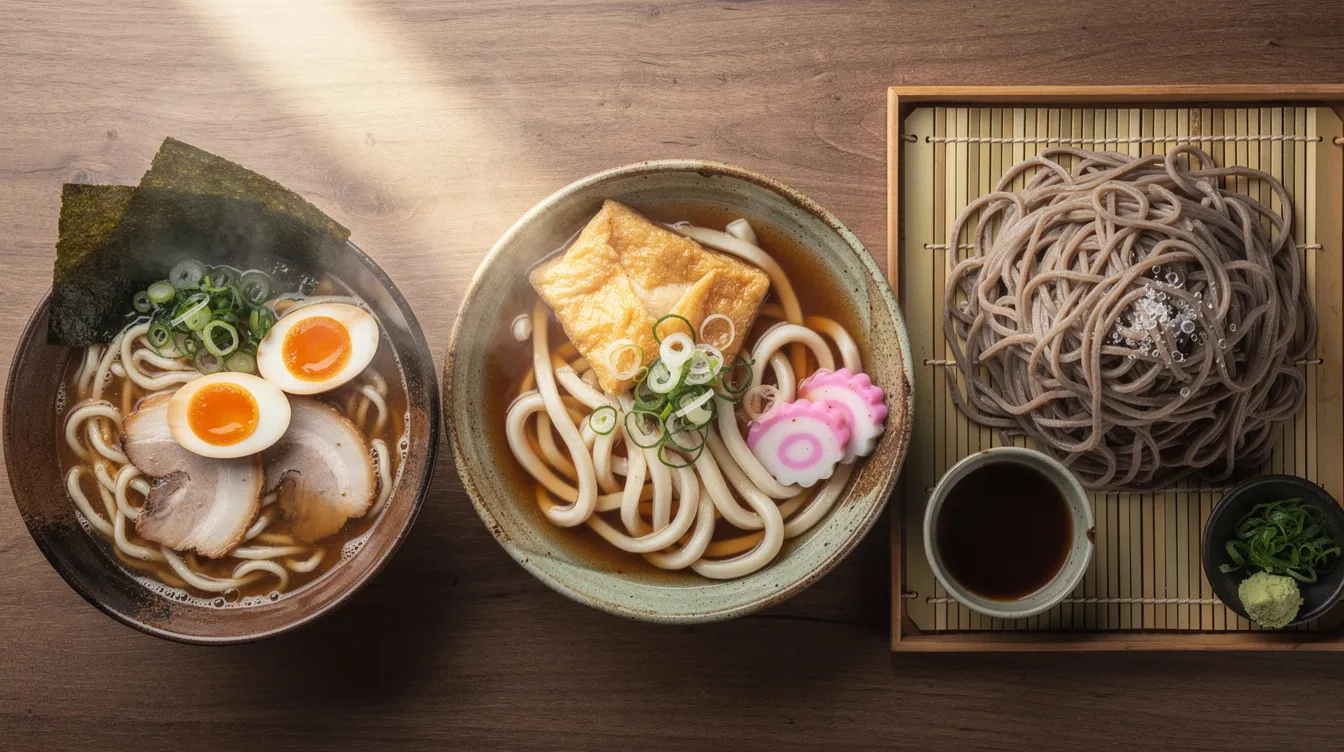
Ramen are Chinese-style noodles served in a soup with various toppings, and have become one of the most popular noodle dishes in Japan. These wheat noodles often use alkaline water, giving them a springy texture that works well in noodle soup.
Common broth bases include:
- Shoyu: soy sauce-based.
- Shio: salt-based and lighter.
- Miso: rich, savory, and especially famous in Sapporo.
- Tonkotsu: pork-bone broth, associated with Hakata and Kyushu.
Toppings often include sliced pork called chashu, soft-boiled egg, nori, bamboo shoots, and green onions. Ramen shops commonly use ticket vending machines, counter seating, and quick service, so the process can feel intimidating the first time.
Ramen is now one of the most famous japanese dishes worldwide, but eating it in Japan still feels different. The broth is hotter, the service faster, and the regional styles more specific.
Washoku Club’s nighttime Tokyo tours often include a ramen stop to compare regional styles or broth bases. For halal-conscious travelers, pork-free ramen requires planning, since many ramen broths use pork or chicken.
Udon
Udon are thick Japanese noodles made from wheat flour, commonly served in a savory broth with various toppings such as tempura or fried tofu. These thick wheat noodles are soft, chewy, and often milder than ramen.
Popular variations include:
- Kake udon: simple broth and noodles, often served hot.
- Kitsune udon: topped with sweet fried tofu.
- Tempura udon: topped with battered shrimp or vegetables.
- Curry udon: udon noodles in japanese curry sauce.
Udon is easy to find in station noodle bars, self-service chains, and specialty shops. It is often a good choice for travelers who prefer mild flavors, simple toppings, and clean soup stock.
In western Japan, the broth is often lighter in color than Tokyo-style broths. Kyoto and Osaka are good places to notice this difference.
Soba & Other Noodles
Soba are native Japanese noodles made of buckwheat flour or a mixture of buckwheat and wheat flour, served either hot or cold with various toppings. Soba noodles have an earthy flavor and are especially satisfying cold with dipping sauce in summer.
Zaru soba is cold soba served on a bamboo tray with dipping sauce, while hot soba is served in broth with toppings such as tempura, green onions, or mountain vegetables. Soba is also traditionally eaten on New Year’s Eve as a symbol of longevity.
Somen are extremely thin wheat flour noodles, traditionally enjoyed cold during the summer, often served with a dipping sauce called mentsuyu. Nagashi somen, where noodles flow down a bamboo chute, is more of a seasonal experience than an everyday meal.
Yakisoba are grilled or fried Chinese-style noodles mixed with pieces of meat and vegetables, often served at festivals in Japan. Yakisoba, a stir-fried noodle dish with vegetables and meat, is commonly sold at street stalls during festivals in Japan, making it a popular street food option.
Washoku Club Kyoto or countryside-adjacent tours can arrange soba-tasting stops or summer nagashi somen outings when in season.
Seafood Staples: Sushi, Sashimi & Grilled Fish
Japan’s long coastline makes seafood central to japanese cuisine, even as modern meat consumption has grown. Fish appears in everything from sushi restaurant counters to hotel breakfasts and market rice bowls.
Sushi and sashimi are often grouped together by travelers, but they are not the same. Sushi is about seasoned rice as much as topping; sashimi is raw fish or seafood without rice.
Washoku Club food tours often balance famous spots with tiny family-run sushi counters, seafood izakaya, and market stalls where guests can ask questions before ordering.
Sushi
Sushi is a dish that consists of sushi rice, which is cooked white rice flavored with seasoned rice vinegar, and it is one of the most famous Japanese dishes both inside and outside of Japan. The word “sushi” refers to any dish made with Japanese rice that has been seasoned with rice vinegar, and its popularity has steadily increased since it was first exported to the US after the Meiji Restoration in 1868.
That means sushi is not simply “raw fish.” The vinegared rice is the foundation.
Common varieties of sushi include nigirizushi, hand-formed sushi; makizushi, rolled sushi; and chirashi, sushi rice topped with raw fish. Travelers should also recognize gunkan, temaki hand rolls, and inari sushi wrapped in sweet fried tofu.
Conveyor-belt sushi, or kaiten-zushi, is casual, affordable, and beginner-friendly. Traditional sushi counters are more personal and often more expensive, especially if you order omakase.
A few practical tips:
- Start with milder fish such as tuna, salmon, sea bream, or prawn.
- Do not over-dip sushi in soy sauce.
- Eat pieces in one bite when possible.
- Avoid wasting food, especially at set-menu counters.
Washoku Club can arrange beginner-friendly sushi stops where staff are used to international guests and dietary questions.
Sashimi & Kaisendon
Sashimi is thinly sliced, raw seafood served without rice. It is usually eaten with soy sauce, wasabi, and sometimes grated daikon or shiso.
Sashimi is thinly sliced raw fish or seafood without rice, which makes freshness especially important. Common choices include tuna, salmon, yellowtail, squid, scallop, and sea bream. Seasonal fish can be excellent, so it is worth asking what is recommended that day.
Kaisendon is a rice bowl topped generously with assorted sashimi. It is common at seafood markets in Tokyo, Osaka, and seaside towns, and it is often more approachable than a formal sushi counter.
Fish markets and local seafood alleys can be confusing because menus are fast-moving and seasonal. A guide helps you avoid overpaying, order safely, and choose shops with good turnover.
Grilled Fish & Unagi
Yakizakana, or grilled fish, is one of the most commonly eaten traditional japanese breakfast and set-meal items. It may be saba, salmon, aji, or seasonal fish, usually served alongside rice, miso soup, pickles, and a small side dish.
This is a typical japanese meal: not flashy, but balanced. If you stay in a ryokan or traditional hotel, grilled fish is likely to appear at breakfast.
Unagi is freshwater eel, often prepared kabayaki style with a sweet soy sauce glaze. It is traditionally eaten for stamina in summer, especially around Doyo no Ushi no Hi. Because eel sustainability is a concern, enjoy unagi sparingly and choose reputable restaurants if you decide to try it.
Some Washoku Club Kyoto and Osaka itineraries pass classic unagi streets where guides explain the history and culture behind eel dishes.
Hot Pot Dishes & Warm Comfort Foods
Japanese hot pot dishes, known broadly as nabe, are communal meals built around vegetables, tofu, broth, and thinly sliced meat. They are especially popular in winter, but many restaurants in Tokyo, Kyoto, and Osaka serve them year-round because travelers love the interactive format.
Hot pot is ideal for small groups and families because everyone cooks and shares at the table. It also makes dietary adjustments easier when the restaurant can separate broths or ingredients.
Shabu Shabu (Hot Pot)
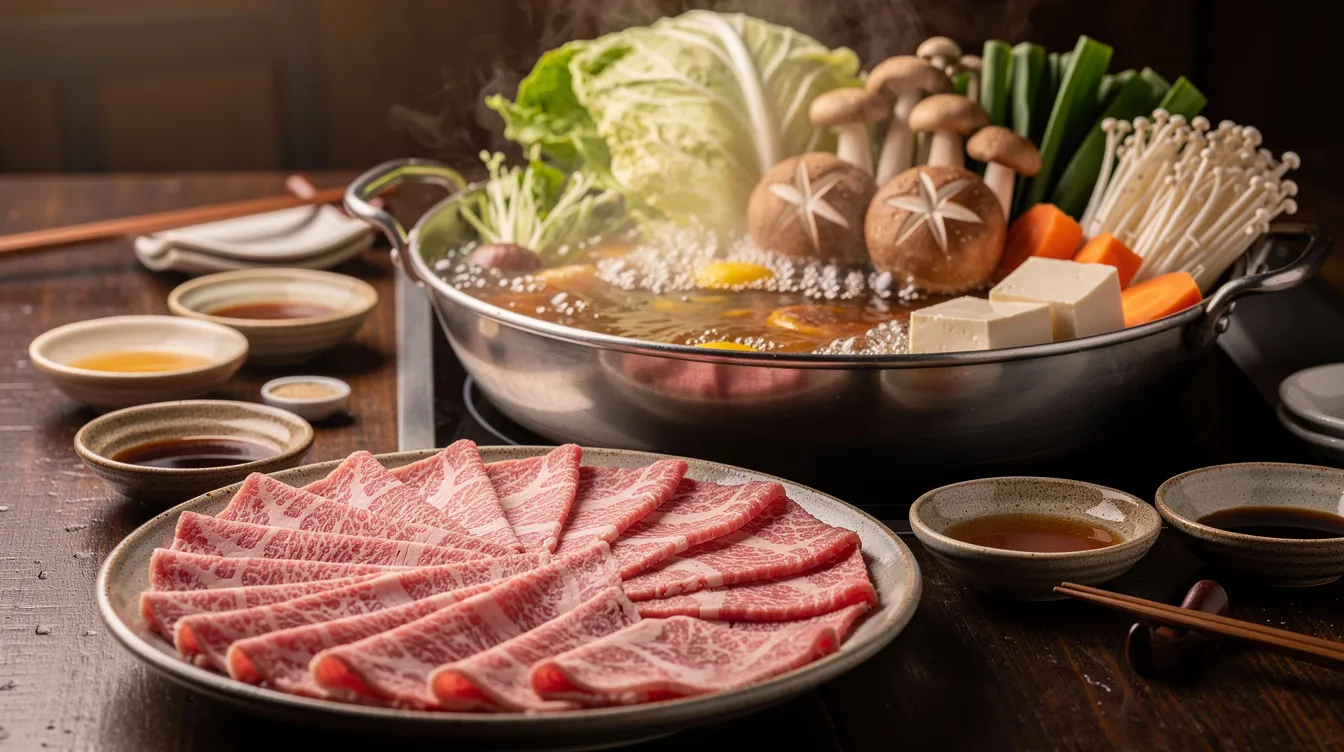
Shabu shabu is a Japanese-style hot pot where thinly sliced meat and vegetables are cooked by dipping them into a hot broth, often served with ponzu or sesame sauce for dipping.
The name comes from the swishing motion diners make as they move thin slices of beef or pork through the broth. Vegetables, tofu, mushrooms, and noodles are added throughout the meal.
Common dipping sauces include ponzu citrus soy and sesame sauce. At the end, rice or noodles may be added to the remaining broth.
Shabu shabu is helpful for travelers who want to control meat consumption because you can choose more vegetables, tofu, or seafood depending on the restaurant.
Sukiyaki
Sukiyaki is a popular hot pot dish prepared with thinly sliced meat, vegetables, mushrooms, tofu, and shirataki noodles, simmered in a sweet soy sauce broth. It is richer and sweeter than shabu shabu because the broth usually includes soy sauce, sugar, and mirin.
A traditional custom is dipping cooked ingredients into beaten raw egg before eating. Some travelers love the texture; others skip the raw egg, and that is fine.
Sukiyaki is often considered a special-occasion meal, making it a memorable dinner in Tokyo or Kyoto. Washoku Club can reserve traditional sukiyaki restaurants where staff help guests cook at the table.
Oden & Other Nabe
Oden is a type of hot pot dish that consists of various fish cakes, daikon, boiled eggs, and konnyaku, simmered in a soy sauce-based broth, commonly enjoyed during winter. You will see oden at izakaya, specialty shops, and sometimes convenience stores during colder months.
The light broth, soft daikon, fish cake, and eggs make oden one of the most comforting everyday winter foods. It is casual, inexpensive, and very local.
Chanko nabe is a traditional hot pot dish that serves as the staple diet of sumo wrestlers, typically made with a variety of proteins and vegetables in a hearty broth. Yosenabe is another flexible mix-pot style that varies by region and restaurant.
Some Washoku Club winter tours include steaming oden stands or neighborhood nabe shops for a cozy atmosphere.
Meat & Street-Food Favorites
Traditional Japanese cuisine used less red meat than the modern japanese diet, but meat consumption grew rapidly after the late 19th century. Today, yakitori, tonkatsu, gyukatsu, yakiniku, gyoza, and festival snacks are among the favourite japanese dishes for both locals and visitors.
This is also where dietary planning matters. Pork appears in ramen, tonkatsu, gyoza, kushikatsu, and many broths. Washoku Club offers halal-friendly food tours and can help travelers find non-pork, seafood, vegetarian, or certified options where possible.
Yakitori & Kushiyaki
Yakitori, which translates to “grilled chicken,” consists of skewered chicken pieces that can include various parts of the chicken, seasoned with salt or a tare sauce made from soy sauce, mirin, and sugar. You may see thigh, breast, skin, liver, cartilage, wings, and tsukune chicken meatballs.
Yakitori alleys near train stations in Tokyo and Osaka are social places, especially after work. The smoke, counter seats, and small plates make them ideal for an evening food crawl.
Kushiyaki refers more broadly to grilled skewers, while kushikatsu, or deep-fried skewers of meat and vegetables, originated in Osaka and is a beloved street food, often enjoyed at casual eateries and food stalls across Japan.
Washoku Club guides help guests navigate menus, choose non-pork skewers, and avoid cuts that may feel too adventurous on a first visit.
Tonkatsu, Gyukatsu & Katsu Dishes
Tonkatsu is a breaded and deep-fried pork cutlet that is often served with shredded cabbage and a special tonkatsu sauce, making it a popular dish in Japan. Tonkatsu, a deep-fried pork cutlet, is typically served with shredded cabbage and can be enjoyed as a standalone dish or as part of a rice bowl known as katsudon.
You will often see tonkatsu as a set meal with rice, miso soup, pickles, and cabbage. It also appears on curry rice as katsu curry. Deep fried pork cutlets are crisp outside and juicy inside when done well.
Gyukatsu is beef katsu, often served rare inside and finished on a personal hot plate at the table. Chicken katsu is a useful non-pork variation, though frying oil and sauces should still be checked for dietary needs.
Katsu sets are common lunch options at japanese restaurants, department store food floors, and station dining areas. They are filling, easy to understand, and popular with travelers who like fried food.
Tempura consists of seafood and seasonal vegetables that are coated in a light batter and deep-fried to a crisp. It is another important deep fried dish, especially when you want lighter batter than katsu.
Yakiniku & Wagyu/Kobe Beef
Yakiniku, meaning “grilled meat,” refers to bite-sized pieces of meat, primarily beef and pork, grilled at the table, and is a popular dining experience in Japan. Diners order by cut, cook pieces over gas or charcoal, and dip them into sauce.
Wagyu beef, known for its high standards and rich flavor, is graded by the Japanese Beef Association based on marbling and yield, with regional varieties like Matsusaka and Kobe beef being particularly prized. Wagyu is famous for marbling, tenderness, and a buttery texture, but premium cuts can become expensive quickly.
Order carefully:
- Start with a small mixed plate.
- Ask about cuts and portion size.
- Watch cooking time because thin pieces cook fast.
- Check whether pork and beef are cooked on the same grill if that matters to your diet.
Washoku Club Osaka tours can route through yakiniku neighborhoods and help guests choose reputable, good-value spots.
Festival & Street-Food Classics
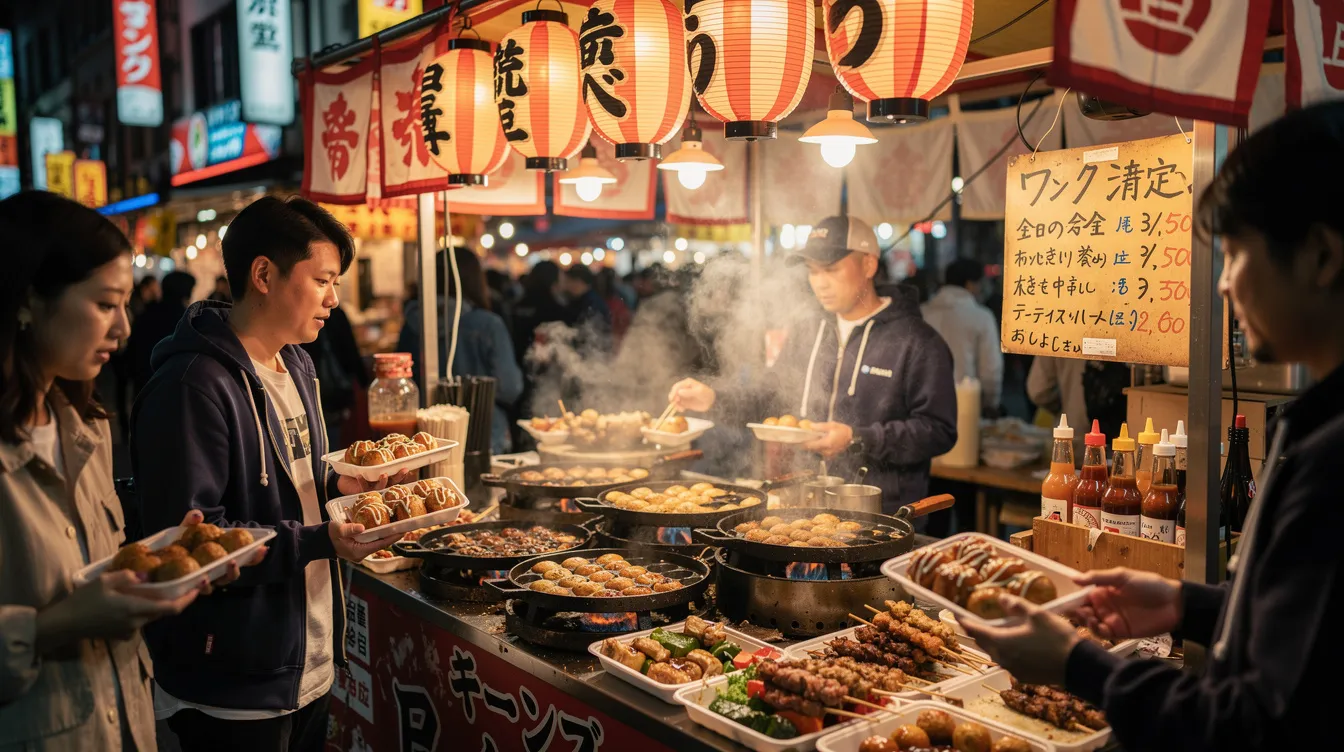
Japanese street food is easiest to find at festivals, busy shopping streets, temple approaches, and Osaka’s nightlife areas.
Takoyaki, also known as octopus balls, is a popular street food in Japan, made from a batter filled with diced octopus, tempura scraps, and green onions, cooked in a special molded pan. It is usually topped with sauce, mayonnaise, bonito flakes, and seaweed powder.
Okonomiyaki is a savory pancake made with a batter of flour, grated yam, and shredded cabbage, often topped with a variety of ingredients such as meat, seafood, and sauces, and is particularly popular in Osaka and Hiroshima. Osaka-style mixes the ingredients into the batter, while Hiroshima-style layers them and often includes noodles.
Gyoza are Japanese dumplings that are typically filled with ground meat and vegetables, pan-fried to create a crispy bottom while remaining tender on top, and are commonly served as an appetizer or side dish.
Other easy street snacks include:
- Yakisoba with vegetables and meat.
- Taiyaki, a fish-shaped pastry filled with sweet fillings like red bean paste, and a popular street food item found at festivals and food stalls throughout Japan.
- Imagawayaki, a traditional Japanese street food often found at festivals, consisting of a round cake-like dessert filled with red bean paste or custard, making it a perfect portable snack.
Sampling small portions across several stalls is better than ordering too much at one place. A guided tour helps you compare styles without missing hidden alleys or local favorites.
Sides, Soups & Everyday Soy-Based Dishes
The idea of ichijū-sansai, or one soup and three sides, shapes the traditional japanese meal set. It reminds you that japanese cooking is not only about big main dishes. Balance comes from rice, soup, pickles, vegetables, protein, and small contrasts in texture.
Miso soup, tofu, pickles, and small izakaya plates are the quiet heroes of authentic japanese cuisine. They make meals feel complete and help travelers understand how locals eat every day.
Miso Soup
Miso soup is made by mixing fermented soybean paste into dashi soup stock, often with tofu, wakame seaweed, and green onions. It appears at breakfast, lunch, and dinner in homes, hotels, and japanese restaurants.
The flavor changes by region and miso type:
- White miso is often sweeter and milder.
- Red miso is deeper, saltier, and stronger.
- Mixed miso balances both.
The broth may include fish-based dashi, so strict vegetarian or vegan travelers should ask carefully. Washoku Club sometimes includes a market stop to taste different miso and learn how locals choose pastes for home cooking.
Tofu & Soy Dishes
Tofu is a staple protein in japanese cuisine. It can be served cold as hiyayakko, simmered in hot pot, deep fried as agedashi tofu, or used as aburaage, the sweet fried tofu pouch found in kitsune udon and inari sushi.
Soy foods help balance high meat consumption in modern diets and are important for vegetarian guests, though sauces and dashi may still include fish.
Common tofu and soy dishes include:
- Hiyayakko: chilled tofu with toppings.
- Agedashi tofu: lightly fried tofu in broth.
- Yudofu: simmered tofu, especially associated with Kyoto.
- Yuba: tofu skin made from soy milk.
Kyoto is especially famous for tofu and yuba. Washoku Club Kyoto routes often feature a specialist shop or restaurant where travelers can taste how simple soy dishes become refined.
Pickles, Small Plates & Izakaya Sides
Tsukemono, edamame, potato salad, kinpira gobo, seaweed salads, simmered pumpkin, and seasonal vegetables appear as small plates in set meals and izakaya spreads. These small dishes add crunch, salt, acidity, and color.
Pickled vegetables may be sour, salty, lightly sweet, or fermented. Edamame are mild and easy to share. Kinpira gobo is usually sweet-savory burdock root cooked with soy sauce and sesame.
Do not skip the sides. They are often where seasonality is easiest to taste, and they help you sample more flavors without committing to large portions.
Kaiseki ryori is a traditional multi-course Japanese dinner that emphasizes seasonal ingredients and presentation, often served in ryokan (traditional inns) and considered a high form of Japanese cuisine. If you want a traditional japanese tasting menu, kaiseki is the refined version of the balance you see in everyday meal sets.
Desserts, Snacks & How to Eat in Japan with Washoku Club
Japanese desserts and snacks range from delicate wagashi to melon bread, matcha ice cream, taiyaki, and regional KitKats. They are widely available in cities, department-store food floors, convenience stores, festival stalls, and tea houses.
Wagashi, traditional Japanese sweets, are typically enjoyed with a cup of green tea and come in a wide variety of shapes, flavors, and ingredients, primarily using sweet azuki bean paste. This sweet red bean paste may appear smooth, chunky, wrapped in mochi, layered in cakes, or served with jelly.
Yokan is a classic Japanese sweet made from sweet red bean paste, gelatinous agar-agar, and sugar, often served in blocks that can be cut into bite-sized pieces. It is dense, elegant, and often paired with bitter tea.
Anmitsu is a popular Japanese summertime dessert made with sweet red bean paste, cubes of kanten jelly, fruits, and dango, often drizzled with a dark sugar syrup before serving. It is refreshing, colorful, and ideal after a hot day of sightseeing.
Other sweets to try include:
- Daifuku: mochi filled with red bean paste or fruit.
- Dango: chewy rice dumplings on skewers.
- Taiyaki: fish-shaped pastry with red bean paste or custard.
- Imagawayaki: round cake-like festival snack.
- Matcha desserts: ice cream, parfaits, cakes, and chocolates.
By now, you can see how the most common japanese foods fit into an average week of eating in Japan. A local might grab onigiri for breakfast, eat gyudon for lunch, have ramen after work, share yakitori at night, enjoy miso soup with a set meal, and save sushi or sukiyaki for a more special outing.
For travelers, the challenge is not finding food. It is choosing wisely, understanding menus, and avoiding hidden ingredients that matter for halal, vegetarian, vegan, or allergy-conscious diets.
That is where Washoku Club helps.
Our guided food tours in Tokyo, Kyoto, and Osaka are designed for travelers who want more than a checklist. We help you:
- Navigate overwhelming menus and ticket machines.
- Find local eateries and hidden gems.
- Try traditional japanese and yōshoku dishes in the right context.
- Ask about pork, alcohol, dashi, and other dietary concerns.
- Build a route around your priorities, whether that is ramen, sushi, street food, sweets, or halal-friendly options.
If you are planning your first night in Tokyo, a family-friendly afternoon in Osaka, or an evening stroll through Kyoto’s alleys, use this guide as your checklist of japanese dishes to try.
Book Now with Washoku Club, tell your guide which foods are your top priorities, and let us turn the most common japanese foods into a delicious, local, and stress-free experience.