

Imagine standing under a canopy of glowing paper lanterns, the rhythmic beat of taiko drums vibrating in your chest while the smoky, savory aroma of charcoal-grilled skewers drifts through the warm evening air. This is the magic of the matsuri, where the sheer variety of japan festival foods can make even the most seasoned traveler feel a bit overwhelmed. We understand that feeling of excitement mixed with a touch of anxiety, especially when you are trying to respect local customs like “tabearuki” or worrying about missing a rare seasonal specialty that only appears for a few days each year.
You deserve to experience the heartbeat of Japan without the stress of the unknown. We have curated this guide to give you a curated bucket list of must-try snacks, from the classic ¥600 plate of yakisoba to the latest 2026 seasonal treats. You will learn the cultural secrets to navigating crowded stalls with ease and understand the recent food labeling updates to keep your culinary journey safe and delicious. By the time we are done, you will have the confidence to find the most authentic flavors and connect with the stories of the artisans who prepare them. Let’s begin this delicious journey into the soul of Japanese tradition.
Key Takeaways
- Learn the heart of the matsuri by understanding the tradition of yatai stalls and their central role in Japanese community life.
- Identify the essential savory japan festival foods that define the experience, from sizzling grills to the deep umami of traditional dashi.
- Discover how seasonal wagashi and refreshing treats provide the perfect aesthetic and flavorful balance to the summer heat.
- Master “Matsuri manners” to navigate crowded stalls with the grace of a local, ensuring you’re respectful of social cues and traditions.
- Find out why stepping off the beaten path into local neighborhood festivals reveals the most authentic and soulful culinary treasures.
The Soul of the Matsuri: Understanding Japanese Festival Food Culture
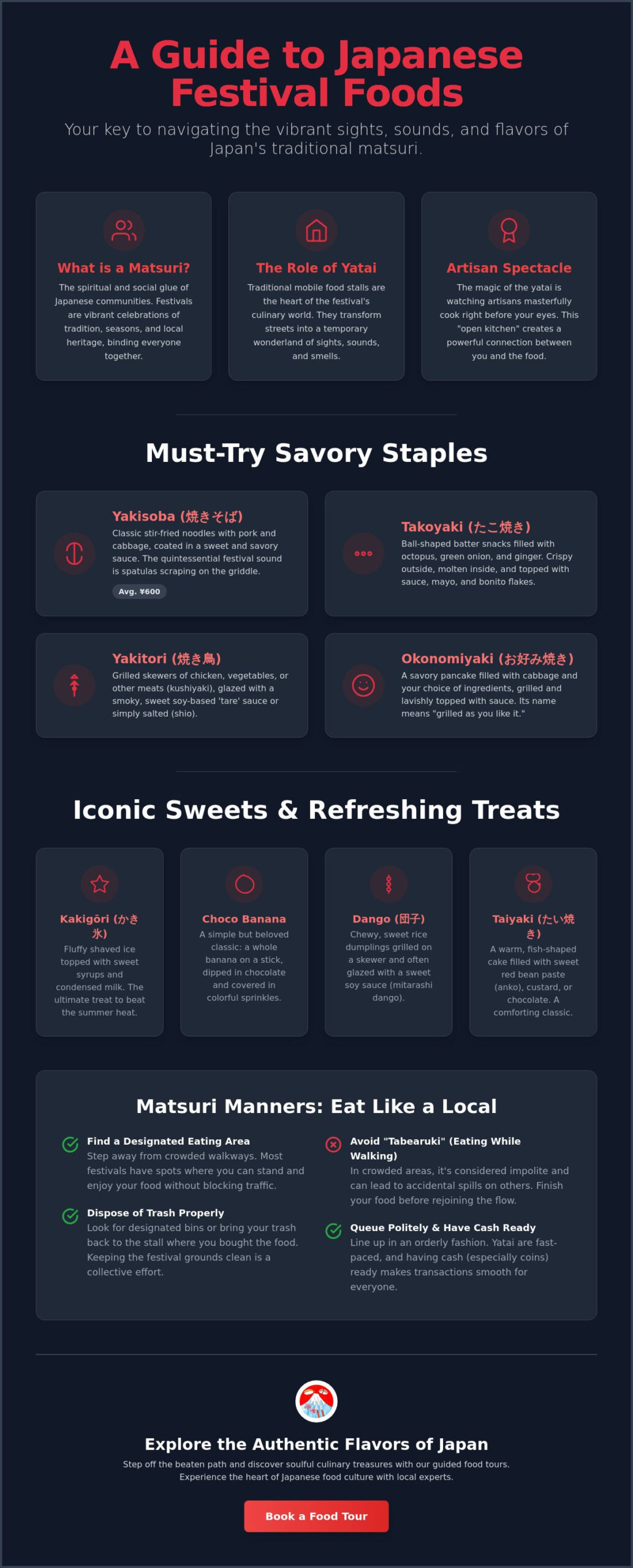
To truly understand the heart of Japan, you have to step into the vibrant energy of a matsuri. These Japanese festivals (matsuri) are much more than simple events; they’re the spiritual and social glue that binds our communities together. At the center of this whirlwind of color and music are the yatai, the traditional mobile food stalls that have fed revelers for centuries. While the shrine rituals provide the spiritual focus, the yatai provide the life-giving energy. These stalls transform ordinary streets into a temporary culinary wonderland where the boundaries between the chef and the guest completely disappear.
When we think of Washoku, we often imagine quiet, refined restaurants or delicate tea ceremonies. However, we believe festival dining represents the most inclusive and spirited side of Japanese food culture. It’s casual, fast, and deeply rooted in “soul food” that brings a collective smile to everyone from toddlers to grandparents. The air is thick with the scent of charred soy sauce and the sweet aroma of frying dough, creating a sensory tapestry that defines the Japanese experience. Every region takes immense pride in their local version of japan festival foods, turning each celebration into a unique showcase of local ingredients and heritage. At Washoku Club culture and food tours, we love sharing these traditions through our group food tours in Tokyo, offering you a front-row seat to this authentic culinary culture.
What Makes Yatai Food Unique?
The magic of a yatai lies in the spectacle of the “open kitchen.” You aren’t just buying a snack; you’re watching an artisan masterfully handle a sizzling griddle or a charcoal flame right before your eyes. This transparency creates an immediate connection to the people behind the food. Everything is designed for portability, allowing you to navigate the crowds without missing a beat of the performance. These snacks are famous for their intense umami profiles, often featuring rich savory glazes and dashi bases that satisfy the appetite and the spirit simultaneously.
Seasonality in Festival Flavors
In Japan, the concept of “Shun,” or peak seasonality, is a sacred principle that extends even to street food. Summer festivals often focus on cooling treats like kakigori (shaved ice) or chilled cucumber sticks to help you endure the humidity. As the air turns crisp in autumn, the stalls shift toward the warm, earthy flavors of roasted chestnuts and grilled sweet potatoes. Seasonal ingredients dictate the festival menu each year, ensuring that every matsuri reflects the specific bounty of the local harvest and the current micro-season. This deep respect for the calendar means you’ll always find something new to taste, no matter when you join the celebration.
Must-Try Savory Street Foods at Every Japanese Celebration
You’ll likely hear the rhythmic scraping of metal spatulas against hot iron griddles before you even reach the first stall. The savory heart of any matsuri lies in these sizzling grills, where the air is thick with the rich, salty-sweet scent of dashi and charred soy sauce. These japan festival foods are the true soul food of the public, offering a comforting, unpretentious deliciousness that connects generations of families. While you might find versions of these dishes in urban restaurants, nothing compares to the version served in the open air, where the smoke adds a layer of depth you simply can’t replicate indoors. If you want to discover more authentic flavors on our guided tours, we’d love to show you our favorite local vendors.
The beauty of these savory staples lies in their incredible balance of textures. You’ll find everything from the delicate, airy crunch of tempura batter to the satisfying chew of perfectly tender grilled meats. This variety is a testament to the food traditions of Japanese festivals, where every bite is designed to be both portable and deeply satisfying. Whether it’s a ¥500 bowl of noodles or a ¥300 skewer, the quality remains remarkably high because these artisans take immense pride in their craft.
Takoyaki and Okonomiyaki: The King and Queen of the Grill
No culinary journey is complete without tasting Takoyaki, those iconic molten octopus balls that usually cost between ¥500 and ¥700 per serving. A perfect Takoyaki has a slightly crisp, charred exterior that gives way to a creamy, almost custard-like interior hiding a tender piece of octopus. Right alongside them, you’ll find Okonomiyaki, the hearty “savory pancake” layered with cabbage and pork. Both are smothered in a thick, sweet-savory sauce and finished with a flourish of toppings:
- Aonori: Finely powdered green seaweed that adds a subtle oceanic saltiness.
- Katsuobushi: Dried bonito flakes that “dance” in the heat, providing a deep umami punch.
- Japanese Mayo: A creamy, slightly tangy drizzle that ties all the flavors together.
Yakisoba and Yakitori: Sizzling Staples of the Street
Yakisoba stalls are a spectacle of high-heat stir-frying, where noodles are tossed with pork and vegetables in a cloud of steam. This technique gives the noodles a signature smoky flavor that’s hard to resist, especially at a friendly price of around ¥400 to ¥600. For meat lovers, Yakitori skewers are the ultimate portable snack. You can choose between different cuts, like juicy thigh meat or skin, and decide on your seasoning: “tare” for a sweet soy glaze or “shio” for a simple, clean salt finish. The intoxicating aroma of chicken fat dripping onto glowing charcoal defines the entire festival experience and draws crowds from blocks away.
Ikayaki and Fried Delights
If you’re looking for visual drama, look for Ikayaki. This whole grilled squid is glazed in soy sauce and served on a skewer, offering a satisfyingly chewy texture and a deep, caramelized flavor. For something even more familiar, Karaage is a national favorite. This Japanese fried chicken is marinated in ginger and soy before being fried to a golden crunch. Many vendors now serve it in “Karaage-kun” style cups, making it the perfect portable snack for children and adults alike as they navigate the festival grounds.
Iconic Japanese Festival Sweets and Refreshing Treats
After the savory smoke of the yakitori stalls, your palate will naturally crave something sweet. Japanese sweets, or wagashi, offer a beautiful balance between subtle natural sweetness and artistic presentation. They aren’t just food; they’re a visual celebration of the season. During the intense humidity of a traditional summer matsuri, these treats become essential for more than just their flavor. They provide a much-needed cooling respite. While traditional favorites remain the backbone of the festival, we’ve seen a fascinating evolution toward modern, “Instagrammable” creations that capture the hearts of younger generations. This blend of old and new is a hallmark of japan festival foods, making every visit a fresh discovery.
The Food Traditions of Japanese Festivals often highlight how these sweets connect us to our history. If you find yourself wandering through a bustling local market before the main event, you’ll see these same artisans at work. For those curious about the roots of these flavors, you can read our guide to traditional market culture to see how the “Kitchen of Japan” influences what ends up on the festival skewer.
Traditional Mochi and Dango Variations
You can’t walk far without spotting Mitarashi Dango. These chewy rice flour dumplings are skewered and grilled until slightly charred, then smothered in a glossy, sweet, and salty soy glaze. We love the “mochi-mochi” texture, a term we use to describe that perfect, bouncy chewiness that’s so central to Japanese gastronomy. Another classic is Taiyaki. This fish-shaped cake, usually priced between ¥200 and ¥300, is traditionally filled with sweet red bean paste (anko). However, many stalls now offer creamy custard or even chocolate to satisfy modern tastes. It’s a comforting, warm snack that feels like a hug from a local grandmother.
Modern Festival Favorites: Choco-Banana and Kakigori
If you’re looking for a burst of color, the Choco-banana stalls are hard to miss. These are whole bananas dipped in vibrant chocolate and decorated with whimsical sprinkles or patterns. They’re a hit with kids and a staple of the modern yatai scene. But when the heat truly peaks, nothing beats Kakigori. This isn’t just a simple snow cone. It’s a mountain of fluffy shaved ice drenched in fruit syrups and condensed milk, often topped with sweet beans or fruit. Priced around ¥300 to ¥500, it remains the ultimate symbol of a Japanese summer. Just remember that with the April 2026 labeling updates, it’s always wise to check for allergens like pistachios or cashews if your toppings look particularly nutty.
Essential Etiquette for Navigating a Japanese Food Festival
Stepping into a crowded matsuri is an exhilarating experience, but the sheer energy can sometimes make it difficult to know how to act. We believe that respect is the secret ingredient that makes japan festival foods taste even better. Understanding “Matsuri manners” isn’t about following strict, rigid rules; it’s about contributing to the harmony of the community. Before you dive into the delicious offerings, take a moment to observe the local crowds. You’ll notice that while the atmosphere is festive, there’s a quiet order to how people move and interact. If you want to dive deeper into the social nuances of dining in Japan, you can learn more etiquette in our street food guide.
Ordering at a busy yatai requires a bit of preparation. Most stalls are strictly cash-only, so we recommend carrying plenty of ¥100 and ¥500 coins. Having small denominations ready shows respect for the vendor’s time and keeps the line moving smoothly. When you approach a stall, a simple “onegaishimasu” (please) goes a long way in building rapport with the artisan. Once you’ve received your steaming tray of takoyaki or yakisoba, the next challenge is finding a place to enjoy it.
The “Tabearuki” Debate: Eating While Walking
In Japan, the concept of “tabearuki,” or eating while walking, is generally frowned upon. It’s considered impolite to navigate through crowds with food in hand, as it increases the risk of bumping into others or making a mess. Instead, we suggest looking for a designated eating area or simply standing to the side of the stall where you made your purchase. The only real exception is during high-energy festival parades, where the rules relax slightly, but even then, staying stationary while you eat is the safest and most respectful choice.
Managing Waste and Respecting the Stalls
One of the first things you’ll notice at a Japanese festival is the scarcity of public trash bins. Japan has a strong “take your trash home” culture, and festivals are no different. To keep the streets clean and respect the neighborhood, follow these simple steps for waste disposal:
- Return to the Source: Most yatai vendors will take back the skewers, containers, or cups they provided once you’ve finished eating.
- Carry a Small Bag: We always recommend bringing a small plastic bag in your pocket for any wrappers or tissues that don’t have a clear home.
- Sort Your Gomi: If you do find a rare public bin, be sure to sort your waste into “burnable,” “non-burnable,” and “bottles/cans” as indicated.
By following these local cues, you’ll find that the community opens up to you in wonderful ways. If you’re feeling unsure about navigating these traditions on your own, we invite you to join one of our small group food tours in Tokyo where we can guide you through these customs in person.
Discovering Authentic Flavors Beyond the Tourist Path
While the grand spectacles of the Gion Matsuri are undeniably breathtaking, the most authentic japan festival foods are often found tucked away in the intimate neighborhood shrines of districts like Sunamachi or the quiet corners of Asakusa. These local gatherings, often organized by the neighborhood association, offer a window into daily Japanese life that grander events can’t match. Here, the flavors aren’t mass-produced for crowds of thousands; they’re crafted with the pride of a community feeding its own. You’ll find a level of craftsmanship and warmth that makes every bite feel like an invitation into a local home.
Navigating these smaller festivals can be tricky for those who don’t speak the language or understand the hyper-local social cues. This is where the expertise of Washoku Club culture and food tours becomes invaluable. We help you move beyond the surface level of the experience, bridging the gap between you and the local artisans who might not have English menus or signs. It’s about more than just finding food; it’s about accessing the deeper cultural storytelling that makes a simple skewer a piece of living history.
Why Local Expertise Elevates Your Culinary Journey
A guide transforms your walk through a festival into a narrative experience. We know which stalls are run by families who have occupied the same spot for decades, using secret sauce recipes passed down through generations. While tourist-heavy areas might sometimes rely on pre-packaged ingredients, we lead you to the vendors who still prioritize the quality of their dashi and the freshness of their seasonal produce. This ensures that your encounter with japan festival foods is genuine, high-quality, and completely free of the “tourist traps” that can mar a trip.
Joining the Club: Your Gateway to Genuine Gastronomy
Our philosophy at Washoku Club culture and food tours is built on the spirit of Omotenashi, or wholehearted hospitality. We don’t just see ourselves as tour operators; we’re your passionate local guides who prioritize human connection over simple business transactions. Whether you’re joining us for a family friendly food tour in Tokyo or exploring the hidden alleys of an Osaka Food Tour, you’ll feel like a welcomed guest rather than just a customer. We invite you to join our community of food lovers and discover the national culinary culture through the eyes of those who live and breathe it every day.
Your Journey Into the Heart of Japanese Tradition
The vibrant world of Japanese festivals offers more than just a meal; it’s a sensory gateway into the country’s collective soul. You’ve explored how the intersection of community, seasonal craftsmanship, and ancient ritual creates a dining atmosphere unlike any other on earth. By understanding the etiquette of the stalls and the stories behind the flavors, you’re no longer just a spectator but a welcomed participant in this living heritage. Every bite of japan festival foods becomes a memory of a time and place where tradition feels modern and every guest feels like a local.
We’d love to be your companions as you seek out these authentic experiences. At Washoku Club culture and food tours, we specialize in expert-led journeys that focus on finding off-the-beaten-path culinary gems that most visitors miss. Our highly rated family-friendly experiences are designed to spark curiosity and satisfy the appetite simultaneously. Join a Washoku Club culture and food tours experience to discover authentic Japanese flavors! We look forward to sharing the table with you and revealing the secrets of our favorite neighborhood matsuri.
Common Questions About Japanese Festival Dining
What is the most popular food at a Japanese festival?
Yakisoba and Takoyaki are the undisputed champions of the matsuri scene. These savory staples are loved for their rich umami flavors and easy portability. You’ll find Yakisoba for about ¥400 to ¥600, while a piping hot tray of Takoyaki usually costs between ¥500 and ¥700. They represent the heart of japan festival foods and are a must-try for any first-time visitor looking for an authentic taste of celebration.
Is it okay to eat while walking at a Japanese festival?
Generally, it’s considered impolite to eat while walking in Japan, a practice known as tabearuki. While festival grounds are more relaxed than city streets, it’s still best to finish your snack near the stall where you bought it. Most vendors provide a small designated area for customers to stand. This helps keep the pathways clear for others and ensures you don’t accidentally spill sauce on a neighbor’s beautiful yukata.
Are there vegetarian or vegan options at Japanese food festivals?
Yes, you can find several delicious options, but you need to be mindful of hidden ingredients. Chilled cucumbers on sticks, grilled corn with soy sauce, and sweet kakigori are usually safe bets for vegetarians. However, many savory sauces and batters contain dashi made from fish stock. We recommend asking the vendor if “dashi” or “katsuo” is used in the preparation to ensure your meal aligns with your dietary needs.
How much does food typically cost at a festival stall?
Prices are quite affordable, usually ranging from ¥200 for a simple skewer to ¥800 for a large savory pancake. According to 2026 data, you can expect to pay around ¥300 to ¥500 for a refreshing bowl of shaved ice or a piece of fish-shaped Taiyaki. While prices have seen a slight increase of about 4% since 2025 due to inflation, these treats remains a budget-friendly way to explore the national culinary culture.
What should I wear when attending a traditional Japanese festival?
Comfort is key, so breathable clothing and sturdy walking shoes are highly recommended for navigating the crowds. Many locals choose to wear a yukata, which is a light summer kimono, or a jinbei for a more casual traditional look. If you decide to dress up, you’ll fit right into the festive atmosphere. Just remember that you’ll be on your feet for several hours, so prioritize footwear that can handle the journey.
Can I pay with a credit card at Japanese festival food stalls?
Almost all festival stalls are strictly cash-only operations. Even as Japan becomes more digital, these temporary yatai rarely have the infrastructure for card payments. We always advise our guests to carry plenty of ¥100 and ¥500 coins along with smaller bills. Having exact change ready is a small gesture of respect that helps the busy artisans serve the long lines of hungry festival-goers more efficiently.
What is the best time of day to visit a festival for food?
Late afternoon, around 4:00 PM or 5:00 PM, is the ideal time to arrive for a food-focused visit. At this hour, the stalls are fully set up and the first fresh batches of japan festival foods are ready for the evening rush. You’ll beat the heaviest nighttime crowds while still enjoying the magical atmosphere as the lanterns begin to glow and the drums start their rhythmic evening performance.
Are Japanese festivals child-friendly when it comes to food?
Festivals are wonderful environments for children and offer many kid-friendly flavors. Sweet treats like chocolate-covered bananas and fruit-filled crepes are always a hit with younger visitors. For savory options, Karaage (fried chicken) and simple yakitori skewers are easy for little hands to hold. The vibrant colors and exciting sounds make it a memorable experience for families, and the portions are often perfect for sharing between parents and kids.