
What if the busiest train station on the planet wasn’t a stressful maze to avoid, but actually the gateway to the most authentic meal of your life? It’s completely natural to feel overwhelmed by the neon glow and the endless crowds, and we know the fear of accidentally wandering into a tourist trap is very real. You want to experience the true soul of shinjuku food, yet the thought of finding a seat in a hidden basement or deciphering unwritten rules can feel daunting.
We’ve crafted this 2026 guide to help you find those quiet, hidden gems tucked away from the main thoroughfares. You’ll discover the legendary flavors that locals cherish, from sizzling Wagyu sets to a comforting ¥900 bowl of ramen. We will walk you through the distinct vibes of each sub-district, share the essential dishes you cannot miss, and provide the strategies you need to dine with total confidence. Let’s explore the vibrant culinary heart of Tokyo together, one delicious bite at a time.
Key Takeaways
- Navigate the sheer scale of Shinjuku’s dining scene by understanding its unique micro-neighborhoods, from nostalgic alleys to experimental snack bars.
- Unlock the secrets of “vertical dining” to find the most authentic shinjuku food tucked away in basements and high-rise buildings.
- Learn to identify “Osusume” on local menus so you can confidently order the chef’s best seasonal recommendations every time.
- Discover why venturing off the beaten path into family-run eateries provides a soul-stirring connection to Japanese heritage that mainstream guides miss.
- Gain the confidence to explore hidden gems by learning how a professional tour bridges the language gap and reveals the stories behind the flavors.
Understanding the Shinjuku Food Landscape
Step into Shinjuku and you’ll immediately feel a pulse that doesn’t exist anywhere else in the world. It’s a place of beautiful contradictions. Within a single square mile, you can find Michelin-starred masters tucked inside sleek skyscrapers and tiny, three-seat yakitori stalls where the smoke of decades has seasoned the wooden beams. This incredible density means there are thousands of eateries to explore, making shinjuku food the ultimate representation of Japan’s urban soul. It’s where the fast-paced energy of the city meets the timeless traditions of Japanese hospitality.
To help you visualize this incredible sensory overload, watch this immersive walk through the district’s most famous food alleys:
We believe Shinjuku is the true kitchen of Tokyo. While Ginza offers luxury and Shibuya offers trends, Shinjuku offers everything. It’s where salarymen grab a quick bowl of soul-warming ramen after a long shift and where families gather for celebratory Wagyu dinners. The sheer scale can be intimidating, but that’s exactly why we love it. There’s always a new hidden gem waiting to be discovered just one floor above or below the street level.
The Evolution of Shinjuku’s Gastronomy
Shinjuku didn’t become a global food destination overnight. Its roots reach back to the post-war era when it served as a vital market hub for a city in recovery. You can still feel this history today when you explore Shinjuku’s history and districts, which have evolved from humble beginnings into sophisticated culinary zones. Because Shinjuku Station acts as a gateway for the entire country, regional flavors from Hokkaido to Kyushu have found a home here. This creates a unique landscape where “Washoku” (traditional Japanese cuisine) isn’t just a static concept; it’s a living, breathing experience that thrives alongside modern skyscrapers.
Why a Strategic Approach is Essential
With so many choices, it’s easy to fall into “choice paralysis.” Many travelers end up eating at the first brightly lit chain they see simply because the sheer volume of shinjuku food options is overwhelming. There’s a massive difference between “station food” meant for a quick commute and the “destination dining” that locals keep as their best-kept secrets. To truly unlock this district, you need a plan that looks beyond the neon signs. Joining a curated Shinjuku Food Tour allows you to skip the tourist traps and step directly into the authentic heart of the neighborhood, guided by someone who knows the artisans behind the counter.
Shinjuku’s Iconic Food Micro-Neighbourhoods
To truly understand the shinjuku food scene, you have to think of the district as a collection of miniature worlds, each with its own rhythm and flavor profile. It’s not just about one main street; it’s about the contrast between the neon-lit skyscrapers and the quiet, smoky alleys that feel frozen in time. Consulting the official guide to Shinjuku’s attractions can give you a sense of the geography, but the true culinary magic happens in the pockets where locals gather after dark. We believe that by exploring these micro-neighbourhoods, you aren’t just eating; you’re participating in a living history of Tokyo’s urban culture.
Omoide Yokocho: More Than Just Yakitori
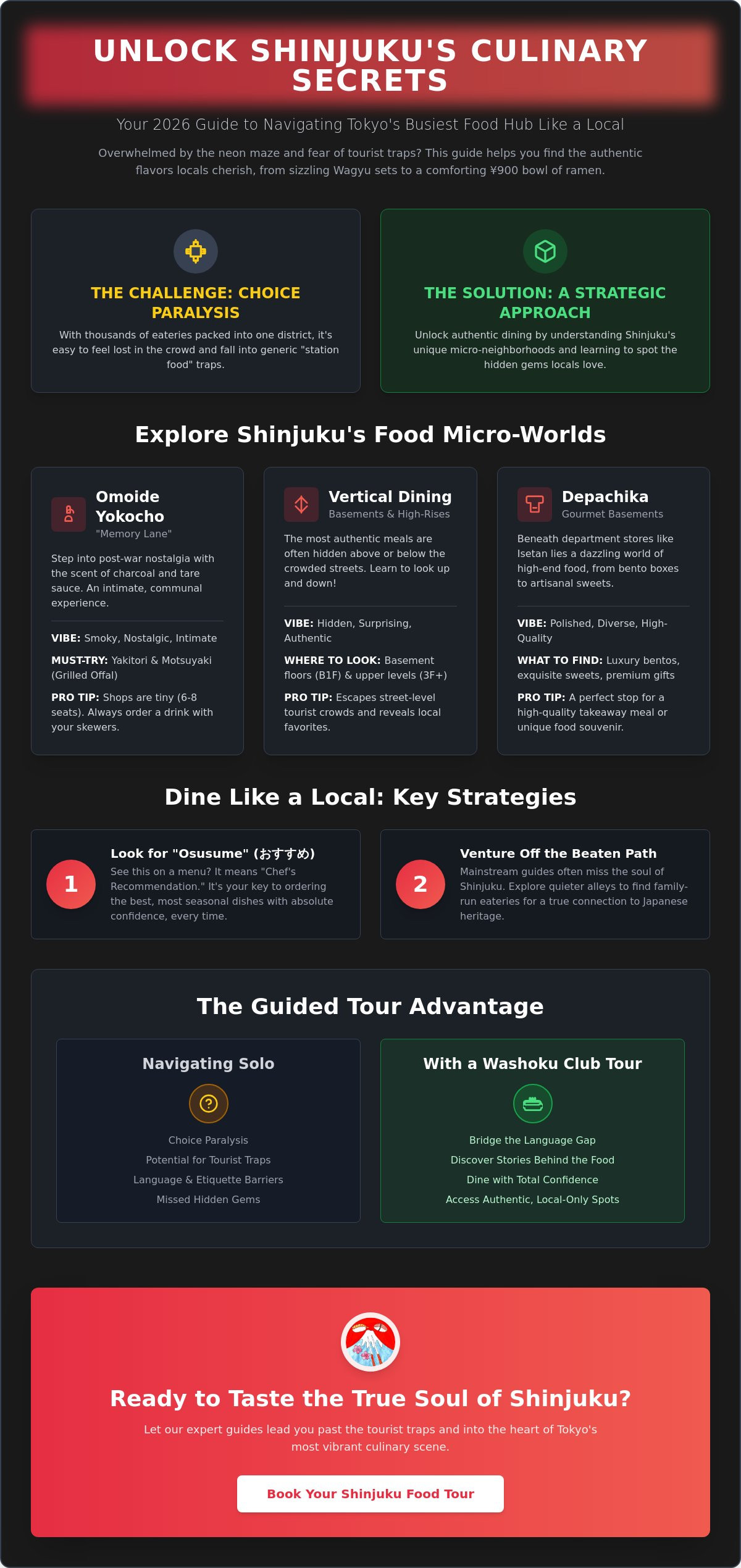
Omoide Yokocho, or “Memory Lane,” is the heart of charcoal-grilled nostalgia. As you step into this narrow passage, the scent of tare sauce hitting hot coals greets you instantly. It’s a sensory journey where you’ll find Motsuyaki (grilled offal) and seasonal vegetable skewers prepared with incredible precision. Space is at a premium here. Most shops only have six to eight seats, creating an intimate, communal atmosphere. It’s polite to keep your stay brief if others are waiting, and always remember to order a drink alongside your skewers as a sign of respect for the house. This is where the spirit of “Washoku” meets the grit of the post-war era.
The Gourmet Basements (Depachika)
Beneath the polished floors of giants like Isetan and Takashimaya lies the “Depachika” culture. These are gourmet food halls that represent the pinnacle of Japanese food presentation and quality. It’s the best place to find high-end “Omiyage” (food gifts) like artisan wagashi or perfectly ripened seasonal fruits. While the upper floors house sophisticated sit-down restaurants, the basement is where you find a treasure trove of takeaway treasures. We often find that a guided walk through these micro-neighbourhoods is the best way to feel the transition from street-level grit to basement-level luxury without feeling overwhelmed by the choices.
Just a short walk away, Golden Gai offers a maze of over 200 tiny bars, many serving experimental snacks that pair perfectly with a local drink. Meanwhile, Nishi-Shinjuku provides a different vibe altogether. This is where the “salaryman” culture thrives. You’ll find bustling Izakayas hidden in the shadows of high-rise buildings, offering hearty shinjuku food that fuels the city’s workforce. Each area tells a different story of the people who live and work here, making every meal a personal connection to the city.
Essential Dishes to Experience in Shinjuku
While the neon lights and hidden alleys provide the atmosphere, it’s the craftsmanship on the plate that truly defines the shinjuku food experience. In this district, dining is an act of storytelling. Every bowl of steaming ramen and every perfectly marbled slice of beef carries the legacy of the artisans who have perfected their craft over generations. Whether you are looking for a quick, soul-warming meal or a multi-course celebration, you’ll find that the best restaurants in Shinjuku offer a level of dedication that is rare to find elsewhere in the world.
The Art of Tempura in Shinjuku
Shinjuku is a historic stronghold for tempura, home to masters who have spent decades learning how to balance heat, oil, and batter. There is a significant difference between the “street” tempura you might find in a bento box and the refined “counter” service found in the district’s specialized shops. At a tempura counter, the chef prepares each piece right before your eyes, serving it the moment it leaves the wok. The perfect tempura crunch is a delicate, golden veil that shatters to reveal the deep Umami of the ingredient hidden within. It’s a light-as-air experience that feels worlds away from the heavy, greasy versions often found outside of Japan.
A5 Wagyu Yakiniku: The Ultimate Indulgence
For many of our guests, the highlight of their journey is the A5 Wagyu Yakiniku Experience. Yakiniku is more than just a meal; it’s a social ritual where you take center stage as the griller at your own table. When you’re looking for the highest quality, you’re searching for the elusive A5 grade, which signifies the most intense marbling and buttery texture. Authentic sourcing is key here. You want to see the intricate, snowflake-like patterns of fat that melt at room temperature. Grilling these thin slices over a high flame creates a caramelized exterior while the inside remains incredibly tender, offering a sensory journey that defines Japanese luxury dining.
Ramen and Seasonal Wagashi
The variety of shinjuku food extends deeply into the world of ramen. You can find everything from the heavy, creamy Tonkotsu broths of the West to delicate, clear seafood broths that highlight the natural sweetness of the ocean. Most budget-friendly bowls range between ¥900 and ¥1,500, making it an accessible way to taste the city’s diversity. To finish your culinary exploration, we always recommend seeking out seasonal Wagashi. These traditional sweets change every month to reflect the current season, using ingredients like cherry blossoms in spring or chestnuts in autumn. They are a beautiful reminder of the “Washoku” philosophy: eating in harmony with nature’s rhythm.
Navigating Shinjuku: A Local’s Strategy for Authentic Dining
Finding the most soul-stirring shinjuku food isn’t about following the longest line or the brightest neon sign. In fact, we often find that the most popular spots on social media are just well-marketed tourist traps. To eat like a local, you have to change your perspective. It’s about looking up, looking down, and understanding the subtle cues that signal quality. We want you to feel like a welcomed guest in these spaces, not just another traveler passing through. By adopting a few simple strategies, you can bypass the crowds and step into the authentic heart of the district’s culinary scene.
Timing is your greatest ally. While the city feels like it never sleeps, the kitchens certainly do. To catch the chefs at their most focused and the ingredients at their freshest, we recommend aiming for the “magic hours” of 11:30 AM for lunch and 5:30 PM for dinner. Arriving just as the curtains (noren) are hung ensures you get a seat before the post-work rush. If you find yourself staring at a menu without translations, don’t panic. Simply look for the word “Osusume.” This means “recommendation,” and it’s the chef’s way of telling you what is seasonal, fresh, and representative of their best work.
Beyond the Ground Floor
In Shinjuku, the street level is expensive real estate often dominated by international chains. The true masters are usually found in “vertical dining” complexes. You’ll need to master the art of reading the “kanban” building directories. These vertical signs list restaurants floor by floor. Don’t be afraid to step into a narrow elevator and head to the 4th floor or wander down to a B2 basement level. These hidden locations often boast lower rents, which allows the family-run businesses to invest more in high-quality ingredients. There is a special kind of excitement in leaving the noise of the street behind and discovering a quiet, wood-paneled sanctuary three stories above the neon lights.
Etiquette and Cultural Fluency
We believe that respecting the artisan is just as important as enjoying the meal. When you sit down at an Izakaya, you’ll often be served a small, unrequested dish called “Otoshi.” This is a traditional table charge that doubles as a welcoming appetizer. It’s a beautiful part of the Japanese hospitality spirit, so embrace it as the start of your journey. In shops with open kitchens, a simple nod to the chef goes a long way. If you want to skip the guesswork and dive straight into the best-kept secrets of the area, we invite you to join one of our Shinjuku Food Tours. It’s the most reliable way to bridge the language gap and experience the “Washoku” philosophy through the eyes of a passionate local guide.
Joining the Club: Why a Guided Shinjuku Food Tour is Essential
Exploring the labyrinth of Shinjuku on your own is a brave adventure, but there is a profound difference between seeing the district and truly understanding it. We believe that the best way to experience shinjuku food is through the eyes of someone who lives its stories every day. A “Passionate Local Guide” does more than just translate a menu; they act as a cultural bridge, helping you navigate the subtle social cues of an Izakaya or the specific etiquette of a high-end tempura counter. At the Washoku Club, we are committed to providing authentic, off-the-beaten-path experiences that prioritize connection over simple transactions.
The true magic of our journey lies in the people we meet along the way. Behind every simmering pot of broth or perfectly sliced piece of sashimi is a family, an artisan, or a chef who has dedicated their life to a specific craft. We want you to hear these stories. By meeting the faces behind the flavors, your meal transforms from a simple dish into a piece of Japanese heritage. This human storytelling is what elevates a standard outing into a lifelong memory, ensuring you feel like a welcomed guest in the city’s most private culinary sanctuaries.
What to Expect on a Shinjuku Food Tour
When you join us, you aren’t just signing up for a meal; you’re embarking on a curated journey through the very micro-neighborhoods we’ve explored in this guide. We keep our group sizes small by design. This allows us to slip into those tiny, six-seat shops in Omoide Yokocho or claim a spot at an intimate counter where you can watch the chef’s hands at work. It is the perfect balance of education, historical context, and pure, unadulterated indulgence. You’ll learn the “why” behind the “what,” gaining a deep appreciation for the “Washoku” philosophy while tasting the most vibrant shinjuku food available in 2026.
Booking Your Culinary Adventure
Choosing the right experience depends on the vibe of your trip. While our group tours offer a wonderful social atmosphere for meeting fellow food lovers, our private food tours in Tokyo provide a more tailored pace for families or those seeking a specific culinary focus. To prepare for your adventure, we have two simple pieces of advice: come with a very healthy appetite and wear your most comfortable walking shoes. Shinjuku is a district meant to be explored on foot, and there are many hidden gems waiting just around the next corner. We invite you to join our next Shinjuku food tour and eat like a local! Our family is eager to share the secrets of our favorite neighborhood with you.
Start Your Authentic Shinjuku Adventure Today
Shinjuku is a vibrant tapestry of flavors and stories that reward those who look beyond the neon lights. By mastering the art of vertical dining and exploring the smoky nostalgia of its hidden alleys, you can experience the true soul of shinjuku food. We founded Washoku Club in 2016 with a single mission: to share the authentic gastronomy of Japan while avoiding the hollow experience of tourist traps. Our expert-led journeys focus on the people behind the flavors, from the dedicated ramen masters to the families running multi-generational tempura stalls.
We invite you to sit at our table and feel the warmth of genuine Japanese hospitality. Whether it’s your first visit or your tenth, there is always a new hidden gem waiting to be discovered. Discover the best Shinjuku food tours with Washoku Club and let us guide you through an unforgettable culinary landscape. Your seat is waiting.
Frequently Asked Questions
Is Shinjuku food expensive compared to other parts of Tokyo?
Shinjuku offers a vast spectrum of prices that cater to every type of traveler. You can find soul-warming bowls of ramen for as little as ¥900, while high-end omakase experiences in the skyscrapers can reach ¥40,000 or more. Mid-range Izakayas typically provide a fantastic meal for between ¥3,000 and ¥6,000. It’s a district where budget street stalls and luxury dining live side by side, making shinjuku food accessible to everyone.
Can I find vegetarian or vegan food options in Shinjuku?
Finding plant-based meals is much easier in 2026, though it still helps to have a local’s guidance. While traditional dashi often contains fish, Shinjuku now hosts several dedicated vegan ramen shops and organic cafes near the station. We recommend looking for the “vegan” or “halal” symbols on shop windows. Many department store basements also offer a beautiful variety of seasonal vegetable dishes that are naturally meat-free.
What is the best time of day to explore the Shinjuku food scene?
The magic hours for dining are 11:30 AM for lunch and 5:30 PM for dinner. Arriving right as the doors open allows you to beat the rush of local office workers and secure a seat at popular counter-service spots. If you love the atmospheric glow of neon and lanterns, the alleys come alive after 6:00 PM. Weekdays are generally quieter than weekends, offering a more relaxed pace for exploration.
Do I need to make reservations for restaurants in Shinjuku?
Reservations are highly recommended for high-end dining, themed restaurants, or specific Michelin-starred spots, as these can book up weeks in advance. For casual eateries, ramen shops, and the tiny stalls in Omoide Yokocho, walk-ins are the standard practice. If you have your heart set on a particular famous table, using a multilingual booking app is a smart way to navigate the “no-show” policies many places now enforce.
What is Omoide Yokocho and why is it famous for food?
Omoide Yokocho, or “Memory Lane,” is a nostalgic network of narrow alleys famous for charcoal-grilled yakitori and its post-war charm. It is a cornerstone of the shinjuku food scene where you can experience the gritty, authentic heart of old Tokyo. The scent of grilled skewers and the sight of steam rising from tiny kitchens create a sensory experience that feels like stepping back in time. It is perfect for communal dining.
Are there family-friendly dining options in the Shinjuku area?
Yes, Shinjuku is very welcoming to families, especially within the major department stores. Places like Isetan or Takashimaya have spacious restaurant floors with diverse menus and high chairs. These floors offer a quieter retreat from the bustling streets. We also provide specialized kids-friendly tours of Tokyo that focus on fun, accessible flavors in environments where children can feel comfortable and excited about trying new things.
What should I do if a restaurant menu is only in Japanese?
Don’t be intimidated by a Japanese-only menu, as it often signals a very authentic local spot. You can simply smile and ask for the “Osusume,” which means “recommendation.” This tells the chef you trust them to serve their best seasonal dish. Many travelers also use translation apps on their phones, but we find that embracing the chef’s choice often leads to the most delicious and surprising culinary discoveries of the trip.
Is it safe to eat at the small stalls in Golden Gai?
It is exceptionally safe to eat at any stall in Golden Gai. Japan maintains very strict sanitation standards based on HACCP principles, even for the smallest and most historic wooden establishments. While these bars are famous for their drinks, many also serve unique snacks and “soul food” dishes. Just be aware that some spots have a small cover charge, which is a common local practice to support these tiny, independent businesses.