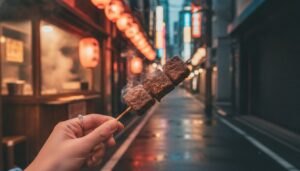

Imagine standing at the center of the world’s busiest intersection, surrounded by a sea of 3,000 people, yet feeling completely alone in your search for a meal that isn’t a neon-lit chain restaurant. You’ve likely felt that dizzying sensation of looking up at Shibuya’s towering glass skyscrapers and wondering where the “real” Tokyo is hiding. It’s natural to feel overwhelmed by the sheer verticality of these buildings or worry about accidentally stumbling into a tourist trap with mediocre food and high prices. We understand that anxiety, especially with 2026 regulations like the new street littering fines making even a simple snack feel a bit complicated for a first-timer.
We’re here to show you that the heart of Japanese culinary tradition isn’t lost; it’s just tucked away in the back-alleys and basement nooks that most visitors walk right past. By joining a shibuya crossing food tour, you’ll gain the confidence to navigate these hidden layers like a local, mastering dining etiquette while discovering flavors that have remained unchanged for generations. This guide will walk you through the seasonal secrets of Shibuya’s most authentic eateries, from standing bars to family-run gems, ensuring your journey through the scramble is as delicious as it is memorable. Welcome to our community of food lovers; your table is waiting.
Key Takeaways
- Learn to navigate the “vertical kitchen” of Shibuya by exploring hidden basement food halls and high-rise gems tucked away from the street-level crowds.
- Discover why a guided shibuya crossing food tour is the best way to bypass overwhelming mass-market chains and find authentic, family-run eateries.
- Gain a clear understanding of the dramatic shift between daytime snacks and evening Izakaya culture to help you plan the perfect culinary adventure.
- Master essential local etiquette, including the “no eating while walking” rule, ensuring you show respect for Japanese traditions while you explore.
- Uncover the human stories behind every bite as we introduce you to the passionate artisans who keep Tokyo’s traditional flavors alive amidst the neon lights.
Beyond the Scramble: Why a Guided Food Tour is Essential in Shibuya
Shibuya is more than just a crossing; it’s a sensory explosion of sizzling yakitori, the deep aroma of dashi, and the vibrant energy of modern Tokyo. When you join us for a shibuya crossing food tour, you aren’t just eating; you’re embarking on a curated journey through Japan’s modern culinary capital. While the lights of the scramble are iconic, the true magic happens when we step away from the neon glow and into the quiet, steam-filled kitchens of local artisans who’ve spent decades perfecting their craft. We invite you to see the city through our eyes, where every bite tells a story of heritage and innovation.
It’s easy to feel overwhelmed here. Shibuya presents a “Paradox of Choice” with thousands of dining options packed into just a few city blocks. Unfortunately, many of the most visible spots are mass-market chains or tourist traps that prioritize speed over soul. We help you cut through the noise. Our passionate local guides act as your bridge to traditional artisans, unlocking doors to tiny eateries that don’t have English menus or even a street-level sign. These are the places where “Washoku” is served with heart and hospitality, and you’ll see why a guided shibuya crossing food tour is the secret to finding quality amidst the quantity.
The Challenge of the “Vertical Neighborhood”
Shibuya is a 3D puzzle. The most authentic culinary treasures are often “hidden in plain sight” on the 4th floor of a nondescript building or tucked away in a B1 basement level. Digital maps often struggle in these high-density, multi-level districts, leaving you wandering in circles. We know these buildings inside and out. We’ll lead you directly to that perfect bowl of ramen or seasonal sashimi you’d never find alone.
A National Perspective on Local Flavors
Understanding the history of Shibuya helps you appreciate how it became a microcosm for culinary trends across Japan. If you want to see how this energy compares to other regions, explore our full range of Japanese food tours. While Shibuya captures the pulse of the future, an Asakusa food tour offers a contrast rooted in the traditional atmosphere of old Tokyo.
The Vertical Kitchen: Uncovering Hidden Gastronomy in Shibuya’s Alleys
To truly understand Shibuya, you have to look beyond the street level. While the scramble is a horizontal marvel of movement, the culinary soul of this district is decidedly vertical. Just steps from the intersection, the air carries the savory promise of Umami, the “fifth taste” that anchors Japanese cuisine. On a shibuya crossing food tour, we guide you through these hidden layers, starting deep beneath the earth in the legendary Depachika. These are not mere grocery stores; they are vibrant hubs of flavor where traditional techniques meet modern presentation.
Depachika: The Underground Food Cathedrals
Imagine a cathedral dedicated entirely to gastronomy. These basement food halls, found beneath major department stores, offer a dizzying array of textures and aromas that can overwhelm the uninitiated. You’ll find everything from perfectly marbled Wagyu to delicate seasonal Wagashi, traditional sweets that look like tiny, edible works of art. A Depachika is a cultural phenomenon that combines high-end luxury with the accessibility of a daily market, offering a curated snapshot of regional flavors from across the Japanese archipelago. It’s the perfect place to witness the profound respect for ingredients that defines Washoku, a UNESCO Intangible Cultural Heritage.
The Soul of the Yokocho: Nonbei Yokocho and Beyond
As the sun dips below the skyscrapers, we lead you into the lantern-lit embrace of the Yokocho. These are the narrow, atmospheric alleys, like Nonbei Yokocho (Drunkard’s Alley), where Showa-era nostalgia survives in the shadow of glass towers. Here, the “people” are the heart of the experience. You’ll sit at a counter barely wide enough for four people, watching a master chef who has grilled the same succulent yakitori for forty years. These intimate spaces have their own social rhythm; it’s about sharing a moment and a small plate while respecting the quiet harmony of the room. We’ll help you navigate the unspoken etiquette of these tiny Izakayas, ensuring you feel like a welcomed guest rather than a stranger.
Shibuya is also home to dedicated artisans who focus on a single craft with obsessive detail. Whether it’s a shop specializing solely in a specific cut of A5 Wagyu or a quiet nook serving seasonal soul food, the dedication to quality is palpable. This level of specialization is what makes a shibuya crossing food tour so rewarding for the curious traveler. If you’re ready to taste these hidden layers for yourself, you might enjoy exploring our curated selection of Tokyo experiences. We take pride in showing you the side of Shibuya that most people simply walk over.
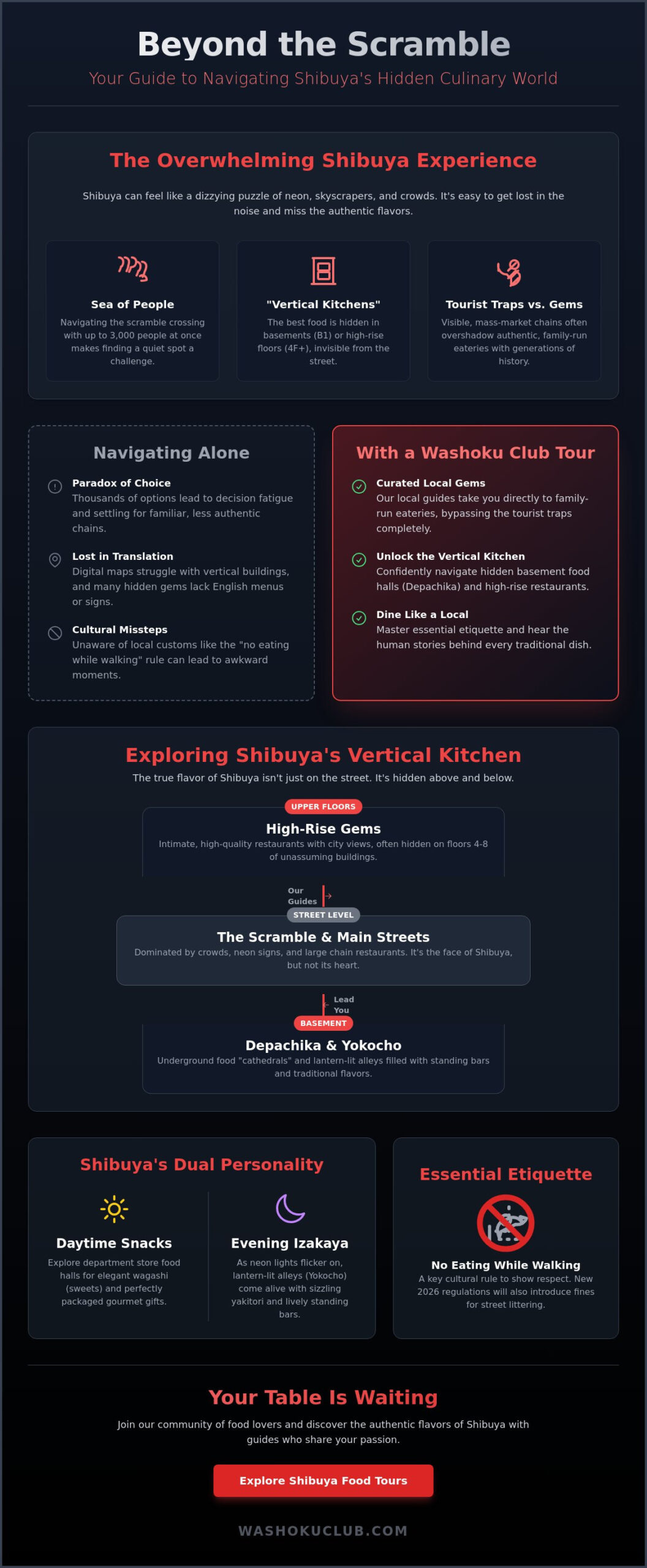
Neon vs. Nostalgia: Comparing Daytime and Evening Culinary Excursions
Shibuya is a chameleon that sheds its skin as the sun dips below the horizon. Choosing the right time for your shibuya crossing food tour depends entirely on the “vibe” you want to capture. During the day, the district is a high-energy playground of fashion and light, while the evening transforms it into a glowing labyrinth of neon signs and smoky back-alleys. Each timeframe offers a distinct culinary palette, and understanding these shifts is the key to a truly authentic experience. We love showing guests how the same street can tell two completely different stories depending on the lighting.
Daytime: Market Flavors and “Kawaii” Culture
Daylight brings out the vibrant, playful side of Shibuya’s food scene. If you wander through Center-Gai at noon, you’ll be greeted by the “Kawaii” culture that has made Tokyo famous worldwide. Here, the snacks are designed to be as visually stunning as they are delicious, featuring rainbow-colored treats and artistic desserts that are perfect for street food photography. However, we also make sure to ground this modern energy in tradition. We’ll introduce you to classic “Washoku” snacks like Dango (sweet rice dumplings) or Taiyaki (fish-shaped cakes filled with red bean paste) that have been enjoyed for centuries. Daytime excursions are particularly ideal for families or those who want to navigate the crossing while the architecture is fully visible. It’s a time for exploration, where every corner reveals a new color or a seasonal limited-edition treat.
Evening: The Izakaya Experience and Nightlife
As 8:00 PM approaches, the atmosphere thickens with the enticing scent of charcoal and soy sauce. This is when the “Soul Food” of Tokyo truly shines. The focus shifts from light snacks to the hearty, savory world of the Izakaya. Izakaya hopping is the quintessential evening activity, where we lead you into intimate spaces to share plates of succulent Yakitori or sizzling Yakiniku. The social energy is palpable; it’s about the clinking of glasses and the warm hum of conversation between locals and visitors. Because these spaces are often small and traditional, following Japanese dining etiquette is essential to ensure a respectful and immersive experience. While Shibuya offers a modern take on this nightlife, travelers seeking a different regional flavor might also enjoy a private food tour in Osaka to experience the “Kuidaore” spirit of the south. Whether you choose the neon-lit night or the bustling day, we’re here to ensure your journey is filled with genuine connection and unforgettable flavors.
Navigating the Scramble: Essential Etiquette and Tips for Your Adventure
Stepping into the sea of people at Shibuya Crossing is an exhilarating rite of passage, but doing so with “Omotenashi” in mind ensures you move with the rhythm of the city rather than against it. While the chaos looks random, there’s a subtle harmony to how thousands of people avoid collision. On a shibuya crossing food tour, we teach you to embrace this flow, treating the intersection not just as a photo opportunity but as a gateway to the district’s culinary heart. Navigating this space with respect for those around you is the first step toward a truly authentic Tokyo experience.
One of the most important cultural nuances to master is the “No Eating While Walking” rule. In Japan, food is something to be honored and enjoyed while stationary. You’ll notice locals standing near a stall or sitting in a designated area to finish their snack before moving on. This tradition is more than just polite; it’s practical. As of June 1, 2026, Shibuya Ward has implemented a ¥2,000 on-the-spot fine for littering. Since public trash cans are notoriously scarce in Tokyo, eating in place allows you to return your wrappers or skewers directly to the vendor, keeping the streets clean and your wallet full.
When it comes to payments, the landscape has shifted. While many small, traditional stalls still prefer cash, most now accept IC cards like Suica or Pasmo, and even the new littering fines can be paid via QR code. We recommend keeping a mix of both. Having a small coin purse is essential for those 6-seat “hole-in-the-wall” gems where the master chef might still use a manual register. Being prepared with the right payment method is a small but significant way to show you value the artisan’s time.
The “Scramble” Strategy for Foodies
Before you dive in, head to a high vantage point like the Shibuya Sky or the second floor of the station to map your route. To reach the best food zones without getting lost, use these specific exit strategies:
- Hachiko Exit: Leads you straight into Center-Gai for vibrant daytime snacks.
- Moyai Statue Exit: A short walk to the nostalgic lanterns of Nonbei Yokocho.
- West Exit: The gateway to high-rise “vertical” dining and sophisticated Izakayas.
Dining Etiquette: Respecting the Local Artisans
Entering a tiny shop requires a gentle touch. Always wait for a nod from the staff before taking a seat, and keep your voice at a conversational level to maintain the shop’s atmosphere. Use “Sumimasen” to get attention and “Gochisousama-deshita” to thank the chef when you finish. Itadakimasu is a beautiful phrase used before eating that expresses deep gratitude to the ingredients, the farmers, and the chef for the life-giving meal you are about to receive. If you want to practice these customs in a supportive environment, we invite you to book one of our guided Tokyo tours and let us introduce you to the artisans personally.
Joining the Club: The Washoku Club culture and food tours Approach to Authentic Experiences
At Washoku Club culture and food tours, we believe that the best way to understand a culture is through its flavors and the people who protect them. When you join our shibuya crossing food tour, you aren’t just a customer; you’re a welcomed guest in our community of food lovers. We’ve made it our mission to reject the hollow allure of tourist traps in favor of authentic, off-the-beaten-path discoveries. Our tours are designed to bridge the gap between international visitors and the local traditions that make Tokyo so special, ensuring every bite carries a sense of place and purpose.
The secret to a truly memorable meal isn’t just the ingredients; it’s the human storytelling behind the counter. We focus on the “who” as much as the “what.” Whether it’s a third-generation artisan perfecting a seasonal sauce or a family-run Izakaya that has survived the rapid modernization of the district, these are the stories we want to share with you. This deep culinary immersion is what defines our spirit at Washoku Club culture and food tours. We invite you to slow down, listen to the sizzle of the grill, and connect with the heart of Japanese hospitality.
Shibuya is a vibrant, neon-lit chapter in the larger story of Japanese gastronomy, but it’s only the beginning. From the refined traditions of Kyoto to the bold street food of Osaka, every region offers a unique perspective on Washoku. We see our shibuya crossing food tour as an invitation to explore the culinary layers of the entire nation, one hidden gem at a time.
Why We Focus on Hidden Gems
Our selection process for the shops we visit is rigorous and deeply personal. We look for more than just great taste; we seek out quality, a rich sense of history, and the unique personality of the owner. By choosing these smaller establishments, we actively support the family-run businesses that form the backbone of Tokyo’s food scene. These artisans are the keepers of tradition, and your visit helps ensure their crafts continue to thrive. We encourage you to explore all our guided tours to see how this commitment to authenticity extends across Japan’s most iconic cities.
Ready to Taste the Real Shibuya?
Your journey through the scramble is about more than just crossing a street. It’s about the transition from the overwhelming energy of the crowds to the quiet, steam-filled sanctuary of a secret alleyway. You’ve learned the etiquette, understood the verticality of the neighborhood, and discovered the difference between daytime snacks and evening soul food. Now, the only thing left is to experience it for yourself. We invite you to join Washoku Club culture and food tours for an upcoming adventure where the flavors are bold, the stories are real, and the hospitality is boundless. Let’s discover the real Shibuya together.
Your Seat at the Table Awaits
Shibuya is a district that rewards the curious and the brave. By looking beyond the neon lights and diving into the vertical layers of the city, you’ve unlocked a world where traditional craftsmanship thrives amidst modern chaos. We’ve explored everything from the underground food cathedrals to the lantern-lit alleys where Umami is a way of life. You now have the tools and etiquette to navigate the scramble with confidence, ensuring every meal is a meaningful encounter rather than just a quick bite.
Since we were founded in 2016, our passion at Washoku Club culture and food tours has always been to provide warm, personal service rooted in the spirit of Japanese hospitality. We take great pride in our expert-led journeys that focus on off-the-beaten-path hidden gems you won’t find in any guidebook. We’d love to welcome you as a guest on our next shibuya crossing food tour to show you the side of Japan we love most. Join the Washoku Club culture and food tours and discover the hidden flavors of Shibuya today! We can’t wait to share these stories and flavors with you.
Frequently Asked Questions
Is a Shibuya food tour worth it for a first-time visitor?
Yes, a shibuya crossing food tour is exceptionally valuable for first-time visitors because it removes the stress of navigating the district’s complex vertical layout. Instead of wandering aimlessly or settling for a mass-market chain, you’ll be led directly to authentic spots that most tourists overlook. It’s the most efficient way to overcome the “Paradox of Choice” and ensure your first taste of Tokyo is rooted in genuine quality and hospitality.
What kind of food can I expect to eat on a Shibuya crossing food tour?
You can expect a diverse sensory journey ranging from succulent Yakitori grilled over charcoal to delicate, seasonal Wagashi sweets found in the underground Depachika. Many tours also feature premium A5 Wagyu, traditional “soul food” like savory Okonomiyaki, and regional specialties from across Japan. Every dish is chosen to highlight the deep Umami flavors and meticulous preparation that define the Washoku tradition.
Are there vegetarian or gluten-free options available on these tours?
Yes, we can accommodate various dietary needs with advanced notice, as there is a growing demand for specialized culinary experiences in Tokyo. While traditional Japanese cuisine often uses dashi or soy sauce, we work closely with our local partners to curate delicious vegetarian or gluten-free alternatives. Please let us know your requirements when booking so we can ensure your experience is both safe and satisfying.
What is the best time of day to take a food tour in Shibuya?
The best time depends on the atmosphere you prefer, as the district offers two distinct personalities. Daytime tours are perfect for families and photography enthusiasts who want to see the vibrant “Kawaii” culture and traditional market snacks in full light. Evening tours are ideal for those seeking the social energy of Izakaya hopping and the glow of the back-alley lanterns after the sun sets.
Do I need to be able to speak Japanese to enjoy the local food spots?
No, you don’t need to speak the language to enjoy an authentic meal when you are with a local guide. We act as your cultural bridge, handling all the ordering and explaining the history behind each dish. We’ll also teach you essential phrases like “Itadakimasu” and “Gochisousama-deshita” so you can interact respectfully with the artisans and feel like a welcomed guest in their shops.
How much walking is involved in a typical Shibuya food tour?
A typical tour involves approximately 2 to 3 kilometers of moderate walking over a period of 3 to 4 hours. We move at a deliberate, relaxed pace that mirrors the flow of a well-curated meal, with plenty of stops to sit and enjoy the food. We recommend wearing comfortable shoes as we’ll be navigating several levels of buildings and the narrow, atmospheric alleys of the Yokocho.
Can children join the food tours in Shibuya?
Yes, we offer family friendly food tours in tokyo that are designed to be engaging for guests of all ages. Many of the snacks found near the crossing are a hit with younger travelers, and we ensure the pace is manageable for little legs. Please keep in mind that the legal drinking age in Japan is 20, so alcohol will only be served to adults during the Izakaya portions of the journey.
What should I bring with me on a guided food tour?
You should bring comfortable walking shoes, a small bag for personal items, and a healthy appetite. It’s also very helpful to carry a small plastic bag for your own trash, as public bins are notoriously difficult to find in Shibuya. Since the ward implemented a ¥2,000 littering fine on June 1, 2026, being prepared to manage your own waste is a practical way to show respect for the local environment.