

What if the most authentic flavors of Japan aren’t found in a Michelin-starred skyscraper, but along a 670-meter stretch of family-run stalls where the recipes haven’t changed in decades? It’s easy to feel overwhelmed by the country’s endless options or worry that you’re missing out on the “real” Japan because of language barriers at local shops. We understand that common anxiety of wanting to dive deeper into the culture while fearing you’ll just end up at another tourist trap.
By joining a Sunamachi Ginza food tour with Washoku Club culture and food tours, you’ll step into a nostalgic atmosphere that most visitors never see. We’ll help you explore this side-dish paradise with total confidence, ensuring you taste heartwarming “soul food” and connect with the local artisans behind every bite. In this guide, we’ll preview the essential “osozai” snacks to try, the secrets of this historic market, and how to experience the true spirit of Japanese hospitality away from the crowds.
Key Takeaways
- Step into the heart of a traditional “Shotengai” to experience an authentic side-dish paradise that remains a cherished hidden gem for local food lovers.
- Explore the sensory delights of “tabearuki” with a curated selection of soul foods, ranging from savory, steaming stews to artisanal fried delicacies.
- Discover how the intimate atmosphere and generous portions of this local hub offer a more meaningful culinary journey than Tokyo’s more commercial markets.
- Unlock the secrets of the market by learning the “Wednesday Rule” and see why a Sunamachi Ginza food tour is essential for navigating shops that lack English menus.
- Connect deeply with multi-generational artisans through guided stories that transform your meal into a series of heartwarming cultural exchanges.
Sunamachi Ginza: A Journey into the Heart of Traditional Market Culture
Imagine walking down a street where the air smells of sweet soy glaze and freshly fried panko. This is Sunamachi Ginza, a legendary shopping district that stretches 670 meters through the quiet Koto ward. While much of Tokyo races toward the future with glass skyscrapers and automated cafes, this neighborhood remains a living museum of traditional market culture. It’s a place where time slows down, and every shopkeeper greets you with a genuine smile that makes you feel like an old friend.
Our Sunamachi Ginza food tour isn’t just about eating; it’s about stepping into a community that has thrived since the post-war era. You won’t find flashy neon signs or international chains here. Instead, you’ll find warmth. You’ll find history. You’ll find the soul of Tokyo preserved in every hand-wrapped dumpling and simmering pot of oden. It’s an invitation to see the city through the eyes of the people who call it home.
To better understand this vibrant local atmosphere, watch this helpful video exploring the sights and sounds of the market:
What is a Shotengai? Understanding the Local Shopping Street
In Japan, a “Shotengai” is more than just a place to buy groceries. It’s the social heartbeat of the neighborhood. These streets are designed for walking, creating a space where neighbors chat and shopkeepers know your name. As you stroll, the sensory experience is overwhelming in the best way possible. You’ll hear the rhythmic calls of vendors inviting you to try their daily specials and smell the rich aroma of tempura being prepared in small batches. While many of these districts are disappearing due to modern supermarkets, Sunamachi Ginza stands firm as a must-visit destination. If you’re curious about other historic corners of the city, we invite you to browse our full range of Tokyo experiences.
The “Side-Dish” Culture: Why This Market is Different
What truly sets this market apart is its reputation as a “side-dish paradise.” In Japanese, these prepared foods are called “Sozai” or “Osozai.” They are the flavorful building blocks of a traditional home-cooked meal. Families come here to pick up grilled yakitori, crispy croquettes, and seasonal pickles to serve at their dinner tables. Unlike markets built for tourists where prices are inflated and the vibe feels staged, Sunamachi Ginza is a “living market.” It serves the people who live here. This local-first approach ensures that every bite you take is honest, affordable, and deeply rooted in the flavors of Washoku. To truly understand these layers of flavor, joining a Sunamachi Ginza food tour offers an unparalleled window into the heart of the community.
Must-Try Delicacies: A Sensory Tour of Sunamachi’s Famous Flavors
Walking through Sunamachi Ginza feels like a feast for every sense. We often practice “tabearuki,” or the art of walking and eating, which is a beloved tradition in these local corridors. It’s important to do this respectfully, usually by standing near the stall where you purchased your snack to savor the flavor. This practice allows you to fully engage with Tokyo’s market culture without the rush of modern life. On a Sunamachi Ginza food tour, we guide you through these customs so you can eat like a local while feeling completely at home.
The real magic lies in the hands of the artisans. Many of these stalls are run by third-generation families who have perfected a single recipe over decades. They use seasonal ingredients that reflect the changing landscape of Japan, from spring bamboo shoots to winter root vegetables. This commitment to “shun” (seasonality) ensures that the flavors are always at their peak. It’s soul food in its purest form. Every bite tells a story of heritage and hard work.
The Art of Oden and Tempura: Classic Comfort Foods
The steam rising from a deep vat of Oden is a welcome sight on a cool afternoon. This classic comfort food features ingredients like daikon radish and hand-pressed fish cakes simmered in a rich, umami-filled dashi broth for hours. Nearby, you’ll find market tempura that’s worlds away from the heavy versions found in tourist spots. It’s light, airy, and incredibly crisp. Locals often favor the “kakiage” (vegetable fritters) or seasonal seafood, each piece fried to order by masters who have spent a lifetime at the wok.
Regional Sweets and Snacks: From Taiyaki to Green Tea
No visit is complete without something sweet. You’ll likely smell the Taiyaki before you see it. These fish-shaped cakes are filled with “anko” (sweet red bean paste) and served piping hot with a crispy exterior. To balance the sweetness, follow the scent of roasting leaves to a local tea merchant. The aroma of freshly roasted hojicha is intoxicating. Don’t forget to look for “Agemochi,” which are fried rice crackers that offer a satisfying crunch. These small treasures are why a Sunamachi Ginza food tour remains a favorite for those seeking the authentic side of the city. If you’re ready to taste these traditions for yourself, our carefully curated food experiences are waiting to welcome you.
Sunamachi Ginza vs. Famous Markets: Choosing Your Authentic Adventure
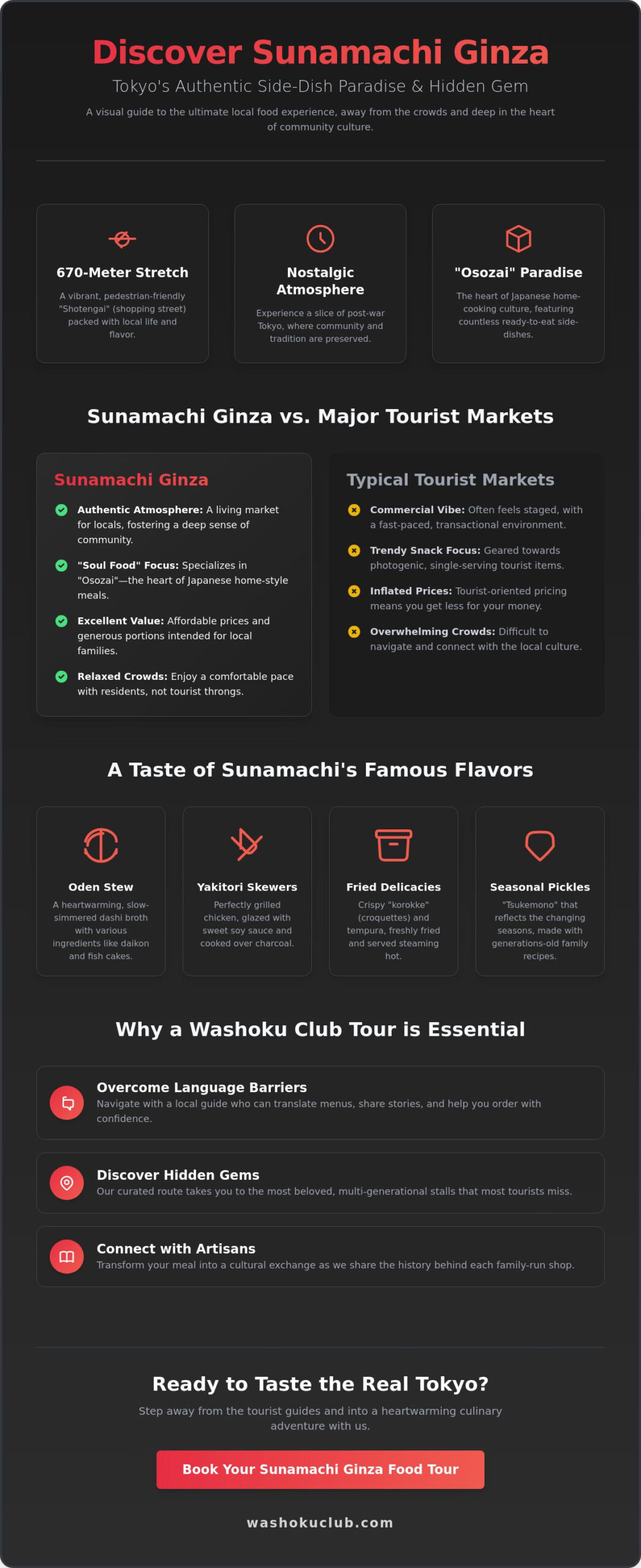
While Tokyo’s world-famous landmarks have their own undeniable charm, they often feel like they’re performing for an audience. In contrast, the Sunamachi Ginza Shopping District doesn’t put on a show. It simply exists for the community. You won’t find the aggressive hustle or inflated prices of the more commercialized hubs here. Instead, you’ll find a quiet dignity in the way a grandmother carefully selects her evening pickles. It’s a place where the “crowd factor” is replaced by a gentle, rhythmic flow of local life. You can actually breathe here.
Choosing a Sunamachi Ginza food tour means choosing connection over simple consumption. In the city’s major tourist markets, the relationship is often purely transactional. You pay a premium for the convenience of English signage and photo-ready stalls. In Sunamachi, the lack of English menus isn’t a barrier but an invitation to interact. It’s a much more human experience. You aren’t just another face in a sea of tourists; you’re a welcomed guest in a neighborhood that prides itself on its heritage. This is where the spirit of Japanese hospitality truly shines.
The ‘Real Japan’ Factor: Why Travelers Crave Authenticity
In 2026, we’ve noticed a significant shift in how people want to travel. The modern adventurer is looking for “off-the-beaten-path” experiences that offer more than just a curated photo op. One traveler recently shared with us that they desperately wanted a break from the relentless neon lights and glass skyscrapers of the city center. Sunamachi Ginza provides that necessary exhale. It’s a window into everyday life, where the sound of bicycle bells and the chatter of neighbors create a soundtrack that feels honest and timeless. It’s the Japan you’ve always hoped to find.
A Comparison of Value and Variety
Your yen goes much further in these traditional corners than in the flashy districts. With many artisanal snacks priced around ¥100, you can sample an incredible variety of flavors without a second thought. The diversity along this 670-meter street is staggering. You’ll pass shops selling delicate ceramics, followed by tea merchants and vendors offering the freshest seasonal groceries. We’ve spent years building deep relationships with these local families to ensure you get the best of the market. You can see how we curate these meaningful journeys by visiting our all tours page to find your next adventure.
Planning Your Visit: Practical Tips for Navigating the Street
Before you set out on your Sunamachi Ginza food tour, there’s one critical detail to remember: the “Wednesday Rule.” In many traditional Japanese shopping districts, Wednesday is the collective day of rest for family-owned businesses. If you visit then, you’ll find many shutters closed and the street unusually quiet. To experience the full, vibrant energy of the market, plan your journey for any other day of the week. This ensures you see every stall in its full glory, with steam rising and vendors calling out their daily specials.
Timing your arrival is just as important as the day you choose. We recommend arriving in the mid-afternoon, ideally between 15:00 and 16:00. This is when the “osozai” displays are at their peak as vendors prepare for the local dinner rush. To reach the district, take the Toei Shinjuku Line to Nishi-ojima Station or the Tozai Line to Minami-sunamachi Station. From either station, it’s a pleasant walk or a quick bus ride into the heart of the district. Don’t forget to stop at an ATM before you arrive. While Tokyo is becoming more digital, Sunamachi Ginza remains a cash-first environment. Having a pocket full of ¥100 and ¥500 coins will make your transactions smooth and show respect for the local way of doing business.
Cultural Etiquette: How to Eat and Shop Like a Local
Japanese street food culture has its own set of unwritten rules that we love to share. The most important is the “no walking while eating” custom. It’s considered polite to stand near the stall where you bought your food or find a designated bench to savor your snack. This also solves the “trash problem.” Japan has very few public bins, but vendors will almost always take back the wrappers or skewers from the food they sold you. A simple “Oishii!” (Delicious!) or a grateful “Gochisousama-deshita” (Thank you for the meal) goes a long way in building rapport with the artisans who have spent their lives perfecting these recipes.
Beyond Food: Exploring Ceramics and Daily Necessities
While the flavors are the main draw, the street offers a complete cultural experience beyond the plate. You’ll find shops tucked away selling beautiful, heavy-duty Japanese ceramics and traditional kitchenware that make for perfect, authentic souvenirs. These aren’t mass-produced trinkets; they’re the same tools local families use in their own kitchens every day. Engaging with these shopkeepers provides a complete picture of the neighborhood’s character and history. If you want to navigate these cultural nuances with an expert by your side, we invite you to book a guided food tour and let us handle the logistics while you focus on the flavors.
Why a Guided Food Tour is Essential for the Sunamachi Experience
While the charm of this “side-dish paradise” is undeniable, navigating it on your own can feel like trying to read a book in a language you haven’t learned yet. Most shops here don’t have English menus; the fast-paced local dialect can be intimidating even for seasoned travelers. This is exactly why a Sunamachi Ginza food tour is the most rewarding way to experience the area. We act as your cultural bridge, turning what could be a confusing walk into a deep, meaningful journey through Japan’s heritage.
Imagine having a local friend who knows exactly which stall has the crispest tempura and which grandmother makes the most comforting oden. You won’t have to guess what’s inside a mysterious fried snack or worry about accidentally being impolite. We handle the logistics of the transit and the nuances of the street so you can focus entirely on the flavors and the people. It’s about feeling safe, comfortable, and truly welcomed in a neighborhood that rarely sees international visitors. This curated approach ensures you taste the very best versions of every dish without the stress of guesswork.
Breaking the Language Barrier with Washoku Club
Our guides don’t just translate words; they translate the soul of the food. When you’re standing in front of a third-generation artisan, knowing the name of the dish is only half the story. We tell you about the specific dashi used, the history of the shop, and why certain ingredients are chosen for the season. For those with dietary preferences or allergies, this insider knowledge is vital for a worry-free experience. We ensure you can eat with peace of mind, knowing exactly what’s on your plate. If you find yourself loving this historic atmosphere, you might also enjoy our Asakusa food tour guide, which explores another of Tokyo’s most traditional neighborhoods.
Connecting with the People of Sunamachi
At Washoku Club, we believe that food is a gateway to human connection. Our “Club” philosophy means you aren’t just a customer on a list; you’re a guest in our community. We take pride in introducing you to the families who have run these stalls for over fifty years. You’ll hear stories of resilience and passion that you’d never find in a guidebook. These personal interactions transform a simple meal into a lifelong memory. We invite you to step off the beaten path and see the “real” Japan with us. You can explore our full list of tours to find the perfect culinary adventure for your next trip to Tokyo. Joining a Sunamachi Ginza food tour is the first step toward a deeper understanding of the local heart of the city.
Embrace the Heart of Tokyo’s Culinary Heritage
Sunamachi Ginza is more than just a shopping street; it’s a living connection to the soul food and hospitality that define the Japanese experience. By stepping away from the commercialized hubs, you discover a world where every simmered oden and crispy tempura tells a story of family tradition. We’ve seen how these authentic interactions transform a simple trip into a lifelong memory of warmth and discovery.
Navigating these hidden gems is best done with a friend by your side. Since 2016, Washoku Club culture and food tours has focused on bridging the gap between curious visitors and local artisans through intimate, small group experiences. Our expert guides ensure you bypass the language barrier and dive straight into the most flavorful secrets of the district. We invite you to explore our authentic Sunamachi Ginza and other culinary tours to begin your own adventure. A Sunamachi Ginza food tour is the perfect way to taste the true spirit of Tokyo while feeling like a welcomed guest. We can’t wait to share these stories and flavors with you.
Frequently Asked Questions
What is the best time of day to visit Sunamachi Ginza?
The best time to visit is mid-afternoon, specifically between 15:00 and 16:00. This is when the vendors have their fullest displays of “osozai” ready for local families to pick up for dinner. You’ll experience the peak of the market’s energy without the early morning rush of wholesale deliveries. It’s the perfect window to see the street at its most colorful and aromatic.
Is Sunamachi Ginza open on Wednesdays?
No, we don’t recommend visiting on a Wednesday because many family-owned shops observe this as their collective day off. While the street isn’t completely closed, you’ll miss out on the legendary “side-dish paradise” atmosphere that makes the area famous. To ensure your Sunamachi Ginza food tour includes all the iconic stops, please plan your visit for any other day of the week.
How do I get to Sunamachi Ginza using public transport?
You can easily reach the district by taking the Toei Shinjuku Line to Nishi-ojima Station or the Tozai Line to Minami-sunamachi Station. From either station, it’s about a 15-minute walk or a very short bus ride to the entrance of the shopping street. Most visitors find the bus from Nishi-ojima particularly convenient as it drops you right near the start of the 670-meter stretch.
Are there vegetarian or vegan options on a Sunamachi Ginza food tour?
While traditional Japanese street food often uses fish-based dashi, there are several delicious options for vegetarians, such as vegetable tempura or sweet red bean snacks. Vegan options are more limited in this specific market due to the nature of “sozai” culture. Our guides are experts at identifying ingredients and can help you find suitable treats that align with your dietary needs while still tasting authentic flavors.
Do I need to carry cash, or are credit cards accepted at the stalls?
You definitely need to carry cash, as almost all the traditional stalls and small family shops do not accept credit cards. Having a supply of ¥100 and ¥500 coins is especially helpful for quick transactions at the street food windows. While some larger shops might take digital payments, the heart of the experience remains rooted in a cash-only tradition that has lasted for generations.
Is Sunamachi Ginza crowded on weekends?
Weekends are certainly more crowded than weekdays as local residents have more time to shop and socialize. However, even at its busiest, the street maintains a friendly and community-focused atmosphere that feels very different from the overwhelming tourist crowds in central Tokyo. If you prefer a quieter stroll with more time to chat with vendors, a weekday afternoon is your best bet for an intimate experience.
Can I bring children on a guided food tour of the district?
Absolutely, we love welcoming families and offer specialized kids-friendly tours of Tokyo that include this district. The 670-meter street is flat and easy for little legs to navigate, and the variety of snacks usually includes many child-friendly flavors like sweet taiyaki or mild croquettes. A Sunamachi Ginza food tour is a wonderful way to introduce children to Japanese culture in a safe, welcoming, and delicious environment.
What should I wear for a walking food tour in Japan?
Comfortable walking shoes are the most important part of your outfit since you’ll be on your feet for several hours. We also suggest wearing layers that you can easily adjust based on the weather, as much of the experience takes place outdoors along the shopping street. Since you’ll be standing near stalls to eat, casual and practical clothing is the standard for both locals and visitors alike.