What if the most unforgettable meal of your culinary journey isn’t found at street level, but hidden eight floors up in a narrow office building or tucked away in a basement maze? Most visitors feel overwhelmed by the neon energy of a bustling district and worry they’ll miss the authentic spots while staring at kanji-heavy menus they can’t quite decipher. We understand that feeling of standing in the heart of a vibrant urban center, wondering exactly what to eat in Shibuya without falling into a tourist trap. It’s a vertical labyrinth that requires a local’s eye to truly unlock.
In this guide, Washoku Club promises to peel back the layers of Shibuya’s vibrant food scene, giving you the confidence to step into tiny alleyway izakayas and high-end gourmet basements alike. You’ll learn where to find Michelin-quality udon for under ¥1,000 and how to navigate the legendary “Depachika” food halls. We’ll preview a perfect day of eating that spans from smoky yakitori skewers found in lively lanes to seasonal omakase sets, ensuring every bite connects you to the heart of Japanese hospitality and the talented artisans behind the counter.
Key Takeaways
- Navigate Shibuya’s unique “vertical” food scene to find authentic Washoku hidden inside non-descript office buildings and high-rise hideaways.
- Discover the soul of Tokyo’s nightlife by exploring the atmospheric Yokocho alleys, where historic charm meets the modern energy of the city.
- Gain a clear plan for what to eat in Shibuya in 2026, including the latest trends in refined ramen broths and high-grade Wagyu beef.
- Unlock the secrets of “Depachika” basement food halls to enjoy gourmet seasonal delicacies and high-end sweets like a true local.
- Learn how to bridge the language gap and find the most rewarding off-the-beaten-path experiences with the help of a passionate local guide.
Understanding the Shibuya Food Landscape: Vertical and Horizontal Dining
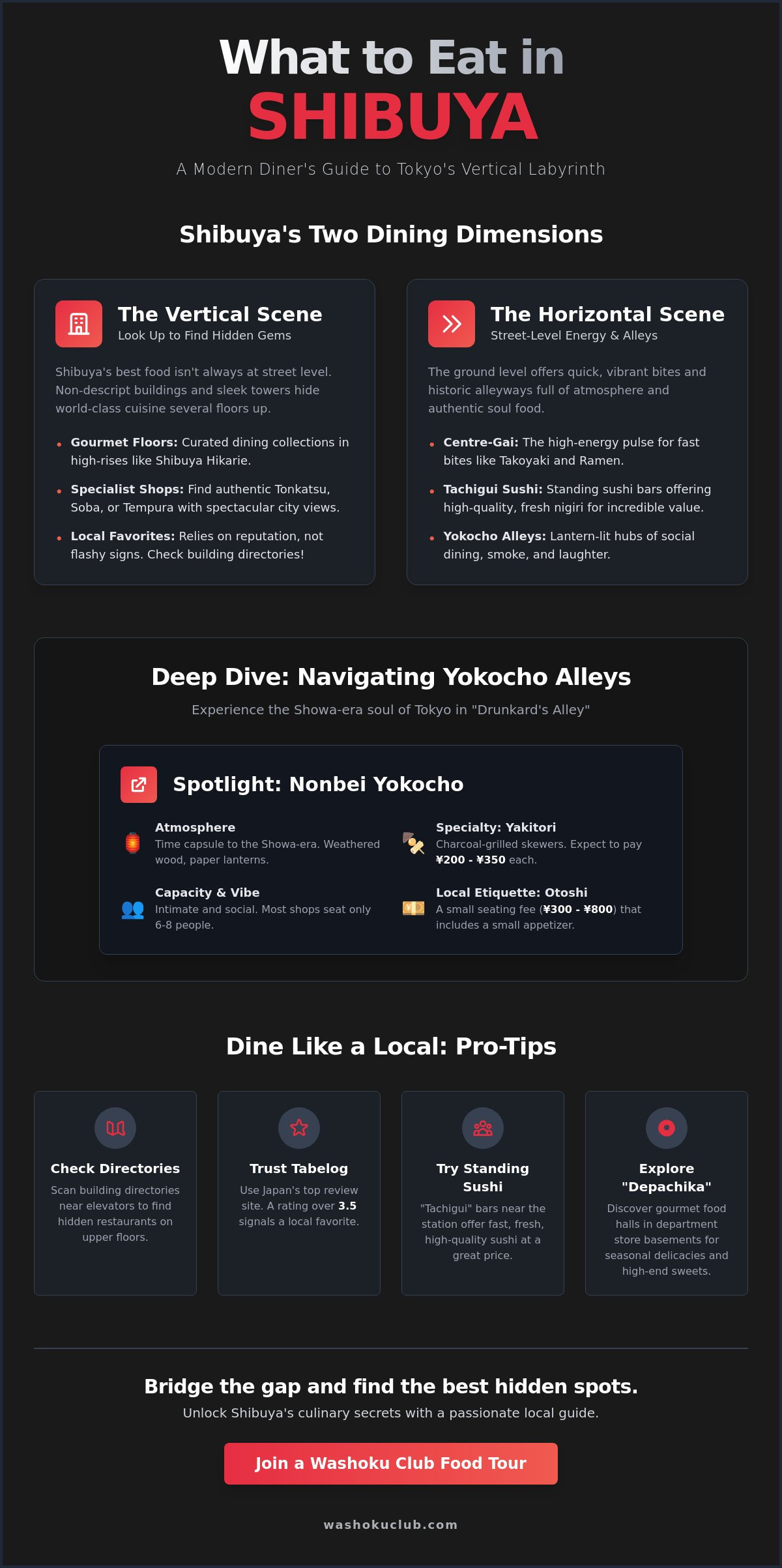
Shibuya is a sensory explosion that demands more than just a quick glance at the neon lights. To truly master the art of dining here, you have to look beyond the ground-level crowds of the Scramble Crossing. For those seeking a comprehensive overview of Shibuya, it’s clear that this district is as much about height as it is about breadth. We often tell our guests that deciding what to eat in Shibuya requires a three-dimensional strategy. You might find a world-class tempura counter on the 9th floor of a sleek tower or a centuries-old tradition tucked into a basement beneath a department store.
Many visitors stick to the bright, street-level chains, yet the most authentic Washoku frequently hides in non-descript office buildings. These “vertical” restaurants aren’t trying to catch the eye of every passerby; they rely on their reputation for quality and deep, soulful flavors. Before you commit to a spot, look for the building directories near the elevator or check Tabelog, Japan’s most trusted restaurant review site. If a place has a rating over 3.5, you’ve likely found a local favorite that prizes craft over commercial flash.
The Horizontal: Street Level and Centre-Gai
Centre-Gai is the high-energy pulse of the neighborhood. It’s the perfect place for quick, vibrant bites like takoyaki or a fast bowl of ramen. While these spots are excellent for soaking up the atmosphere, they’re often just the entry point to your culinary journey. If you’re near the station and hungry for something fresh, look for the standing sushi bars. These “tachigui” spots offer incredible value, where you can enjoy high-quality nigiri for just a few hundred yen per piece while standing alongside busy commuters. It’s fast, fresh, and authentically Tokyo.
The Vertical: The “Gourmet Floor” Culture
To find the real hidden gems, you must go up. Modern developments like Shibuya Hikarie and Shibuya Stream have dedicated “gourmet floors” that house curated collections of specialist shops. Whether you’re craving crispy tonkatsu or refined buckwheat soba, these floors make it easy to find top-tier food in a comfortable setting. Always scan the directory boards at the lift entrance to see which floor hosts the specialist shops. As a bonus, dining on the upper levels often provides a breathtaking view of the city lights, turning a simple meal into a memorable experience. It’s a vertical world waiting for you to explore.
Alleyway Secrets: Navigating Shibuya’s Yokocho Culture
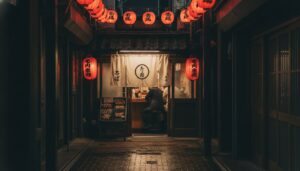
Step away from the neon glare of the main streets and you’ll find the true soul of Tokyo’s nightlife tucked into narrow, lantern-lit alleys. These “Yokocho” are more than just places to grab a bite; they are living, breathing social hubs where the smoke from charcoal grills mingles with the laughter of locals. If you are browsing the official Tokyo guide to Shibuya, you might see these alleys mentioned, but the real magic lies in the unspoken etiquette of these micro-eateries. Most shops operate on a “one drink per person” minimum, and you should expect a small seating fee known as “Otoshi.” Think of this ¥300 to ¥800 charge as a small gift of hospitality, as it always comes with a tiny, seasonal appetizer to start your meal.
When considering what to eat in Shibuya, these alleys offer an intimacy you won’t find in a skyscraper. The spaces are tight, often seating only six to eight people, creating a deeply social atmosphere where it’s common to strike up a conversation with your neighbor. It’s the perfect setting to enjoy authentic soul food while feeling like a welcomed guest in a private kitchen. The air is often thick with the aroma of savory dashi and grilled meats, promising a sensory experience that stays with you long after the night ends.
Nonbei Yokocho: The “Drunkard’s Alley”
Just a stone’s throw from the station, Nonbei Yokocho feels like a Showa-era time capsule. This pocket of history survived the rapid modernization of the district, preserving a world of weathered wood and glowing paper lanterns. Here, the charcoal-grilled yakitori is king, with succulent skewers often priced between ¥200 and ¥350 each. We recommend ordering the “negima” (chicken and leek) or seasonal oden simmered in a rich broth. If the tiny proportions of these shops feel a bit daunting, joining a Shibuya Food Tour can help you navigate these hidden corners with ease.
Shibuya Yokocho in Miyashita Park
For those who prefer a bit more elbow room, the modern Shibuya Yokocho in Miyashita Park is a fantastic alternative. This massive food hall brings together regional specialties from across Japan, from Hokkaido’s fresh seafood bowls to the famous gyoza of Utsunomiya. It’s a vibrant, high-energy space that captures the spirit of traditional alleys but with the convenience of English menus and digital ordering. It is an excellent place to expand your list of what to eat in Shibuya without the pressure of the more traditional, cramped spaces.
Iconic Shibuya Dishes You Cannot Miss in 2026
Walking through Shibuya is a masterclass in appetite. Every street corner and high-rise floor offers a new aroma, from the sizzle of wagyu to the sweet scent of baking dough. If you’re wondering what to eat in Shibuya to experience the neighborhood’s true culinary soul, you must start with the dishes that define its modern identity. At the heart of every bite is “Umami,” the savory fifth taste that Japanese chefs have spent centuries perfecting. In 2026, this pursuit of flavor has moved beyond tradition, blending old-world techniques with bold, contemporary ingredients.
The Ramen Revolution: Beyond the Basics
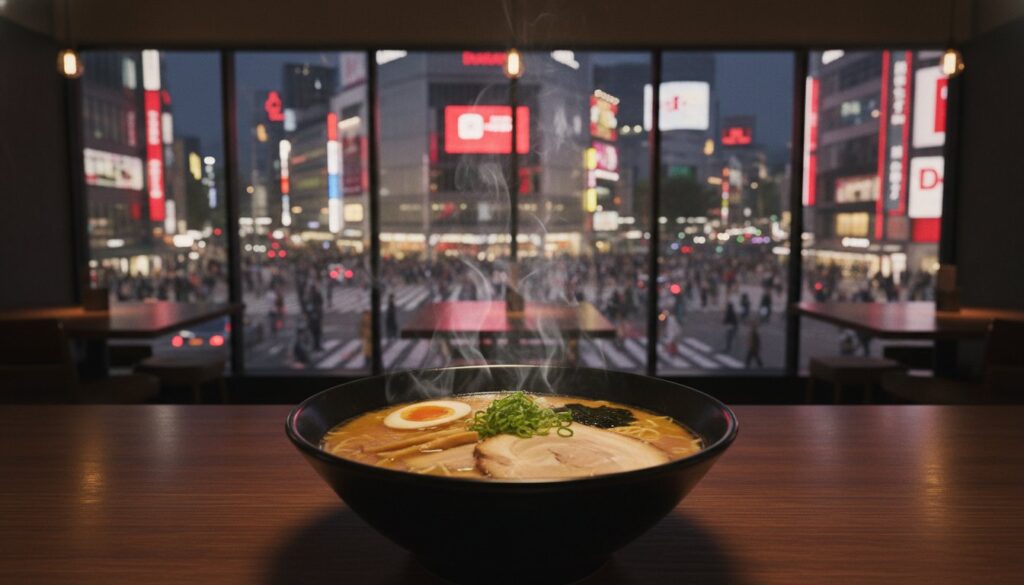
Shibuya’s ramen scene is undergoing a fascinating transformation. While heavy Tonkotsu (pork bone) broth was once the undisputed king, local tastes have evolved toward more refined, complex bowls. In 2026, the trend has shifted toward Niboshi Ramen, a sophisticated bowl featuring a broth made from dried sardines that delivers a deep, oceanic Umami without the heaviness of pork fat. You will also find innovative “duck ramen” or bowls drizzled with truffle oil in the quieter corners of the district.
To eat like a local, you must master the ticket vending machine. These machines stand at the entrance of most shops. You simply insert your yen, press the button for your desired bowl, and hand the ticket to the chef. It’s a fast, efficient ritual that ensures your noodles are served at the peak of freshness. Expect to pay between ¥1,000 and ¥1,800 for a premium bowl that rivals the best in the city.
Sushi for Every Budget
Shibuya is arguably the capital of “Kaiten-zushi” (conveyor belt) innovation, where high-tech delivery systems meet surprisingly high-quality fish. Because Shibuya is a major transit hub, many top-tier shops have direct supply lines from the markets, ensuring freshness that rivals Tsukiji. For a quick gourmet lunch, standing sushi bars near the station offer nigiri for as little as ¥150 per piece. If you seek a slower pace, the backstreets of Shoto house intimate Omakase rooms where a chef will curate a seasonal journey just for you. These hidden spots provide a serene escape from the Scramble’s energy, with lunch sets often starting around ¥5,000.
Beyond the savory, don’t forget the neighborhood’s famous desserts. The fluffy Soufflé Pancake remains a phenomenon here. These gravity-defying treats are known for their signature “wobble” and airy texture, often served with Hokkaido cream or seasonal fruits. They represent the playful, creative side of what to eat in Shibuya, proving that the district’s food scene is as much about joy as it is about tradition.
Depachika: The Underground Gourmet Wonderland
Beneath the feet of the thousands crossing the Scramble lies a culinary paradise that many tourists unknowingly walk right over. We call these basement food halls “Depachika,” a portmanteau of “depato” (department store) and “chika” (basement). They are the ultimate destination when you are deciding what to eat in Shibuya but find yourself torn between a dozen different cravings. From the historic Tokyu Foodshow to the ultra-modern Shibuya Scramble Square B1, these halls represent the absolute pinnacle of Japanese convenience and luxury. You’ll find everything from traditional Wagashi sweets to French-inspired pastries that look more like jewelry than food.
Here is a local secret: arrive after 7 PM. As the department stores prepare to close, vendors begin slapping “waribiki” (discount) stickers on their premium prepared foods. You can often snag a gourmet bento or a tray of high-grade sashimi for half its original price. It’s a frantic, exciting ritual that allows you to feast like royalty for just a few thousand yen. The energy is infectious as locals rush to grab the best deals of the day.
Navigating the Tokyu Foodshow
Tokyu Foodshow is a legendary institution for food lovers. If the weather is fine, we suggest picking up a seasonal bento here before walking ten minutes to Yoyogi Park for a picnic. Don’t be afraid to accept the small samples offered by the staff; it’s a wonderful way to discover a new favorite flavor before you buy. Look for the artisans who have spent decades perfecting a single recipe, like a specific type of grilled eel or a delicate rolled omelet. Their pride in their craft is palpable in every bite, connecting you to the heart of Japanese culinary tradition.
Gifts and Souvenirs: Edible Shibuya
The Depachika is also the best place for edible souvenirs to take home. Look for the famous Shibuya-exclusive sweets featuring Hachiko, the neighborhood’s most loyal dog, on the packaging. You might also see the legendary ¥15,000 muskmelons. While they seem expensive, they represent the Japanese tradition of gift-giving and the pursuit of agricultural perfection. If you’re packing sweets for home, ask the staff for “hoshizai” (ice packs) to keep them fresh until you reach your hotel. Exploring these underground mazes can be overwhelming for a first-timer. To see the best stalls without the stress, join us on our Shibuya Food Tour for an insider’s look at these gourmet wonders.
Why a Guided Shibuya Food Tour is the Ultimate Shortcut
While this guide provides the map you need to start your journey, the true soul of Japanese dining often lies in the stories that aren’t written on a menu. In a neighborhood as dense and three-dimensional as this, deciding what to eat in Shibuya can still feel like a daunting task. We’ve all felt that moment of hesitation at the foot of a narrow stairwell, wondering if the tiny izakaya on the seventh floor welcomes international guests or if the kanji-only specials are out of reach. We bridge that gap for you, turning a potentially overwhelming maze into a warm, curated experience where you feel like a welcomed guest rather than a tourist.
A local guide does more than just translate words; they translate culture. We help you navigate the vertical landscape of office-building eateries and the smoky depths of hidden alleys with total confidence. By focusing on “off-the-beaten-path” spots, we ensure your journey supports the local ecosystem of family-owned businesses. Our “Passionate Local Guide” promise means you won’t just see the sights. You’ll understand the history, the etiquette, and the heart of every dish we share together. You arrive as a curious traveler, but you leave as a true member of our club.
Meeting the Artisans
The magic of a great meal often comes from the hands that prepared it. We take pride in introducing you to our friends, such as the third-generation yakitori masters who have spent their lives perfecting the art of the charcoal grill. The atmosphere in these shops is palpable. You’ll hear the rhythmic sound of the chef’s knife and feel the warmth of a centuries-old tradition of hospitality. We select our “hidden gem” locations based on their soul and the quality of their ingredients, because we believe food always tastes better when you know the story behind the person who made it.
Booking Your 2026 Shibuya Adventure
With the 2026 Michelin Guide recognizing even more incredible spots in the district, the competition for a seat at the best tables is higher than ever. Our tours are designed to be the ultimate shortcut to the flavors you’ve been dreaming of. We keep our group sizes small to maintain an intimate, social feel, and we stand by our “no tourist trap” guarantee. All you need to do is come hungry and bring your curiosity. If you’re ready to see the real side of Tokyo, Book your Shibuya Food Tour with Washoku Club here and let us show you exactly what to eat in Shibuya.
Ready to Taste the Real Shibuya?
Your journey through Tokyo’s most energetic district is more than a simple checklist. It is an invitation to explore a multi-layered world where the scent of charcoal-grilled yakitori drifts from hidden alleys and gourmet treasures await in bustling basement food halls. By mastering the vertical dining scene and embracing the intimate etiquette of the Yokocho, you have unlocked the secrets of what to eat in Shibuya like a true local. Whether you are savoring a refined bowl of sardine-based ramen or discovering the artistry of a third-generation chef, every bite tells a story of passion and heritage.
Since 2016, we have welcomed guests into our community with a strictly no-tourist-trap policy and a deep love for Japanese hospitality. With over 1,000 5-star reviews, our expert guides speak fluent English and Japanese to ensure you never feel lost in translation. We are ready to help you find those quiet, traditional pockets hidden behind the neon glare and introduce you to the artisans who make this city so special. Join our next Shibuya Food Tour and eat like a local! We can’t wait to share a seat at the counter with you and toast to your next great culinary adventure.
Frequently Asked Questions
Is food in Shibuya expensive compared to other parts of Tokyo?
Shibuya offers a wide spectrum of prices that match any budget, from affordable street snacks to luxury dining. While high-end omakase can cost over ¥15,000, you can easily find Michelin-recognized noodles or hearty rice bowls for under ¥1,500. It’s not necessarily more expensive than Shinjuku or Ginza, but the sheer density of options means you have more control over your spending.
What is the best time of day to go on a food hunt in Shibuya?
Mid-day is ideal for those seeking “lunch sets” which often provide the same high-quality ingredients as dinner at a fraction of the cost. If you want to experience the vibrant energy of the drinking alleys, arrive around 6:00 PM before the post-work rush begins. This timing allows you to secure a seat in smaller shops that don’t take reservations.
Can I find vegetarian or vegan options in Shibuya?
Shibuya is one of the most vegetarian-friendly districts in Tokyo with a growing number of dedicated plant-based cafes and ramen shops. Many modern establishments in buildings like Shibuya Parco or Shibuya Stream clearly label their menus. When deciding what to eat in Shibuya as a vegan, look for “Shojin Ryori” inspired dishes or specialized soy-meat izakayas.
Do I need to make reservations for restaurants in Shibuya?
Reservations are highly recommended for popular yakiniku houses or high-floor dining rooms, especially on weekends. However, most ramen shops, conveyor belt sushi bars, and standing izakayas operate on a first-come, first-served basis. If you see a queue of locals, it’s usually a sign that the food is worth the wait.
What is a “seating fee” (Otoshi) and why do I have to pay it?
The “Otoshi” is a small, mandatory appetizer served at most izakayas that functions as a seating fee. It typically costs between ¥300 and ¥800 per person and is a long-standing tradition of Japanese hospitality. Think of it as a small welcome gift from the chef that starts your meal while you wait for your main orders to arrive.
Is it okay to eat while walking in the Shibuya Scramble area?
Eating while walking is generally discouraged in Japan and is especially difficult in the crowded Scramble area. It’s much better to finish your snack at the stall where you bought it or find a designated seating area. This respect for public space is a key part of the local culture and helps keep the neighborhood clean for everyone.
How do I find restaurants that are not on the ground floor?
You can find hundreds of hidden eateries by looking up at the colorful vertical signs attached to buildings. Each floor usually has a small board at the street entrance or inside the elevator lobby listing the restaurants. Don’t be intimidated by plain-looking office buildings; some of the most authentic Washoku experiences are found on the 4th floor or higher.
What are the must-try street foods near the Hachiko statue?
The surrounding stalls offer delicious quick bites like Taiyaki, a fish-shaped cake filled with sweet red bean paste or custard. You can also find savory Takoyaki and seasonal mochi nearby. These treats are a perfect way to experience what to eat in Shibuya while soaking in the energy of the world’s busiest intersection.