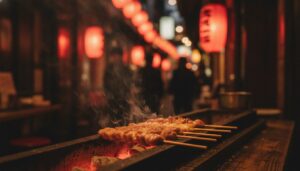

Imagine standing amidst the bustling stalls of a traditional market, where the air carries the scent of toasted sesame and the rhythmic calls of artisans echo through the rafters. You might spot a glistening skewer of takotamago or a cup of steaming yuba, but a moment of doubt stops you. Is it polite to eat here? How do you navigate the crowd without breaking an unwritten rule? We understand that exploring the rich world of street food, often exemplified by terms like kyoto street food, can feel intimidating, especially when you want to honor the nation’s deep culinary heritage while avoiding common tourist pitfalls.
You aren’t alone in wanting to experience these flavors with the grace of a local. Washoku Club culture and food tours promises to help you
Key Takeaways
- Uncover the 1,000-year legacy of the “Kitchen of Kyoto” and see how the refined principles of Washoku are woven into every humble market snack.
- Identify the essential savory and sweet icons you cannot miss, including the famous candied octopus and the delicate, cinnamon-scented yatsuhashi.
- Navigate the bustling stalls of kyoto street food with confidence by mastering local etiquette, such as the “tachigui” rule of standing while you eat.
- Solve the common challenge of finding trash bins in historic districts by learning the proper way to return waste to the artisans who served you.
- Discover how to access “off-menu” seasonal delicacies and the hidden family histories that a typical guidebook simply won’t mention.
The Heart of the Historic Market: Understanding Kyoto Street Food Culture
Walking through Kyoto’s narrow alleys, you’ll feel the history in every stone under your feet. For over a millennium, this city served as Japan’s imperial capital, and its food culture is a direct reflection of that prestige. While many people think of “Washoku” (traditional Japanese cuisine) as high-end kaiseki dining, the soul of this culinary tradition lives just as vibrantly in the humble stalls. Discovering kyoto street food isn’t just about grabbing a quick snack; it’s an invitation to experience centuries of refined taste in a single, accessible bite.
Unlike the mobile Japanese food stalls (yatai) you might see at late-night festivals in other cities, Kyoto’s market stalls are often permanent fixtures held by the same families for generations. This brings us to the “Shokunin” spirit. These artisans don’t just cook; they dedicate their lives to mastering one specific craft. You might meet a vendor who has spent forty years doing nothing but perfecting the temperature of a dashi-filled omelet. You can hear the rhythmic sizzle of the grills and smell the deep, comforting aroma of dashi long before you even reach the stall.
To see this vibrant energy and the craftsmanship in action, watch this look at some of the city’s latest culinary additions:
The Legacy of Nishiki Market
This 400-meter covered arcade is the undisputed pulse of the city. What began as a fish wholesale district in the early 1600s has evolved into a culinary landmark with approximately 130 shops. It’s a sensory maze where the vibrant colors of the stained-glass roof meet the frantic, friendly energy of the merchants. We often tell our guests on a Kyoto Food Tour that Nishiki is more than a market; it’s a living archive of the city’s social and culinary evolution. The architecture itself, with its narrow passages and historic storefronts, preserves an “atmosphere of the alleys” that feels like stepping back in time.
The Philosophy of Seasonal Flavours
In Kyoto, we live by the concept of “Shun,” which refers to the exact moment an ingredient reaches its peak flavor. This means your experience with kyoto street food will change depending on when you visit. In the spring, you’ll find treats wrapped in salt-pickled cherry leaves, while the summer brings chilled yuba and shaved ice to combat the heat. These fleeting ingredients serve as a delicious reminder that every meal is a unique moment in time that will never be repeated in quite the same way.
Essential Savoury Icons: Must-Try Kyoto Street Food Snacking
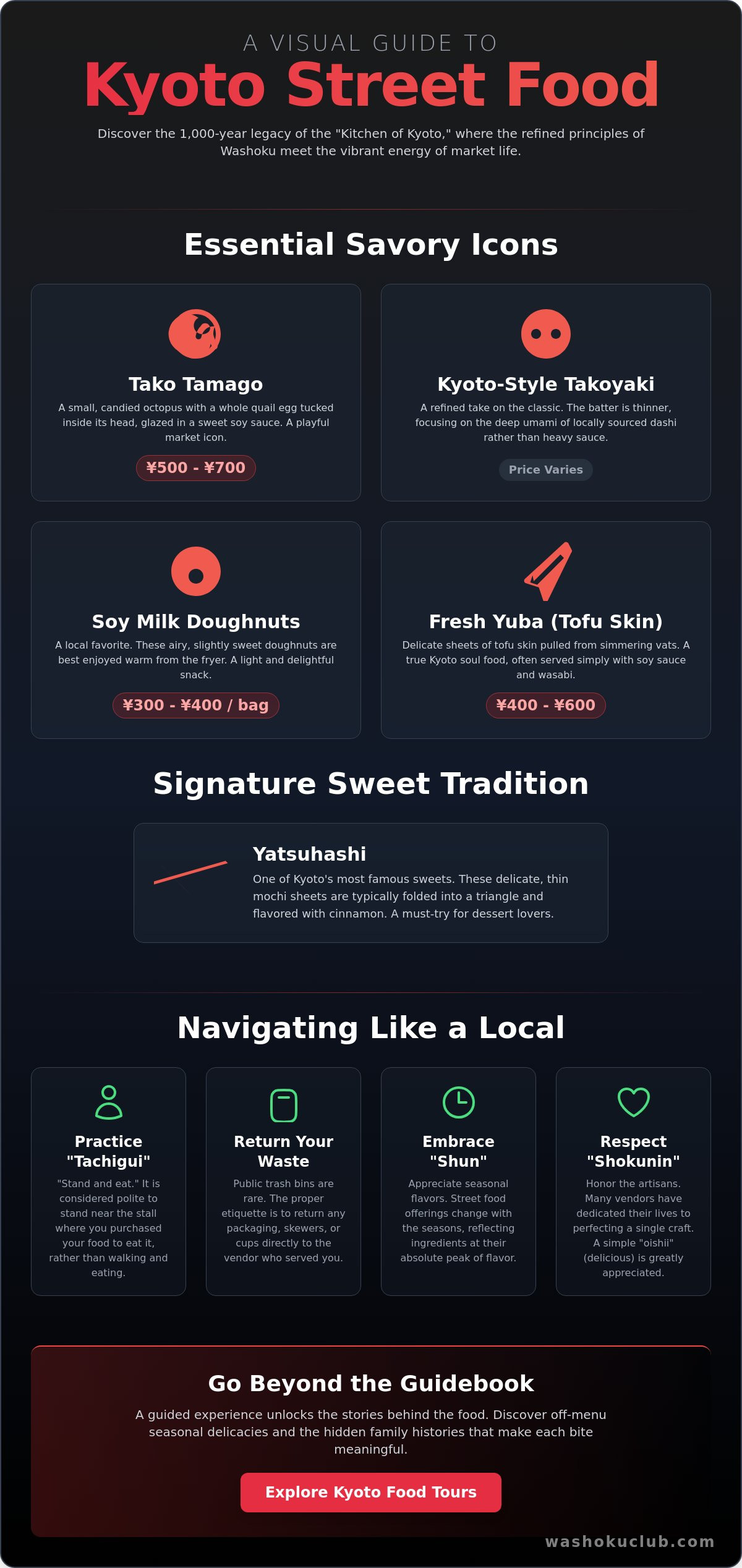
When you step into the vibrant, sun-drenched corridors of Nishiki Market, your eyes will likely land on a tray of bright red, candied octopus skewers. This is the Tako Tamago, perhaps the most photographed icon of kyoto street food. For about ¥500 to ¥700, you get a small octopus with a whole quail egg tucked inside its head. It’s a delightful balance of sweet soy glaze and savoury protein that captures the playful side of market life.
While Osaka is famous for its gooey, street-style takoyaki, Kyoto offers a more refined version. The batter is often thinner and focuses on the deep umami of locally sourced dashi. You’ll notice the difference in the first bite; it’s less about the heavy sauce and more about the quality of the ingredients. If you’re looking for something lighter, the soy milk doughnuts are a local favourite. A bag of ten usually costs between ¥300 and ¥400. They’re airy, slightly sweet, and best enjoyed while they’re still warm from the fryer.
Kyoto’s Unique Take on Tofu and Seafood
The city’s famous soft water is the secret behind its world-class tofu. At many stalls, you can watch artisans pull fresh yuba (tofu skin) from simmering vats. It’s a mesmerizing process. These delicate wraps, often served with a dash of soy sauce and wasabi for ¥400 to ¥600, are a true Kyoto soul food. We love how these simple ingredients represent the “fresh from the coast” heritage that has sustained the city for centuries. You might find it easier to discover these flavours on a guided walk where the local stories come to life.
The Perfect Savoury Skewer: Kushiage and Yakitori
For a crunchier experience, you must try kushiage. These are deep-fried skewers of seasonal vegetables or seafood, typically costing around ¥150 to ¥350 per piece. The key is the light, crisp batter that never feels oily. If you prefer the grill, yakitori stalls offer skewers glazed in a rich tare sauce that has been bubbling for years. Finding the balance between smoky charcoal flavours and a delicate glaze is an art form here. Our local guides can help you spot the stalls where the smoke smells just right, ensuring you avoid the tourist traps and find the authentic hidden gems.
Sweet Traditions: Kyoto Street Food for the Dessert Lover
If you’ve already sampled the savory delights of the market, it’s time to let the delicate sweetness of the city take over. Kyoto street food is perhaps most famous for its wagashi, or traditional sweets, which often reflect the refined tastes of the ancient imperial court. Unlike the heavy, sugary desserts found elsewhere, these treats focus on subtle textures and the deep, earthy notes of toasted soy and green tea. Every bite tells a story of the season, making your culinary journey through Kyoto’s streets feel like a poetic exploration of Japanese history.
One of our favorite sights is the elegant steam rising from a dango stall. Mitarashi dango, those iconic charred rice dumplings glazed in a sweet soy syrup, actually trace their origins back to the Shimogamo Shrine. Legend says the bubbles in the glaze represent the purifying waters of the shrine’s Mitarashi pond. You can usually find a skewer of three to five dumplings for about ¥200 to ¥400. For a cooler experience, look for warabi-mochi. This jelly-like delicacy, made from bracken starch and coated in nutty kinako (roasted soybean powder), typically costs between ¥400 and ¥600 and offers a melt-in-your-mouth sensation that is perfect for a humid afternoon.
The Legend of Yatsuhashi
You cannot talk about kyoto street food without mentioning Yatsuhashi. These cinnamon-flavored treats come in two distinct forms. The traditional baked version is crisp and shaped like a Japanese harp, while the “nama” or raw version is a soft, doughy triangle folded over sweet fillings. We love the tactile experience of holding these delicate pockets; they feel like velvet in your hand. While red bean is the classic choice, keep an eye out for seasonal fillings like peach in the summer or chestnut in the autumn. A small selection usually ranges from ¥200 to ¥600 per piece.
Temple-Side Treats and Festival Favourites
While many visitors stick to the main markets, some of the most authentic sweets are found right at the entrances of historic shrines like Fushimi Inari or Kiyomizu-dera. This is where the atmosphere of “Matsuri” (festivals) truly comes alive. You might find stalls whisking Uji matcha into frothy lattes or serving vibrant matcha soft-serve ice cream for ¥400 to ¥600. During the peak of summer, nothing beats a bowl of Kakigori. This finely shaved ice is often topped with rich matcha syrup and condensed milk, providing a refreshing break during your temple explorations. If you want to find the quiet stalls where the locals hide, we invite you to join one of our guided experiences to see a side of Kyoto most tourists miss.
Navigating Like a Local: Kyoto Street Food Etiquette
Navigating the bustling lanes of Kyoto requires more than just an appetite; it requires an understanding of “Omotenashi,” the selfless spirit of Japanese hospitality. While the sights and smells of kyoto street food are intoxicating, the way you engage with the vendors is what truly separates a tourist from a welcome guest. The most important rule you’ll encounter is “Tachigui,” or the practice of standing while you eat. In many cultures, walking and snacking is the norm, but in Kyoto, it’s considered disrespectful to the food and the people around you. Most stalls provide a small, dedicated space to stand. By staying in one spot, you show the chef that their hard work deserves your full attention.
Managing your waste is another practical hurdle. You’ll quickly notice that public trash cans are nearly non-existent in historic districts. This isn’t an oversight; it’s part of a community effort to keep the city pristine. The standard practice is to return your napkins and skewers to the specific vendor where you bought your meal. They’ll graciously take them back, often with a smile and a nod of thanks. When it’s time to pay, look for the “Choko,” a small tray usually placed on the counter. Placing your ¥1,000 notes or coins in the tray rather than handing them directly to the vendor is a sign of both respect and hygiene, as it keeps the artisan’s hands clean for food preparation.
Respecting the Omotenashi Spirit
Eating at the stall isn’t just about following rules; it’s an opportunity to interact with the artisan chef. When you finish a particularly delicious skewer, a simple “Oishii” (delicious) goes a long way in showing your appreciation. As you leave, saying “Gochisousama” (thank you for the meal) acknowledges the effort that went into your snack. If you want to take photos, always ask for permission first with a quick gesture or a polite “Sumimasen.” Most vendors are happy to be featured, but a little courtesy ensures the “Omotenashi” spirit remains a two-way street.
Practical Tips for Busy Markets
To truly enjoy the experience, timing is everything. We recommend visiting markets like Nishiki between 10:00 AM and 11:30 AM to avoid the overwhelming midday rush. You can spot an authentic stall by looking for limited menus and specialists who focus on just one or two items. If you want to experience these markets with total peace of mind, we’d love to have you join us for a Kyoto Food Tour. Our Asakusa food tour guide offers similar etiquette tips for those visiting Tokyo’s historic districts, helping you feel like a local across all of Japan’s major food hubs.
Beyond the Alleys: Why a Guided Experience Changes Everything
You’ve already mastered the “tachigui” rule and know your yuba from your yatsuhashi, but there’s a deeper layer to kyoto street food that maps simply can’t capture. While anyone can walk through a market, the most profound experiences happen when the language barrier disappears. Many of the most authentic artisans in Kyoto don’t have English menus; they rely on verbal traditions to share “off-menu” seasonal specials that change based on what was fresh at the morning auction. Without a local guide, these fleeting culinary treasures often remain invisible to the passing traveler.
We believe that food is a conversation between the maker and the guest. When you walk with an expert, you aren’t just buying a snack; you’re being introduced to the families who have manned these stalls for generations. You’ll learn the history of the grandmother who still hand-folds every triangle of yatsuhashi and the secret dashi recipes passed down through decades of shokunin dedication. If you have dietary restrictions, having a local voice ensures you can navigate the market with total peace of mind, discovering safe and delicious soul food that respects your needs while still offering an authentic taste of Japan.
Unlocking Secret Flavours
The best stalls are often tucked away in quiet side streets where the light of the main arcade begins to fade. These hidden gems are where the locals eat, far from the commercialized tourist traps that often prioritize convenience over quality. We’ve spent years building relationships with these artisans to create a curated tasting menu that showcases the true heart of the city. For those planning to continue their culinary journey south to Osaka, our Kuromon Ichiba Market guide offers a similar deep dive into the vibrant market life of the “Kitchen of Japan.”
Join the Washoku Club Family
We invite you to experience Kyoto not as a spectator, but as a welcomed guest in our community. Our focus on small groups ensures that every tour remains intimate, allowing for genuine cultural bridges to form between you and the local people. We take pride in sharing the secrets that standard guidebooks miss, from the best time to catch a fresh batch of doughnuts to the quietest corners for a mindful bite. We don’t just show you where to eat; we help you understand the soul of kyoto street food. Book your authentic Kyoto food tour today and let us welcome you to the table for an unforgettable journey through Japan’s ancient capital.
Embark on Your Own Kyoto Culinary Journey
You’ve seen how the vibrant stalls of Nishiki and the quiet shrine entrances offer more than just a quick meal; they provide a window into the heart of Japan’s ancient capital. From the rhythmic sizzle of kushiage to the delicate fold of a nama yatsuhashi, every bite of kyoto street food is a chance to connect with centuries of shokunin dedication. You now have the tools to navigate these historic markets with the poise of a local, respecting the “tachigui” rule and the quiet grace of the money tray. It’s time to turn these stories into your own sensory memories.
We’d love to welcome you into our community and share the secrets that only a passionate local can provide. Our expert guides speak the language of the markets, ensuring you skip the tourist traps to find authentic, family-run stalls tucked away in the shadows. We keep our group sizes small to maintain a personal, non-touristy atmosphere that feels like a walk among friends. Join an authentic guided food tour with Washoku Club and let us introduce you to the artisans who keep Kyoto’s soul alive. We can’t wait to see you at the market!
Frequently Asked Questions about Kyoto’s Food Scene
Is it safe to eat street food in Kyoto?
Yes, it’s exceptionally safe to eat at stalls throughout the city. Japan maintains some of the highest food safety and hygiene standards in the world. You’ll notice that vendors take immense pride in the cleanliness of their stalls, often wearing gloves and using dedicated tools for each ingredient to ensure every guest enjoys a healthy experience.
Can I find vegetarian or vegan street food in Kyoto?
You certainly can, though you should be mindful of dashi (fish stock) which is a staple in many savory batters. Kyoto’s famous yuba (tofu skin) and various mochi treats are excellent plant-based options. We always recommend asking vendors about “katsuo” (bonito) if you want to be certain your snack is strictly vegan and free of animal products.
Why shouldn’t I walk and eat in Japan?
Avoiding eating while walking is a matter of respect for the food, the artisan, and the people around you. It helps prevent accidental spills in crowded alleys and keeps the streets clean from litter. In places like Nishiki Market, this is a strictly enforced policy to ensure everyone can navigate the narrow passages comfortably without disruption.
How much does street food typically cost in Kyoto?
Most snacks range from ¥300 to ¥800 per serving. For a satisfying kyoto street food experience that includes five or six different items and a drink, we recommend budgeting between ¥3,000 and ¥4,500 per person. Higher-end items like A4 Wagyu skewers can cost between ¥1,000 and ¥2,500 depending on the cut.
Do Kyoto street food stalls accept credit cards?
Most traditional stalls and smaller vendors still prefer cash. It’s essential to carry small coins and ¥1,000 notes to make transactions smoother for the merchants. While some newer shops might accept digital payments, the historic stalls that define the market experience almost exclusively use the traditional money tray for cash transactions.
What is the best time of day to explore Nishiki Market?
The best time to visit is between 10:00 AM and 11:30 AM. Most shops open around 10:00 AM, and arriving early allows you to enjoy the atmosphere before the overwhelming midday crowds arrive. Many stalls begin closing their shutters by 6:00 PM, so don’t wait until the late evening to start your adventure.
Are there specific Kyoto street foods for the winter season?
Winter brings a cozy shift to the stalls with warm, comforting treats. You’ll find steaming bowls of fresh yuba in hot dashi and grilled mochi that provides a satisfying, chewy warmth. These seasonal kyoto street food options are designed to keep you toasty while you explore the city’s historic temple districts during the colder months.
How do I know if a street food stall is authentic?
Authentic stalls usually specialize in just one or two items rather than offering a broad, generic menu. Look for vendors who have a steady stream of local patrons and a visible “shokunin” or master artisan at work. These family-run businesses often have simple, focused displays that highlight the quality of their seasonal ingredients over flashy advertising.