

Can you truly taste the soul of a 400-year-old city between a single sunrise and sunset? Most visitors find themselves paralyzed by the sheer scale of the transit map or trapped in a cycle of overrated landmarks that leave them feeling more like a number than a welcomed guest. We understand that planning the perfect tokyo one day itinerary feels like a high-stakes puzzle. You don’t want to settle for mediocre, tourist-focused sushi or miss the quiet, spiritual magic of an ancient temple because you were stuck in a crowded station.
At Washoku Club, we believe the best way to bridge the gap between Edo-period traditions and a neon-lit future is through your palate. You’re about to discover a seamless plan that avoids the tourist traps and dives straight into the authentic heart of the city. We’ll guide you from the savory umami of the Tsukiji Outer Market to the breathtaking 634-meter peak of the Tokyo Skytree, ensuring every bite tells a story. This journey moves beyond basic sightseeing to create a deep cultural connection that stays with you long after your 24 hours are up.
Key Takeaways
- Learn how to use the Yamanote Line as your urban backbone to navigate seamlessly between Tokyo’s historic roots and its neon-lit future.
- Discover the spiritual heart of Edo-era Asakusa and the essential “Umami” flavors waiting for you at the bustling Tsukiji Outer Market.
- Master a perfectly balanced tokyo one day itinerary that avoids common tourist traps by focusing on authentic culinary connections and local secrets.
- Experience the sensory contrast between the electric subcultures of Akihabara and the organized chaos of the world-famous Shibuya Scramble Crossing.
- Uncover the social significance of Shinjuku’s hidden Izakayas, where the city’s soul truly comes alive after dark through shared seasonal plates.
Mastering the 24-Hour Rhythm: Planning Your Tokyo One Day Itinerary
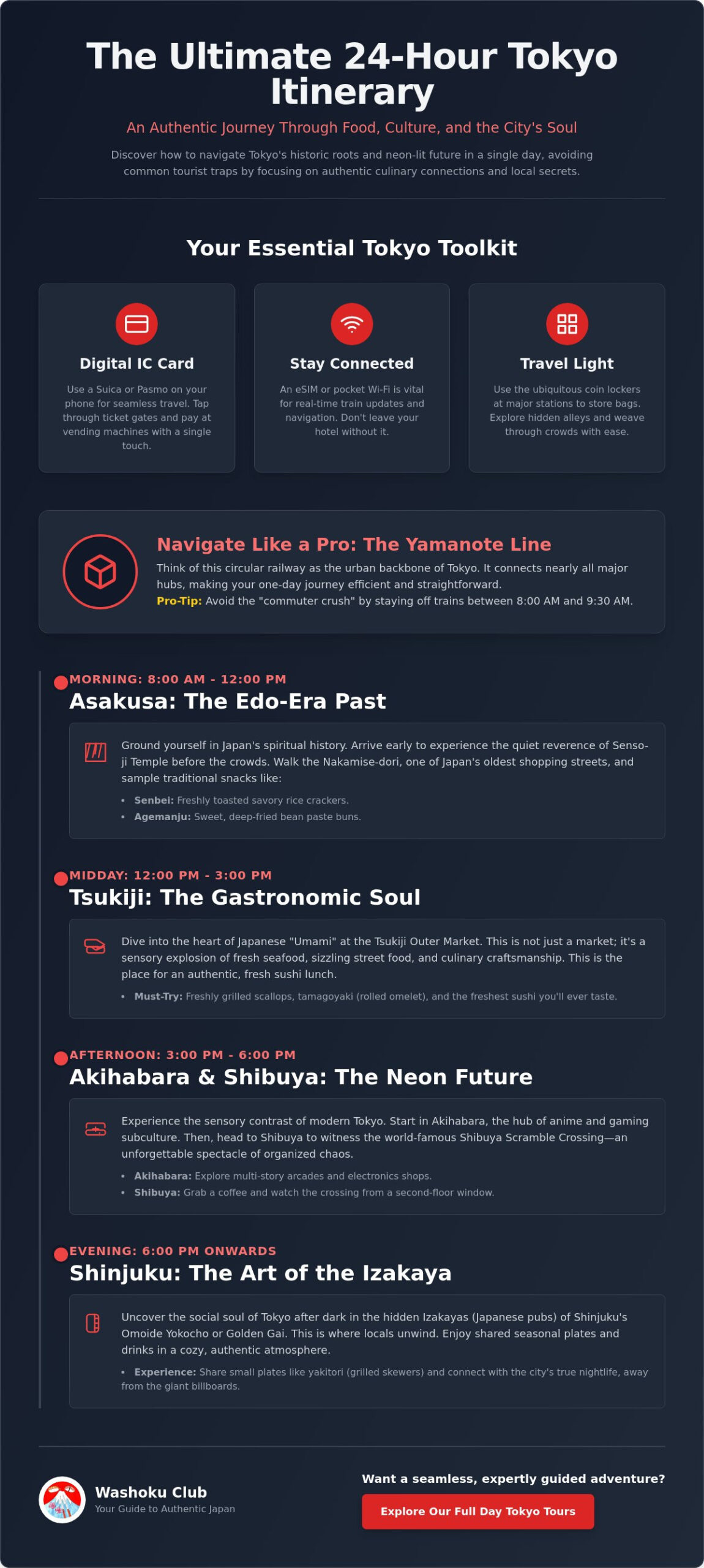
Tokyo is a city that breathes in two different eras simultaneously. To truly master your tokyo one day itinerary, you need to embrace a framework that balances the quiet, spiritual elegance of the past with the high-octane energy of the future. We often see travelers trying to squeeze ten different districts into a single day; this usually leads to exhaustion and a surface-level experience. Instead, we recommend focusing on three core neighborhoods that showcase the city’s soul. By starting your journey at 8:00 AM, you’ll witness the city waking up and enjoy a rare moment of peace at historic sites before the mid-morning rush begins.
To visualize how this rhythm looks in practice, watch this helpful guide on maximizing your 24 hours:
The secret to staying on track is the Yamanote Line, a circular railway that acts as the urban backbone of the metropolis. This line connects nearly all major hubs and makes it easy to trace the history of Tokyo from its humble beginnings as a fishing village to the global powerhouse it is today. It’s about quality over quantity. By slowing down, you’ll find that the city’s real magic exists in the steam rising from a ramen bowl or the polite bow of a local shopkeeper. For those who prefer a structured path, our curated full day tour in tokyo options take the guesswork out of your transit and timing.
The Essential Tokyo Travel Toolkit
Staying mobile is the key to a stress-free day. We strongly suggest downloading a digital IC card like Suica or Pasmo to your phone’s wallet before you even land. It’s a non-negotiable tool that lets you tap through ticket gates and pay at vending machines with a single touch. For navigation, an eSIM or pocket Wi-Fi is vital for real-time train updates. If you have bags, make use of the ubiquitous coin lockers at major stations. Traveling light allows you to weave through crowds and explore hidden alleys without being weighed down.
Navigating the Urban Flow
While the transit map looks like a colorful bowl of noodles, it’s remarkably logical once you understand the color-coding system. Each line has a specific color and letter, making it easy to follow even if you don’t speak Japanese. To avoid the legendary “commuter crush,” try to stay off the trains between 8:00 AM and 9:30 AM. Instead, use that time for walking. The “in-between” spaces between stations often hide the most authentic shrines and family-run bakeries that you’d otherwise miss from a train window. Trust your feet; they often lead to the best discoveries.
Morning in Asakusa: Stepping into the Edo-Era Past
Asakusa is where the heartbeat of old Edo still echoes against the pavement. While the rest of the city races toward the futuristic neon of Shinjuku, this district remains anchored in a deep sense of tradition. It’s the perfect starting point for your tokyo one day itinerary because it grounds you in the spiritual history that defines Japanese culture. We love arriving early, just as the shops along the Nakamise-dori begin to slide open their shutters and the scent of incense begins to drift from the great urn at Senso-ji. The morning air feels different here; it carries a quiet reverence that disappears once the midday crowds arrive.
Senso-ji and the Nakamise-dori Experience
Your journey begins at the Kaminarimon, or Thunder Gate. This massive red lantern is more than just a photo opportunity; it’s a symbolic entrance into a sacred space. As you walk the 250-meter path toward the temple, you’ll find Nakamise-dori, one of Japan’s oldest shopping streets. Here, the air is thick with the aroma of freshly toasted senbei (rice crackers) and sweet agemanju (deep-fried bean paste buns). We encourage you to try these seasonal treats, but remember to eat them near the stall rather than walking. It’s a local sign of respect for the food and the artisans who made it.
When you reach the main hall of Senso-ji, which welcomes over 30 million visitors every year, take a moment to observe the local etiquette. A gentle bow before the gate and a quick purification at the water pavilion prepares your spirit. It’s a sensory experience that connects you to generations of pilgrims who have sought blessings here since the temple’s founding. The main hall is accessible from 6:00 AM in the summer, making it the ideal spot to beat the rush and find a moment of peace.
Discovering the Backstreets of Old Tokyo
The real magic of Asakusa often hides just one block away from the main tourist path. In these quiet alleys, you’ll find the true essence of Washoku (traditional Japanese cuisine). Small, family-run shops have spent decades perfecting a single dish, from handmade buckwheat noodles to delicate pickles. If you want to dive deeper into these stories, our Asakusa Food Tour offers an intimate look at the families who have kept these traditions alive for centuries. It’s about finding those hidden gems that a typical map would never show you.
Just a short walk away lies Kappabashi Street, the legendary kitchenware district. This is the home of the Shokunin, or master artisans, who craft the world’s finest chef knives and eerily realistic plastic food samples. Seeing their dedication reminds us that Japanese culture is built on a foundation of craftsmanship. Before you head toward the riverfront to catch a glimpse of the modern Tokyo Skytree, take a deep breath of the Sumida River air. You’re about to transition from the ancient past to the bustling energy of the Tsukiji Outer Market, where the city’s culinary heart beats even faster.
Midday at Tsukiji: The Gastronomic Soul of Japan
By the time midday arrives, the spiritual quiet of Asakusa gives way to the high-energy pulse of the Tsukiji Outer Market. Even though the wholesale tuna auctions moved to Toyosu in 2018, the heart of Tokyo’s food culture still beats strongest in these narrow, labyrinthine alleys. This is the most delicious stop on your tokyo one day itinerary; it’s where professional chefs and home cooks alike come to source the finest seasonal ingredients. You’ll smell the roasted green tea and the briny scent of fresh scallops before you even see the stalls. It’s a place where tradition isn’t just observed; it’s tasted in every bite.
Distinguishing between “tourist bait” and authentic family-run stalls is an art form. We look for the shops with limited menus and a line of local workers. These families have often occupied the same few square meters for generations, specializing in a single craft. Whether it’s the precise shave of a bonito block or the delicate fold of a tamagoyaki omelet, the dedication to quality is palpable. This deep respect for the ingredient is the foundation of Washoku, and it’s why we believe the market is a living classroom for the Japanese soul.
Navigating the Tsukiji Outer Market
To experience the market like a local, focus on the “Big Three”: incredibly fresh seasonal seafood, sweet and savory tamagoyaki, and high-quality green tea. Many visitors feel overwhelmed by the 400 plus shops, which is why a Tsukiji Outer Market Food Tour is the best way to bypass the fluff and find the hidden gems. Remember the golden rule of market etiquette: do not eat while walking. Most stalls have a small standing area. Respecting this space keeps the flow of the market moving and shows appreciation for the vendors.
Beyond Sushi: The Diversity of Market Flavors
While the sushi here is world-class, the market’s true secret lies in its dried goods and pantry staples. We love introducing guests to Katsuobushi (dried bonito flakes). When combined with kombu, it creates the Umami-rich dashi broth that forms the backbone of Japanese cuisine. For a more substantial midday meal, look for a “Donburi” shop. These overflowing rice bowls, topped with the morning’s freshest catch, are the fuel of choice for the market’s hardworking artisans. After you’ve had your fill, a short walk brings you to the polished streets of Ginza. This provides a stunning modern contrast to the grit and charm of the market stalls.
Afternoon Immersion: Subcultures and the Crossing
As the sun begins to lean toward the west, your tokyo one day itinerary shifts from the historic and artisanal to the vibrantly modern. This is the time to witness the high-definition energy that defines the city’s global image. We start in Akihabara, a district that evolved from a post-war black market for radio parts into the world’s premier “Electric Town.” Today, it’s a multi-sensory Otaku paradise where neon signs compete for your attention and the sound of arcade games spills onto the sidewalks. It’s a fascinating look at how Japan embraces its technological future while creating niche communities for every imaginable hobby.
If the pace of the electronic district feels too fast, a short train ride brings you to the towering Torii gates of Meiji Jingu. Admission to these sacred shrine grounds is free, and the dense forest of 100,000 trees provides an immediate, cooling silence. It’s a vital palate cleanser before you explore the creative fashion lanes of Harajuku, where youth culture constantly reinvents itself. This balance between the meditative forest and the experimental streets of Takeshita-dori is exactly what makes the city so captivating.
Akihabara: The Neon Future
You’ll find multi-story hobby shops filled with everything from vintage consoles to rare collectibles. For a deeper cultural dive, the Maid Cafe phenomenon offers a unique glimpse into the “Kawaii” (cute) subculture. These cafes aren’t just about tea; they’re performance spaces that reflect a specific social dynamic unique to this district. It’s a must-see for tech lovers and pop-culture enthusiasts who want to understand the creative engine that drives modern Japan. The sheer density of specialized shops means you can find anything from a specific 1980s transistor to the latest limited-edition anime figure.
Shibuya: The Pulse of Modernity
From the flashing screens of Akihabara, we head to Shibuya to witness the organized chaos of the Scramble Crossing. It’s the world’s busiest pedestrian crossing, yet it moves with a rhythmic grace that feels uniquely Japanese. For a bird’s-eye view, Shibuya Sky offers a stunning perspective; online tickets are ¥2,700 for entry before 3:00 PM and ¥3,400 for entry from 3:00 PM onwards. Near the station, the Hachiko statue remains a beloved meeting point, honoring the legendary loyalty of a dog that waited for his owner for nine years. While the neon is dazzling, we believe the real heart of the district is found in the narrow backstreets. Why a Shibuya Food Tour reveals the “soul food” behind the neon is because it connects you with the local flavors that the crowds often overlook.
To truly experience the hidden culinary secrets of these bustling districts without the stress of navigating the crowds, we invite you to book a full day family friendly tokyo tour and let a local guide show you the way.
Evening in Shinjuku: The Art of the Izakaya
As the sun dips below the horizon, Shinjuku transforms into a neon-lit labyrinth that serves as the perfect grand finale for your tokyo one day itinerary. This district is home to the world’s busiest railway station, seeing over 3.5 million travelers daily, but the real magic happens in the narrow gaps between the skyscrapers. We believe that to understand the modern Japanese spirit, you must experience the Izakaya. These traditional gastropubs are the social pressure valves of the city, where the rigid formalities of the workday dissolve into laughter, shared seasonal plates, and cold glass mugs of beer. It’s a place of connection where everyone is a welcomed guest.
The transition from the organized chaos of Shibuya to the smoky, intimate alleys of Shinjuku marks the final shift in your journey through time. Here, the “soul food” of the city takes center stage. You aren’t just eating; you’re participating in a nightly ritual that has sustained the people of Tokyo for generations. Whether you are tucked into a tiny six-seat bar or a bustling basement eatery, the atmosphere is thick with a sense of belonging that we love to share with every visitor.
Memory Lane and Golden Gai
Your evening exploration should begin in Omoide Yokocho, affectionately known as “Memory Lane.” These post-war alleys are a living relic of the 1940s, where charcoal grills send plumes of savory smoke into the night air. Just a short walk away lies Golden Gai, a cluster of six tiny lanes packed with over 200 miniature bars. When you enter these spaces, keep in mind the local etiquette. Most bars have a small cover charge called Otoshi, which includes a mandatory starter dish. It’s a traditional way of saying “welcome.” Because these hidden spots can be intimidating for first-timers, our Shinjuku Food Tour is the perfect way to navigate the local rules and find the most authentic seats in the house.
The Final Bite: Yakitori and Beyond
The ritual of the evening is defined by Yakitori. These skewers of succulent chicken, grilled over binchotan charcoal, represent the pinnacle of simple, perfected flavors. For those seeking a more decadent conclusion to their 24-hour journey, Shinjuku offers world-class A5 Wagyu Yakiniku experiences that showcase the incredible marbling and umami of Japan’s most famous beef. As you conclude your day with a high-altitude view from the Tokyo Metropolitan Government Building, you’ll see the endless sea of lights stretching to the horizon. You’ve traveled from the Edo-era temples of Asakusa to the neon heights of the future. While your 24 hours are ending, remember that this is just the beginning of your cultural connection with Japan.
Your Journey into the Heart of Tokyo Awaits
You’ve seen how a single day can bridge centuries, moving from the incense-scented halls of Asakusa to the neon-lit izakayas of Shinjuku. By focusing on the city’s distinct neighborhood flavors and mastering the urban rhythm of the Yamanote Line, your tokyo one day itinerary becomes more than just a list of landmarks. It transforms into a series of authentic connections with the people and traditions that make this metropolis breathe. Whether it’s the precise umami of a Tsukiji market stall or the hidden charm of a back-alley yakitori grill, these are the moments that define a truly memorable trip.
At Washoku Club, we pride ourselves on being your passionate local guides, offering deep cultural knowledge and intimate small group sizes that ensure you never feel like just another tourist. Our commitment to authentic culinary storytelling has even been featured in major travel publications, highlighting our dedication to showing you the real Japan. We’d love to welcome you as our guest and share the secrets that only locals know. Explore our curated food tours to make your one day in Tokyo unforgettable! We can’t wait to see you at the table and share a meal together.
Frequently Asked Questions
Is one day really enough to see Tokyo?
Yes, you can certainly experience the heart of the city in 24 hours if you follow a focused tokyo one day itinerary. While you won’t see every district, a curated path through Asakusa, Tsukiji, and Shinjuku offers a profound look at both ancient traditions and modern life. It’s about choosing quality over quantity to ensure you feel the city’s soul rather than just checking off a list of landmarks.
How much does a full day in Tokyo typically cost?
A typical day can vary, but you should budget for transit and food. A 24-hour Tokyo Metro ticket costs ¥800 for adults, which is a great value for moving between districts. Casual meals like ramen or donburi often range from ¥1,000 to ¥2,000. Many of the city’s spiritual sites, like Senso-ji, offer free admission, allowing you to focus your budget on memorable culinary experiences.
What is the best way to get from Narita or Haneda airport for a one-day trip?
From Haneda Airport, the quickest route is the Tokyo Monorail or the Keikyu Line, reaching the city center in about 15 to 20 minutes. If you’re arriving at Narita, the Narita Express or the Keisei Skyliner are your best options. Both take roughly an hour. We recommend using a Suica or Pasmo IC card for a seamless transition from the terminal to the train gates.
Can I do a food tour if I have dietary restrictions or allergies?
Absolutely, we believe everyone should enjoy the wonders of Washoku regardless of their dietary needs. While traditional Japanese cuisine often uses dashi (fish stock) or soy sauce (wheat), many artisans are happy to accommodate guests if notified in advance. When you join our food tours, just let us know about your allergies. We’ll ensure your gastronomic journey is both safe and delicious.
What should I wear for a full day of walking in Tokyo?
Comfortable, broken-in walking shoes are your most important asset for a long day. You’ll likely cover several miles, so support is essential. Since you’ll be visiting temples and traditional restaurants, wear shoes that are easy to slip on and off. We also suggest dressing in layers, as the temperature can shift between the morning breeze in Asakusa and the crowded evening alleys of Shinjuku.
Is it safe to explore Shinjuku and Shibuya late at night?
Tokyo is consistently ranked as one of the world’s safest cities, and exploring Shinjuku or Shibuya late at night is generally very safe. Even after dark, these districts are vibrant and well-lit with plenty of people around. While you should always maintain basic urban awareness, you can feel comfortable walking through the neon-lit streets or enjoying a late-night bite in a quiet Izakaya.
Do I need to speak Japanese to navigate the city in a day?
You don’t need to speak Japanese to navigate the city successfully. Most major train stations and tourist areas have extensive English signage and announcements. Digital tools like translation apps and Google Maps make it incredibly easy to find your way. Plus, the spirit of Japanese hospitality means locals are often eager to help you if you look a bit lost.
What is the best time of year for a Tokyo one day itinerary?
Spring and autumn are the most magical seasons for a tokyo one day itinerary. During late March and early April, the cherry blossoms transform the city into a pink-hued dream. Alternatively, November brings crisp air and stunning red maple leaves. Both seasons offer mild weather that is perfect for walking between the historic temples and the bustling modern markets without the intense heat of summer.