
While some travelers dismiss it as a mere tourist attraction, the kuromon ichiba market remains the beating heart of Osaka’s food culture, a 200-year-old sanctuary where history and flavor collide. It’s perfectly natural to feel a bit hesitant when you first step onto this 600-meter-long covered street, especially with the surge of visitors and the worry of overpaying at the more vocal stalls. You want an authentic experience that honors the “Kitchen of Japan” without getting lost in the crowd or accidentally breaking local etiquette.
We understand that feeling of sensory overload, and that’s why we’ve curated this guide to help you find the true soul food of Osaka. You’ll discover the rich history of the black gate, learn how to navigate the 150 shops with confidence, and identify the seasonal delicacies that locals actually buy. We’ll walk you through the essential market manners, from handling your trash to finding the best standing stalls for fresh sashimi. By the time we’re finished, you’ll know exactly which hidden gems offer the best value and which flavors define the spirit of Washoku in 2026.
Key Takeaways
- Uncover why this historic district earned its title as the Kitchen of Japan and how it has served professional chefs since the Edo Period.
- Learn to identify the freshest seasonal delicacies at kuromon ichiba market, including high-end fatty tuna and creamy sea urchin.
- Master the local etiquette of “tabearuki” to show respect for vendors while enjoying your meal in designated comfort areas.
- Discover how to look past the bright tourist signs to find authentic, family-run stalls selling exclusive ingredients like traditional pickles and dried kelp.
- Understand how a local expert can transform your visit from a simple walk-through into a deep culinary narrative that connects you with the people behind the food.
What is Kuromon Ichiba Market? A Legacy of Flavor
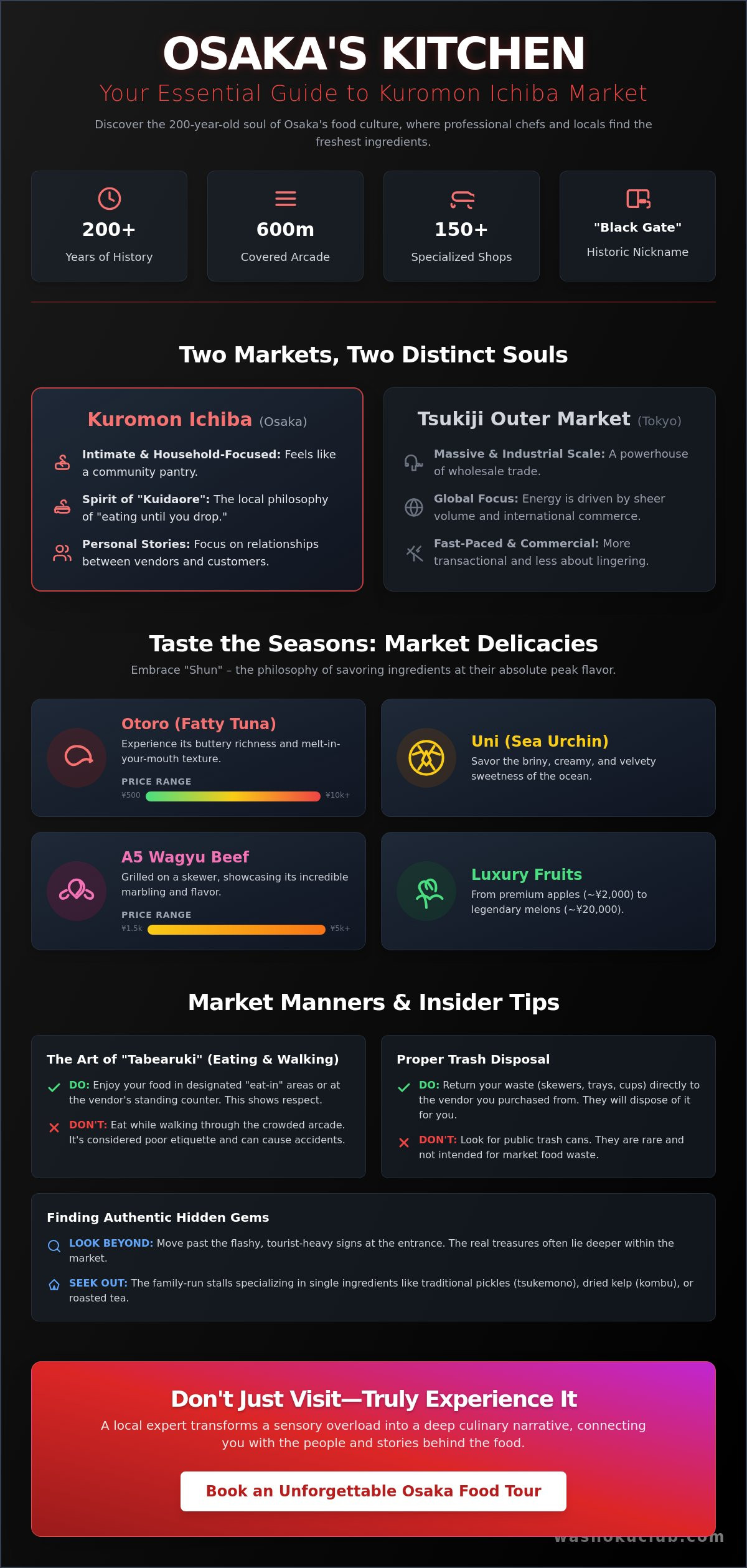
Step into the kuromon ichiba market and you’re stepping into two centuries of Osaka’s culinary soul. Since the late Edo Period, this vibrant corridor has served as the primary pantry for the city’s most discerning palates. It’s often called “Osaka no Daidokoro” or “The Kitchen of Osaka,” a title earned because it supplies the freshest ingredients to local professional chefs and home cooks alike. Walking through the 600-meter-long covered arcade, you’ll find over 150 specialized shops, each one a master of its craft.
The air here is thick with the scent of roasted tea and briny seafood, creating an atmosphere that is both chaotic and comforting. While the market was officially recognized in 1902, its roots go back much further, surviving the fires of war and the pressures of modern urban development. It remains a place where quality isn’t just a buzzword; it’s a family legacy passed down through generations of vendors.
To better understand the vibrant energy of this historic space, watch this helpful video:
The Meaning Behind the Black Gate
The name “Kuromon” translates literally to “Black Gate,” a reference to the imposing dark gateway of the nearby Emmeiji Temple that once stood here. Although the temple gate is long gone, the name remains a symbol of the market’s enduring presence in the community. Through decades of modernization, the market has fought to stay authentic, refusing to lose its grit or its charm. It stands today as a sanctuary for traditional food artisans who have dedicated their lives to perfecting a single ingredient or dish.
Kuromon vs. Tsukiji: Understanding the Regional Identity
Many visitors compare this experience to the Tsukiji Outer Market in Tokyo, but the vibe here is distinctly Osakan. While Tsukiji has a massive, industrial wholesale energy, Kuromon feels more intimate and household-focused. It’s less about the sheer volume of global trade and more about “Kuromon Monogatari,” the individual stories and personal relationships between the vendors and their customers. For a deeper look at the logistics of visiting, you can check out this Kuromon Market visitor guide. We often find that our guests on an Osaka Food Tour are surprised by how much more accessible and friendly the atmosphere is compared to the busy streets of Tokyo. The focus here remains on the local spirit of “Kuidaore” — eating until you drop.
Seasonal Delicacies: What to Eat at Kuromon Ichiba
To truly understand the heart of Japanese cuisine, you must embrace the concept of “Shun.” This philosophy suggests that every ingredient has a fleeting moment when its flavor, texture, and aroma reach an absolute peak. At the kuromon ichiba market, the stalls don’t just sell food; they celebrate the changing calendar. Whether it’s the buttery richness of Otoro (fatty tuna) or the briny, velvety sweetness of Uni (sea urchin), the offerings reflect the bounty of the sea as it is right now. You’ll find tuna trays ranging from 500 to 10,000 yen, allowing you to taste the difference between various cuts and grades.
Don’t let the “wholesale” signs intimidate you. Many of these vendors offer charming “eat-in” counters where you can watch a master carver prepare your selection right before your eyes. It’s a sensory thrill to see a chef expertly slice a skewer of A5 Wagyu beef, which typically ranges from 1,500 to 5,000 yen depending on the cut. For those planning their first visit, the official Kuromon Market guide provides an excellent overview of the market’s layout and vendor variety.
Beyond the seafood, the market is a treasure trove of agricultural perfection. You might see premium apples for 2,000 yen or even legendary melons that can fetch 20,000 yen. If you’re looking for a refreshing treat without the luxury price tag, look for fresh fruit juice or a slice of melon topped with ice cream for 500 to 1,000 yen. These items represent the soul of Japanese produce, grown with a level of care that borders on the obsessive.
Winter Stars: Fugu and Snow Crab
When the air turns crisp, the market atmosphere shifts. This is the season for Fugu, or pufferfish, a celebrated delicacy in Osaka. Licensed experts here prepare it into paper-thin sashimi that is both a culinary thrill and a testament to their skill. You’ll also encounter mountains of Snow Crab, a winter staple that Japanese families prize for its sweet, succulent meat. To ensure you’re getting the best, look for stalls where the crabs are still lively in their tanks. Active movement is the ultimate sign of freshness in the winter market.
Summer Specialties: Conger Pike and White Strawberries
Summer brings the arrival of Hamo, or Conger Pike, especially during the festival season. This fish requires a specialized “honekiri” cutting technique to soften its many tiny bones, and watching a vendor perform this at high speed is a true market highlight. To beat the Osaka heat, we recommend a cup of chilled, freshly squeezed soy milk from one of the long-standing tofu stalls. If you’re lucky, you’ll also find the famous white strawberries. These pale, fragrant gems offer a unique sweetness that regular berries simply can’t match. If you’re feeling overwhelmed by the sheer variety of choices, joining an Osaka Food Tour is a wonderful way to let a local friend show you the very best bites of the day.
Navigating the Crowds: Local Etiquette and Insider Tips
Visiting the kuromon ichiba market is an exhilarating dance of sights and sounds, but the sheer energy of the crowd can sometimes feel overwhelming. We believe that understanding local etiquette isn’t just about following a list of rules; it’s your key to unlocking a deeper connection with the shopkeepers who have spent decades here. When you show respect for their space and traditions, you’re often rewarded with a warmer smile or a genuine recommendation for the best seasonal bite. It turns a simple transaction into a moment of shared hospitality.
One of the most important things to remember is the “tabearuki” ban. While the market is famous for its street food, walking while eating is considered impolite and can lead to messy accidents in the narrow, 600-meter arcade. Most shops provide small standing areas or benches for their customers. If you’re looking for a comfortable spot to regroup, the Kuromon Market Information Center is open from 9:00 AM to 6:00 PM. It offers a free rest area, restrooms, and even a baby changing station, making it a perfect sanctuary for families.
Before you snap a photo of those glistening tuna trays or a master chef at work, take a moment to ask for permission. A simple “Sumimasen” (Excuse me) goes a long way in showing that you value them as artisans, not just attractions. These small gestures of courtesy help preserve the authentic atmosphere that makes this market so special. If you want to dive deeper into these cultural nuances, our Osaka Food Tour offers a chance to explore the market with a local guide who can act as your cultural translator.
The Golden Rules of Market Conduct
- Cash is king: While some larger stalls accept cards, many small, family-run spots still require Japanese yen. Carrying small bills makes transactions faster and easier for busy vendors.
- Look, don’t touch: In a market where freshness is everything, hygiene is a top priority. Never touch produce or seafood unless you intend to buy it.
- Trash disposal: Public trash cans are rare in Japan. The general rule at kuromon ichiba market is to return your empty skewers, cups, or containers to the stall where you purchased the food. They will gladly take them back for you.
When to Go: Timing Your Culinary Adventure
Timing is everything when you want to avoid the heaviest tourist waves. The “Sweet Spot” is usually between 9:00 AM and 11:00 AM. During these morning hours, the stalls are fully stocked, and the air is filled with the anticipation of the day. You’ll beat the lunch rush and have more space to move freely between the 150 different shops.
If you’re a bargain hunter, consider visiting in the late afternoon around 4:00 PM or 5:00 PM. This is often “discount hour,” when vendors may lower prices on perishable items like sashimi or sushi before closing. However, be aware that many popular items will be sold out by then. We also suggest avoiding Sundays and National Holidays if possible. Many of the most authentic, long-standing shops close on these days, which can leave you with a more limited experience of what the market truly has to offer.
Beyond the Tourist Path: Finding Hidden Gems
While the neon signs and sizzling wagyu grills catch most eyes, the true spirit of the kuromon ichiba market lies in the quiet corners where the flash is replaced by tradition. To find the authentic heart of this district, you must look past the shops with loud English banners and seek out the stalls where local chefs are still doing their morning shopping. These vendors often specialize in a single category, such as hand-pressed tofu or artisan vinegars; they’ve been the backbone of Osaka’s culinary scene for generations. You’ll notice a distinct lack of “tourist pricing” at these spots, as their loyalty remains with the neighborhood families they’ve served for decades.
Identifying these “chef-first” stalls is an art in itself. Look for shops that display large, humble containers of dried kelp (kombu) or specialized pickles (tsukemono) that aren’t packaged in bright plastic. These are “Kuromon-exclusive” treasures that define the local palate. Don’t forget to explore the non-food sections too. You’ll find traditional kitchenware shops tucked between the produce stalls, offering everything from hand-forged knives to delicate ceramic graters that no professional kitchen would be without. These items aren’t just tools; they’re the instruments used to create the perfect umami balance in every meal.
The Master Artisans of Kuromon
We often find that the most memorable moments happen at the smallest counters. Imagine a stall that has sold nothing but dashi ingredients for three generations. These master artisans are the true guardians of Washoku culture, preserving the precise techniques that make Japanese food world-famous. They might not have the biggest signs, but their knowledge is encyclopedic. We always encourage our guests to offer a polite “Konnichiwa” (Hello). It’s a simple bridge that often leads to a story about how their family survived the market’s long history, providing a human layer to your culinary journey that you won’t find in any guidebook.
Souvenirs for the Home Chef
If you want to bring a piece of Osaka back to your own kitchen, look for travel-friendly items like high-quality nori or unique spice blends like Shichimi Togarashi. The vendors here embody the spirit of “Omotenashi,” often taking extra care to wrap your purchases in a way that survives a long flight. It’s this human connection that transforms a simple purchase into a lasting memory. Because we believe in these genuine relationships, all our tours prioritize these off-the-beaten-path connections over the typical tourist traps. If you’re ready to see the market through the eyes of a local friend, we invite you to join us on an Osaka Food Tour where we’ll introduce you to the families who make this market a living museum.
Why a Guided Experience Elevates Your Market Visit
It’s a question we hear often: “Can’t I just explore the kuromon ichiba market on my own?” While the market is certainly open to everyone, there’s a profound difference between simply walking the aisles and truly understanding the stories behind the stalls. Without a guide, you might find yourself overwhelmed by the sheer volume of choices or stuck in the busiest tourist lanes. We act as your cultural translator and “flavor curator,” helping you look past the flashy signs to find the authentic soul of Osaka’s kitchen.
Think of us as your local friend who knows exactly which vendor has the best batch of dashi today or which family-run shop is hiding a secret recipe for pickled ginger. We bridge the gap between you and the local artisans, facilitating connections that a solo traveler might miss. Our goal is to turn a meal into a narrative, ensuring that every bite you take has a context and a history. It is about moving from being a spectator to being a welcomed guest in a community that prides itself on hospitality.
The Value of Expert Curation
When you join us, we take the guesswork out of your visit. We carefully select specific bites to tell a cohesive story of Japanese cuisine, moving from light, delicate flavors to richer, more complex profiles. This deliberate pace helps you avoid “flavor fatigue,” a common mistake where visitors fill up on heavy street foods too quickly and miss the subtle nuances of seasonal specialties. By knowing the market’s rhythm, we can also access “off-menu” insights and items that aren’t advertised to the general public. This gives you a taste of the authentic kuromon ichiba market that few others ever experience.
Joining the Washoku Club Family
At Washoku Club, we don’t believe in crowded, impersonal tours. We prioritize small-group, intimate experiences that allow for genuine conversation and a sense of belonging. We invite you to explore our Osaka Food Tour for a deeper dive into these culinary traditions. It’s more than just a list of stops; it’s an invitation to join our family and share in the pride we feel for our heritage. We want you to leave not just with a full stomach, but with a heart full of stories. Let’s make lasting memories together through the simple, beautiful act of sharing a meal in the heart of Japan.
Savor the True Spirit of Osaka’s Kitchen
The kuromon ichiba market is much more than a collection of stalls; it’s a living archive of Japanese flavor and resilience. By embracing the philosophy of seasonality and respecting local etiquette, you transform your visit from a simple walk-through into a meaningful cultural exchange. You now have the knowledge to look past the flashy signs and find the quiet artisans who keep the heritage of Washoku alive through their craft. Whether you’re tasting buttery winter seafood or hunting for the perfect artisan souvenir, your journey through these historic aisles should be one of genuine discovery.
We’d love to welcome you into our community of food lovers. Our expert-led tours are designed by passionate local guides who prioritize authentic, non-tourist-trap experiences. We keep our group sizes small to ensure a personal connection with both our guests and the market vendors. Please join a Washoku Club tour to discover the hidden flavors of Japan and let us introduce you to the families who make this market so special. We can’t wait to share the table with you and help you create memories that last long after the final bite.
Frequently Asked Questions
Is Kuromon Ichiba Market worth visiting in 2026?
Yes, it is absolutely worth visiting if you want to experience the vibrant heart of Osaka’s culinary heritage. While some areas have become more focused on tourists, the market still houses over 150 specialized vendors that supply the city’s top chefs. You just need to know where to look to find those authentic family-run stalls we mentioned earlier. It remains a essential stop for any true food lover.
What are the opening hours for Kuromon Ichiba Market?
Most shops are open from 9:00 AM to 6:00 PM daily. However, keep in mind that individual stall hours can vary quite a bit. Some breakfast-focused spots open as early as 8:00 AM, while others might close early if they sell out of their daily catch. The information center follows the standard 9:00 AM to 6:00 PM schedule, providing a reliable home base for your visit.
Can I find vegetarian or vegan options at the market?
While the kuromon ichiba market is famous for seafood and wagyu, you can certainly find plant-based treasures. Look for stalls selling seasonal fruits, traditional pickles, or freshly pressed soy milk and tofu. Grilled corn and sweet potatoes are also common. We suggest you always double-check if any dashi, which is fish stock, was used in the preparation of savory items like simmered vegetables.
Is the market expensive compared to other places in Japan?
Prices vary significantly depending on what you choose to eat. While premium items like A5 Wagyu skewers or fatty tuna can reach 5,000 or 10,000 yen, local soul foods like oden are often just 150 yen per piece. We recommend bringing a mix of budget for splurging on high-end delicacies and smaller amounts for everyday market snacks. It is possible to eat well on any budget.
How do I get to Kuromon Ichiba Market by train?
The easiest way to reach the market is by taking the train to Nipponbashi Station. You can use either the Sennichimae or Sakaisuji Subway Lines, or the Kintetsu Line. Once you arrive, take Exit 10. You’ll find yourself just a short, two-minute walk away from the iconic entrance of the kuromon ichiba market. It is centrally located and very easy to find from the station.
Do vendors at Kuromon Ichiba accept credit cards?
Cash is still the most reliable way to pay at the majority of stalls. While larger seafood vendors and modern fruit shops have started accepting credit cards or mobile payments, the smaller, traditional artisans often remain cash-only. We suggest carrying enough Japanese yen to cover your planned tastings and any spontaneous souvenirs you might find. This ensures a smooth and stress-free experience for you and the vendors.
Is Kuromon Ichiba Market better than Nishiki Market in Kyoto?
Both markets offer incredible experiences, but they have very different personalities. Nishiki Market in Kyoto feels more refined and focused on traditional vegetables. In contrast, Kuromon has a bolder, more energetic Osaka spirit centered on high-quality seafood and street food. If you love a bustling, lively atmosphere with a focus on fresh catches, you’ll likely prefer the energy here in Osaka.
What is the most famous food to try at Kuromon Ichiba?
Fugu, or pufferfish, is perhaps the most iconic delicacy to try, especially during the winter months. Osaka is responsible for a huge portion of Japan’s fugu consumption, and the market’s licensed experts are masters at preparing it safely. Other must-try items include melt-in-your-mouth Toro tuna and giant grilled scallops topped with butter and soy sauce. These dishes represent the very best of the market’s seasonal bounty.